
A Lifelong Connection to Water Inspires a Legacy of Opportunity
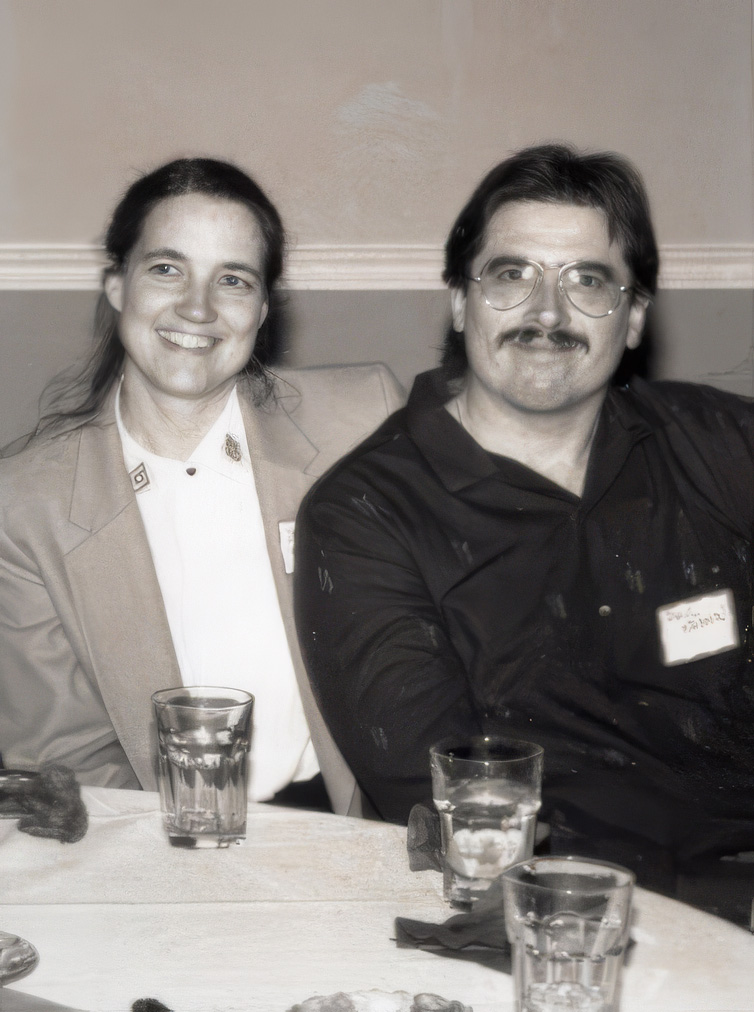
Daria Wightman and her husband, Paul Krahn, attend an awards dinner honoring professional women who dedicated their time to mentoring Girl Scouts. Throughout her career, Daria has supported STEM outreach and encouraged young students to explore opportunities in engineering and science.
Water has always been part of Daria Wightman’s story.
Summers spent at her grandparents’ cabin in Big Springs, Idaho, left a lasting impression. Springs bubbled up from volcanic rock, fish swam beneath nearby bridges, and clear water flowed endlessly through the landscape.
“It was an idyllic place to spend a couple weeks every summer,” Daria said. “Water was always present in my life.”
As the daughter of an Air Force family, Daria moved frequently, living in different parts of the country as she grew up. Swimming pools at military bases, a backyard pool in California, and rivers and lakes in Oregon deepened her appreciation for clean, accessible water.
By the time she reached college, that appreciation had evolved into purpose.
While studying liberal arts at the American College in Paris, Daria read The Closing Circle by environmental scientist Barry Commoner. The book explored the growing environmental damage caused by pollution and its impact on human health.
“So, in my sophomore year of college, when I read The Closing Circle, I found a focus for my future career,” she said. “I wanted to save rivers and lakes from pollution.”
Unsure what type of degree would help her make a difference; Daria took time off from college to explore environmental work. She volunteered with organizations focused on recycling and conservation, worked on a field survey studying the environmental impacts of cattle grazing, and began researching educational pathways.
It was her sister who suggested Utah State University as a place to explore water-related programs.
Because her parents lived in Utah at the time, Daria visited campus to explore programs connected to water quality. After speaking with faculty and learning about career opportunities, she found herself drawn to civil and environmental engineering.
“Engineering offered the ability to solve problems and actually create solutions,” Daria said. “It felt like a way to turn concern for the environment into meaningful work, and there were jobs available to engineers.”
At Utah State, she discovered more than a degree program. She found a community.
Daria became involved in We Engineer, Utah State’s engineering student organization focused on leadership, outreach, and professional growth. The group provided opportunities to build connections, develop confidence, and engage with students who shared an interest in engineering and service. For Daria, it also fostered a sense of belonging at a decade when women were first entering male dominated fields after the 1972 Title IX Education Amendments.
“We Engineer gave me a network of people who understood what it felt like to pursue engineering in that environment,” she said. “It helped me build confidence, take on leadership roles, and develop relationships that shaped my future.”
That network also led to an important opportunity.
Through her connections, Daria secured a student job at the Utah Water Research Laboratory, where she gained hands-on experience in water quality research.
“It gave me real-world experience and helped connect classroom learning to the work I hoped to do professionally,” she said.
She also remembers the encouragement she received from scholarships and mentors.
“I received a scholarship from the American Association of University Women my first year in engineering,” Daria said. “That assistance left a lasting impression on me.”
Following graduation, Daria built a career specializing in wastewater treatment engineering, working on projects across the western United States and Hawaii. She collaborated with engineers, municipalities, and environmental organizations to improve water systems and protect waterways.
Her work focused on ensuring wastewater discharge met national and state standards, helping preserve public health and environmental quality.
“I was lucky to work on wastewater-related projects throughout the West,” she said. “The work was always interesting because it involved both technical challenges and working with diverse groups of people.”
Throughout her career, Daria remained deeply involved in professional organizations, including the Society of Women Engineers and the Water Environment Federation. She held leadership roles, organized conferences, mentored younger engineers, and frequently visited schools to encourage students to consider STEM careers.
She believes the next generation of engineers will face increasingly complex environmental challenges.
“There are new pollutants entering our waterways that current treatment systems aren’t designed to remove,” Daria said. “Microplastics, pharmaceuticals, nanoparticles, stormwater runoff, and climate-related impacts all create new problems that need innovative solutions.”
For Daria, solving those problems requires more than technical knowledge.
“I hope students take advantage of networking, leadership opportunities, and student organizations while they’re in college,” she said. “Engineering is collaborative. The relationships you build matter just as much as what you learn in the classroom.”
That belief inspired her to establish the “daria” Clean Water Scholarship in Utah State University’s College of Engineering.
The scholarship supports undergraduate sophomores, juniors, and seniors in the Department of Civil and Environmental Engineering who are interested in water quality and environmental stewardship. Recipients must also be active participants in We Engineer.
The scholarship reflects both Daria’s personal journey and her commitment to helping future engineers thrive.
“My giving back to USU was inspired in part by seeing scholarships established by people who shaped my own path,” Daria said. “I realized I could help future students the same way others helped me.”
Her endowment also honors the values that guided her career: stewardship, curiosity, collaboration, and a deep respect for water.
“Water is so vital to life,” she said. “We can live weeks without food, but most of us could not survive three days without water. If the water we have access to isn’t clean, chronic disease and environmental damage follow.”
She hopes future scholarship recipients understand that their work carries lasting significance.
“My hope is that responsibility for the planet’s environmental quality is not lost,” Daria said. “Every engineering discipline has a role to play in protecting our world. We only have one planet and a finite amount of water.”
Today, Daria continues to enjoy the water she has spent a lifetime protecting. She and her husband often windsurf near the Columbia River Gorge, close to wastewater treatment systems she once helped improve.
It is a fitting reminder that her work has always been about more than engineering.
It has been about preserving the places people live, swim, explore, and call home.
Through her scholarship, Daria’s impact will continue for generations of Aggies who share her passion for clean water and a healthier future.
Create Your Aggie Impact by supporting scholarships, programs, and student opportunities that help Aggies pursue their goals and reach their potential. Gifts that expand access and opportunity provide students with the tools, experiences, and support they need to succeed at Utah State University and beyond. Together, we can help open doors to brighter futures.
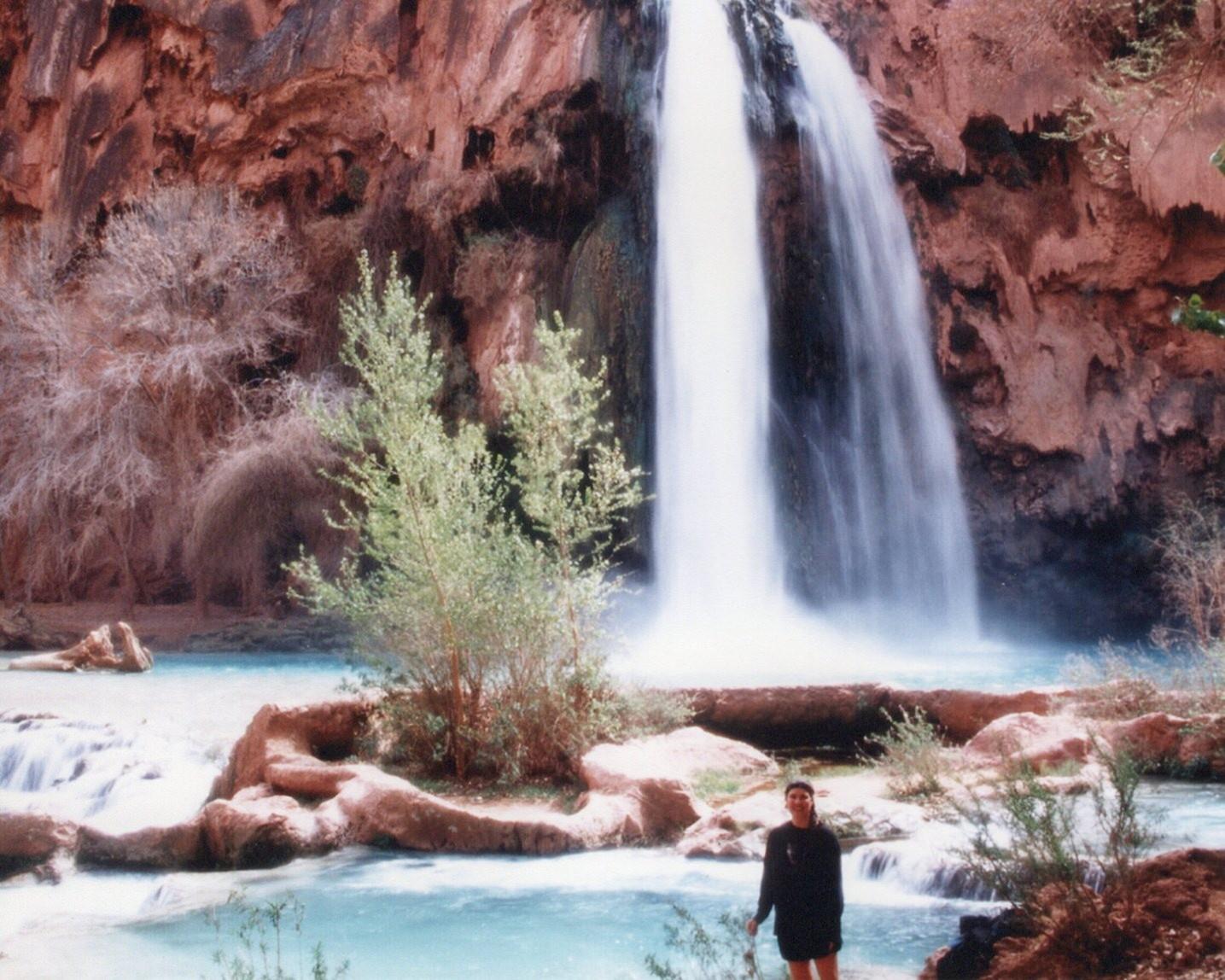
Nearly three decades after first seeing Havasu Falls featured on the cover of Catalyst magazine, Daria fulfilled a longtime dream by hiking to the falls in Arizona in 2002 — a place that reflected her lifelong connection to clean water and the natural environment.
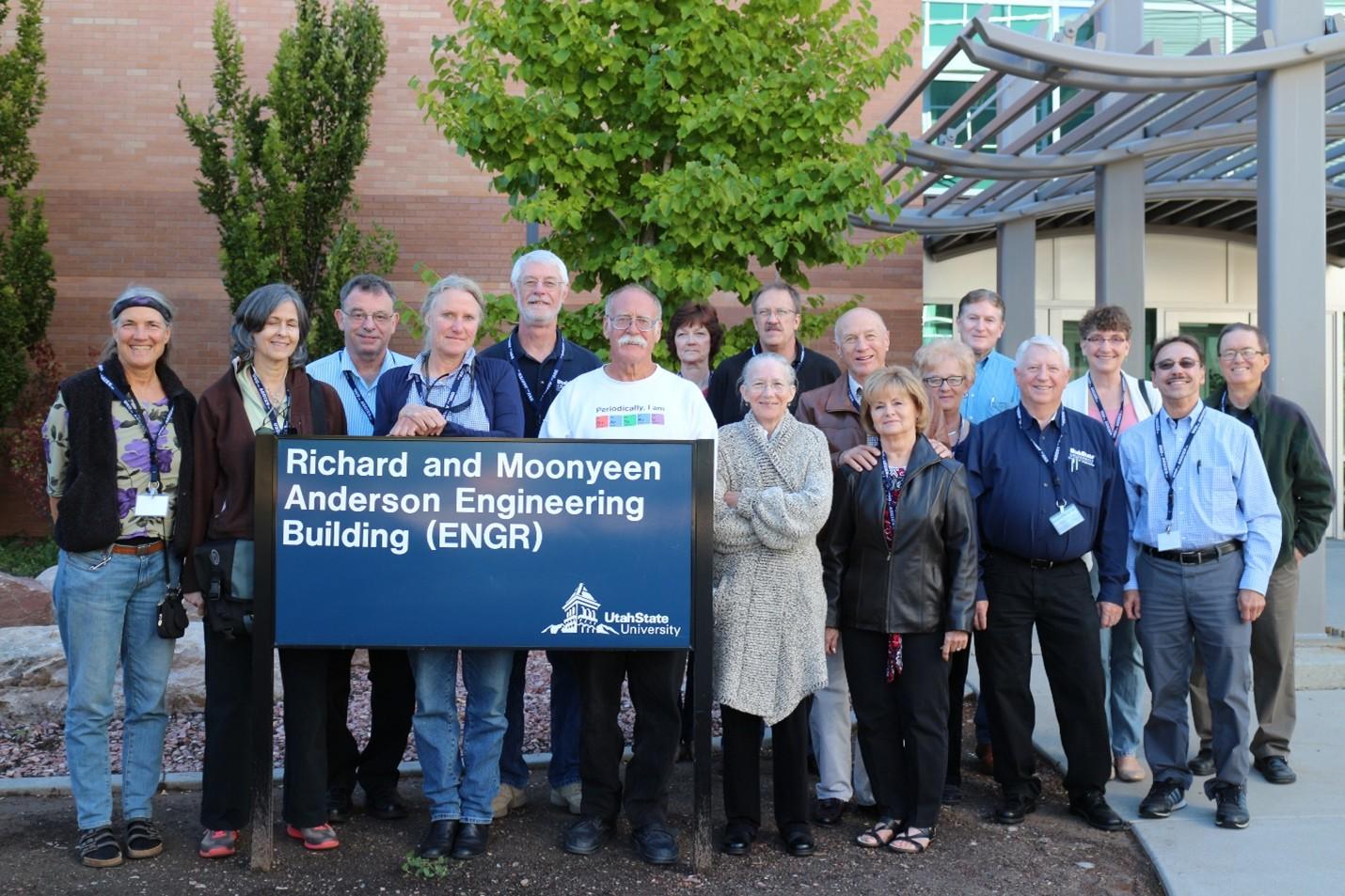
Daria Wightman reunited with fellow Utah State environmental engineering colleagues during a 2015 gathering on campus that included tours of engineering facilities, the Water Lab, and presentations highlighting student research and the evolving future of civil and environmental engineering. Pictured are alumni, faculty, and longtime friends connected through Utah State’s environmental engineering program.
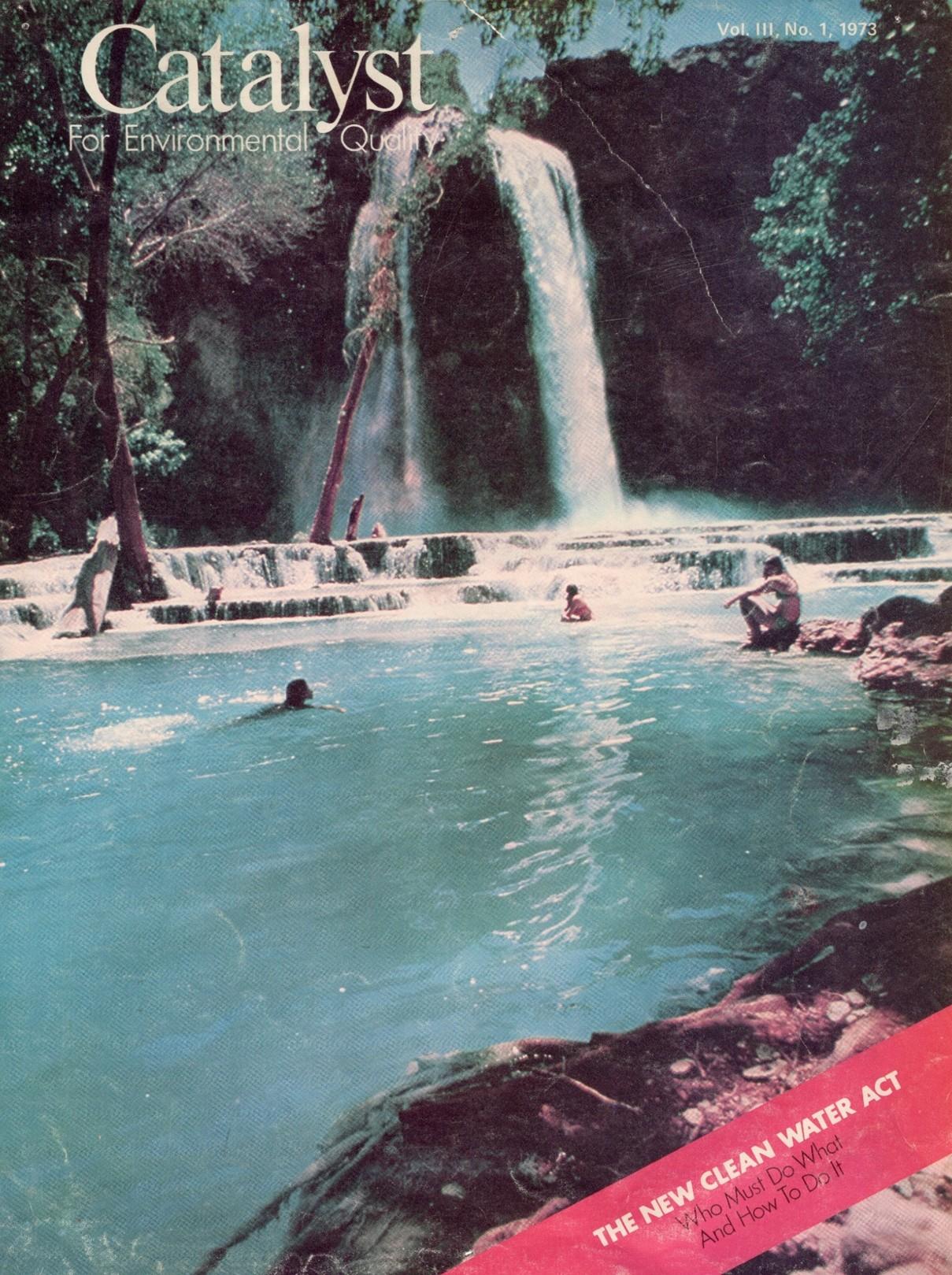
The 1973 cover of Catalyst magazine featured the newly enacted Clean Water Act and an image of Havasu Falls in Arizona. For Daria, who was pursuing a future in environmental engineering, the image represented both inspiration and a dream destination.
Contact
David Kunz
Engineering, Senior Development Director
(435) 797-8012
david.kunz@usu.edu
Tony Ahlstrom
Engineering, Development Officer
(435) 797-0769
tony.ahlstrom@usu.edu