
Applied Remote Sensing and Geospatial Artificial Intelligence - PBC

About This Certificate
The Applied Remote Sensing and Geospatial Artificial Intelligence (GeoAI) Post-Bachelor’s Certificate introduces advanced students, with a Geographic Information Science (GIS) background, to the development and application of artificial intelligence to remote sensing and data-driven geospatial methods.
Remote sensing via satellites and drones and advanced geospatial science tools that harness GeoAI allow for analyzing large amounts of data to understand and address a variety of complex social, economic, and environmental challenges facing society. Over the past few decades, technological advancements, the democratization of geospatial information, and the proliferation of consumer-grade drones have made high-resolution imagery and data more accessible than ever before, generating new demand for individuals skilled in gathering, analyzing, and delivering geospatial products.
As automation through machine learning increases efficiency, the role humans play is transforming, moving from lower-level data management tasks to higher-level tasks of problem definition, inquiry, and innovation. Humans must engage with, troubleshoot, and guide GeoAI efforts, drawing upon critical thinking, creative problem-solving, complex reasoning, the application of emotional intelligence, and other distinctively human capabilities.
What You Will Learn
The certificate will prepare post-baccalaureate students at the convergence of geospatial analysis, remote sensing, and artificial intelligence for opportunities for innovation across various industry and government sectors, including for example environmental monitoring, urban planning, agriculture, disaster planning and response, and natural resource management.
Students can pair the certificate with the Master of Natural Resources or another graduate degree program, or they can pursue it as a standalone certificate. Students also can pursue both the Geographic Information Science Post-Baccalaureate Certificate and the Applied Remote Sensing and GeoAI Post-Baccalaureate Certificate for simultaneously broad and deep skillsets in emerging geospatial technologies. Participants may complete the certificate in one year.
ADVISING
At a Glance
College: S.J. & Jessie E. Quinney College of Agriculture & Natural Resources
Department: Environment and Society Department
USU Location(s):
- Logan campus
- Statewide campuses
- USU Online
Program Requirements
USU Locations
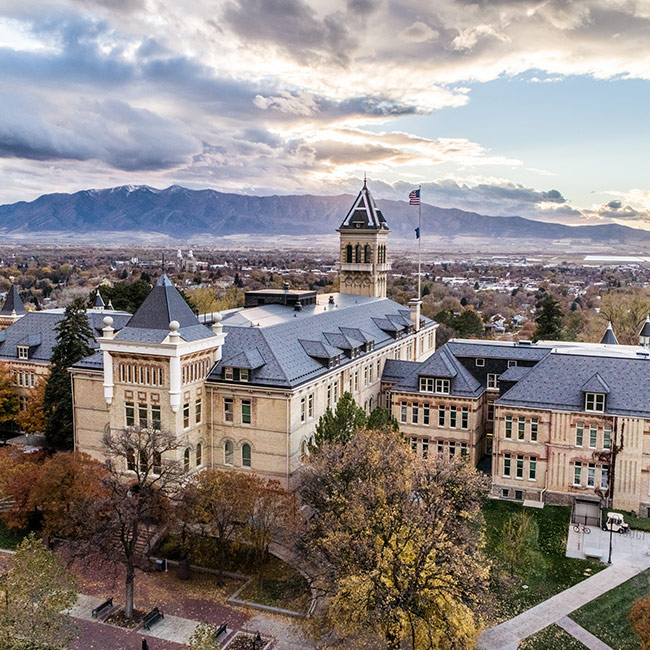
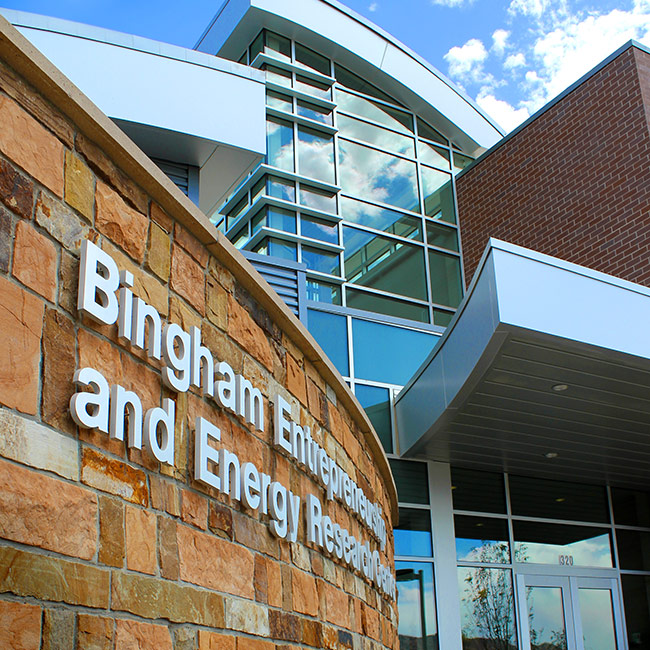

*Available USU location(s):
- Beaver
- Bicknell
- Blanding
- Brigham City
- Castle Dale
- Cedar City
- Delta
- Ephraim
- Heber City
- Junction
- Kanab
- Kaysville
- Moab
- Montezuma Creek
- Monticello
- Monument Valley
- Nephi
- Orem
- Panguitch
- Park City
- Price (USU Eastern)
- Richfield
- Roosevelt (Uintah Basin)
- Salt Lake
- St George
- Tooele
- Tremonton
- Vernal (Uintah Basin)
- Wendover
**USU is a SARA-approved institution offering fully online programs nationwide; please visit USU's state authorizations for details.
Take The Next Step
How to Apply
View our step-by-step guide on how to become an Aggie.
Request Information
Contact the School of Graduate Studies to ask questions or receive more information.
Cost and Funding
Calculate the cost of graduate school and learn about funding opportunities.
You May Also Be Interested In

Geographic Information Science (GIS)
Develop skills and experience applying industry standard GIS and remote sensing tools to natural resource issues.

Geography
Earn a degree in geography as you study a wide range of issues like land use, rural development, map making, the social aspects of natural resource management, and more.