
Natural Resource Economics - MS

About This Degree
How should communities manage scarce water, public lands, energy, and other natural resources while supporting economic prosperity?
Utah State University’s Master of Science in Natural Resource Economics equips students with the economic and quantitative tools needed improve real-world resource decisions.
At Utah’s land-grant university, students study resource challenges where land, water, economic growth, and public policy intersect. Flexible electives and faculty-guided research allow students to shape the degree around their interests while preparing for analytical and leadership roles in government agencies, consulting firms, industry, and nonprofit organizations.
What You Will Learn
Students develop advanced skills in microeconomic theory, quantitative analysis, applied econometrics, natural resource economics, and regional and community economic development. They learn to analyze data, evaluate policy alternatives and tradeoffs, model the allocation of scarce resources, and communicate evidence- based recommendations to decision-makers and stakeholders.
Coursework and faculty-guided research also build critical-thinking, problem-solving, collaboration, and professional communication skills, with opportunities to explore topics such as water, land, environmental policy, and community development.
ADVISING
At a Glance
College: S.J. & Jessie E. Quinney College of Agriculture & Natural Resources
Department: Agricultural and Resource Economics Department
USU Location(s):
- Logan campus
Program Requirements
Career And Outcomes
Job Outlook
USU Locations
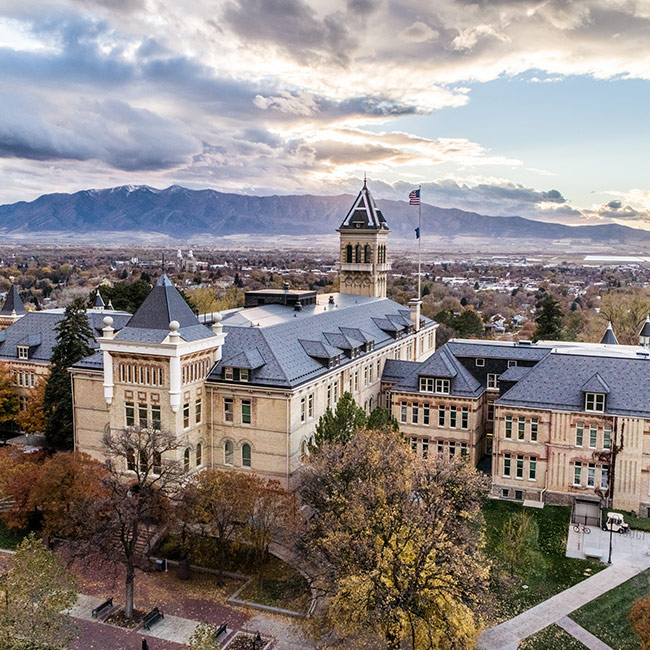
LOGAN CAMPUS
Take The Next Step
How to Apply
View our step-by-step guide on how to become an Aggie.
Request Information
Contact the School of Graduate Studies to ask questions or receive more information.
Cost and Funding
Calculate the cost of graduate school and learn about funding opportunities.
You May Also Be Interested In

Ecology
Work on exciting research projects with renowned faculty studying ecology through the lens of a variety of different scientific disciplines.

Environment and Society
Learn how human activities affect the natural environment and help make changes in policy, land management, and human behavior to reduce society’s impact on the natural world.

Environmental Planning
Prepare for a career helping communities with growth and development in a unique program that focuses on large-scale planning of entire geographic regions.

Master of Natural Resources
Earn a master’s as a working professional as you take courses to help you become a manager and decision maker in the natural resources field.