
Ozone Formation in Summertime Wildfire Smoke
We are collecting additional air quality measurements during the summer of 2026 at the Roosevelt site to better understand how wildfire smoke affects ozone levels. These data will be used to complete an analysis, begun in previous years, of wildfire impacts on summertime ozone in the region. The results will then be summarized and prepared for publication in a peer-reviewed scientific journal.
Seth Lyman and Trevor O'Neil
Project End: Winter 2026-27
Funding: Utah Legislature and SSD1
Project Updates
Updated July 2026
- Major Findings:
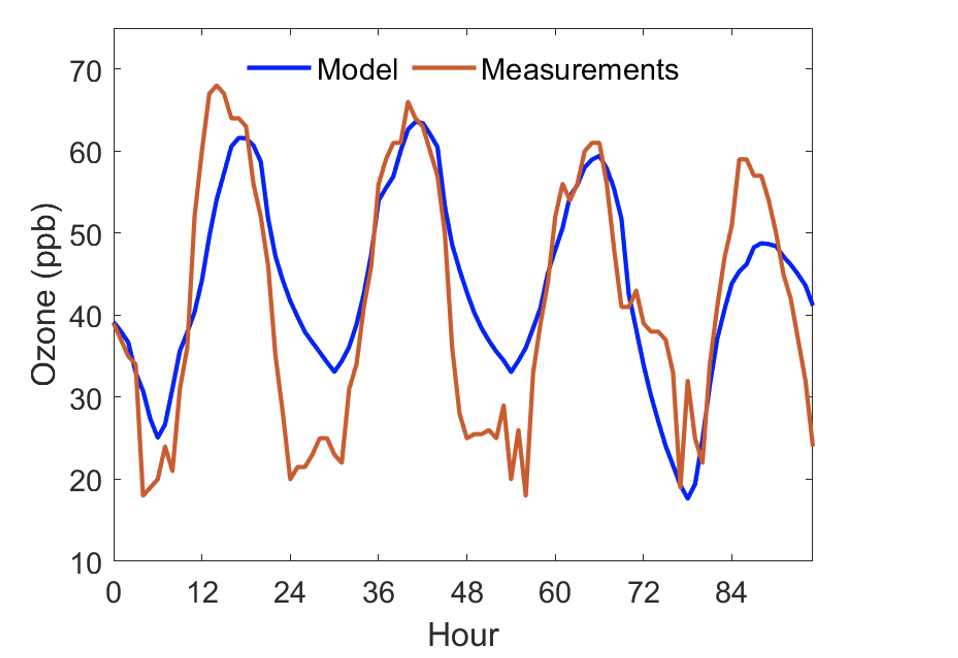
- Results indicate that the F0AM photochemical box model is able to successfully reproduce the key chemical processes observed during days affected by wildfire smoke. This suggests that the model is capturing the major reactions and pollutant formation pathways occurring under smoky conditions, providing confidence in its use for analyzing and understanding the impact of wildfire smoke on air quality.
- Results indicate that the F0AM photochemical box model is able to successfully reproduce the key chemical processes observed during days affected by wildfire smoke. This suggests that the model is capturing the major reactions and pollutant formation pathways occurring under smoky conditions, providing confidence in its use for analyzing and understanding the impact of wildfire smoke on air quality.
- Current and Upcoming Work:
- The photochemical box model has been completed and is now ready to be applied to our measurement data. We will use the model to evaluate how much additional ozone is produced during wildfire smoke events for the periods when air quality measurements were collected. This analysis will help improve our understanding of how wildfire smoke contributes to ozone formation.
- Further refinement of the real time formaldehyde instrument was completed with promising results for the future use of the instrument.
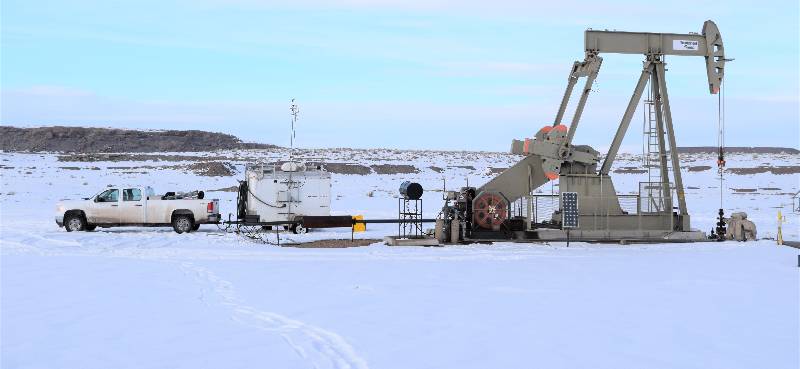
- Our Roosevelt monitoring station is running for the summer, and we have installed a new real-time formaldehyde instrument at the site. When wildfire smoke is present, we will collect air samples to be analyzed in the laboratory for the determination of a suite of 70 individual organic compounds that are present inoil and gas pollution and wildfire smoke. We will use these data with the box model to determine how smoke impacts ozone formation in the Uinta Basin.
- The photochemical box model has been completed and is now ready to be applied to our measurement data. We will use the model to evaluate how much additional ozone is produced during wildfire smoke events for the periods when air quality measurements were collected. This analysis will help improve our understanding of how wildfire smoke contributes to ozone formation.
- Problems:
- The Roosevelt site experienced smoke plumes two weeks ago, as we were still refining the code and timing of our sampling system to include the real time formaldehyde instrumentation our sample collection system failed. We are waiting for new periods of smoke incursion in the Basin to collect the data needed for the photochemical modeling.
- If additional significant wildfire smoke events are not observed during the 2026 summer season, completion of this project may need to be extended until 2027 to allow additional opportunities to collect the necessary data.
More Information
Study Ozone Formation in Summertime Wildfire Smoke
In 2022, we were involved in a collaborative study of the impacts of wildfire smoke on summertime ozone and particulate matter in the Salt Lake City area. The study was funded by the Utah Division of Air Quality and several Wasatch Front oil refineries. Smoke plumes from wildfires emit significant amounts of reactive organic compounds that are key precursors to ozone formation. When these organics combine with high levels of oxides of nitrogen (NOX) emitted from vehicles and other urban sources, they can increase the ability of urban atmospheres to produce ozone. The Salt Lake City study used measurements of organic compound concentrations, along with existing measurements of other pollutants, in a box model to learn how wildfires impact ozone production in Salt Lake. A final report for the Salt Lake study is available at https://www.usu.edu/binghamresearch/files/reports/Samoza_finalreport.pdf
We conducted a similar, but smaller, study at the Roosevelt air quality monitoring station during 2024. We collected measurements during smokey and smoke-free periods in the first week of September 2024. We will collect additional measurements in summer 2026 if significant wildfire smoke materializes. In some recent summers (including 2024 and 2025), ozone at Roosevelt rose above the U.S. Environmental Protection Agency standard when wildfire smoke plumes infiltrated the area. Summertime exceedances of the standard have been more common at Roosevelt than at other sites. Roosevelt is, of course, a much smaller urban area than Salt Lake City, but NOX concentrations there tend to be elevated relative to other parts of the Uinta Basin (Lyman et al., 2024a). Also, ambient organic compound concentrations are elevated in Roosevelt due to oil and gas activity in the area (Lyman et al., 2022a).
We will measure ozone, carbonyls (including aldehydes), hydrocarbons, alcohols, methane, total non-methane hydrocarbons (TNMHC), carbon monoxide, particulate matter, NOX, and total reactive nitrogen (NOY) in Summer 2026 at the Roosevelt monitoring station if the site experiences significant wildfire smoke. We will also utilize all available data collected by Utah DAQ at the same facility. We will use smoke forecasts provided by the National Weather Service (https://hwp-viz.gsd.esrl.noaa.gov/smoke/index.html) to determine whether smoke impacts are likely at the site. We will collect a maximum of two weeks of smoke-impacted measurements and two weeks of measurements during periods without smoke impact. If wildfire smoke does not materialize, we will not collect any measurements, and we may resume the project in Summer 2027.
We will use the data we collected in September 2024 and summer 2026 in the F0AM box model to simulate the average conditions of smoke-impacted and smoke-free days. We will use these simulations to determine (1) how smoke impacts the ozone production rate and the ozone production efficiency of NOX at Roosevelt and (2) whether reductions in non-fire NOX or organic compound emissions in the Roosevelt area are likely to decrease ozone production on smoke-impacted days. This work will be similar to that conducted by Ninneman and Jaffe (2021). We have already used the F0AM model to simulate winter ozone production in the Horsepool area (Lyman et al., 2022b), and have developed a model that reproduces ozone during the 2024 episode with some accuracy.