A New Vision: How Utah State Bioengineering Researchers Are Changing the Outlook for Aging Eyes
By Libbie Anderson |
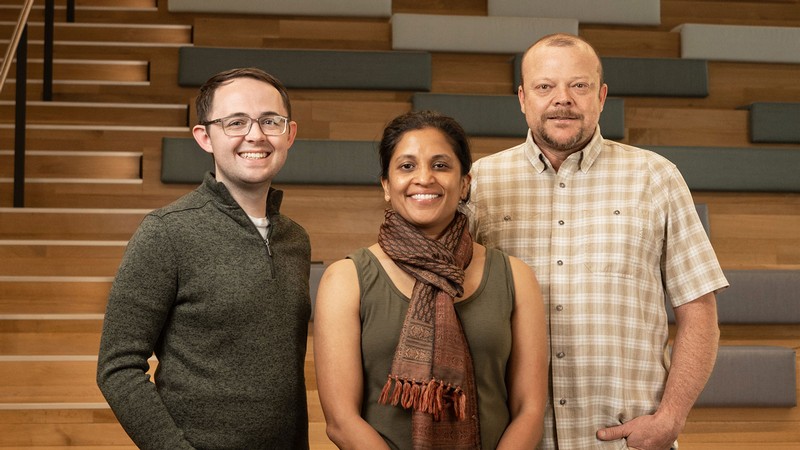
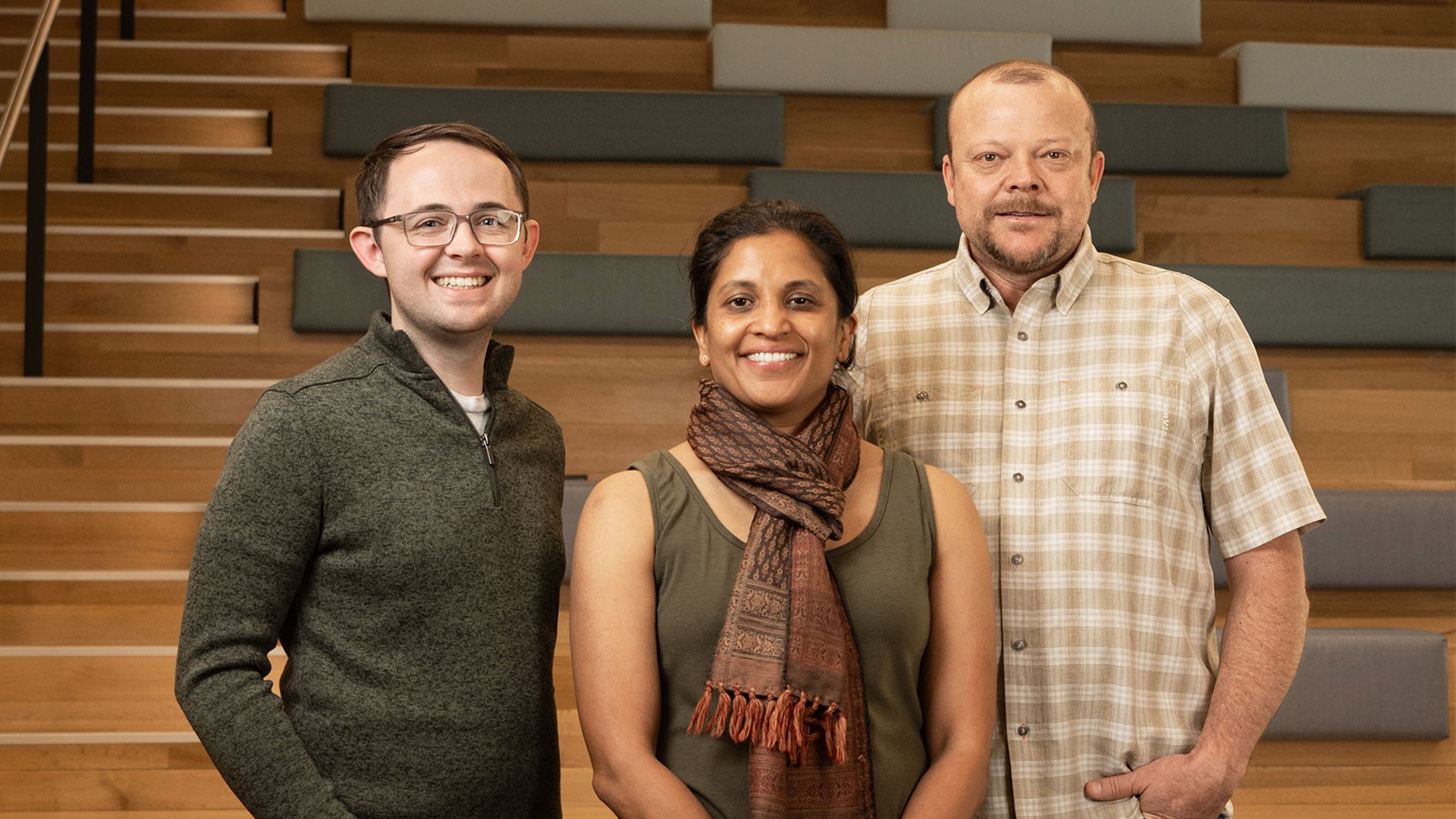
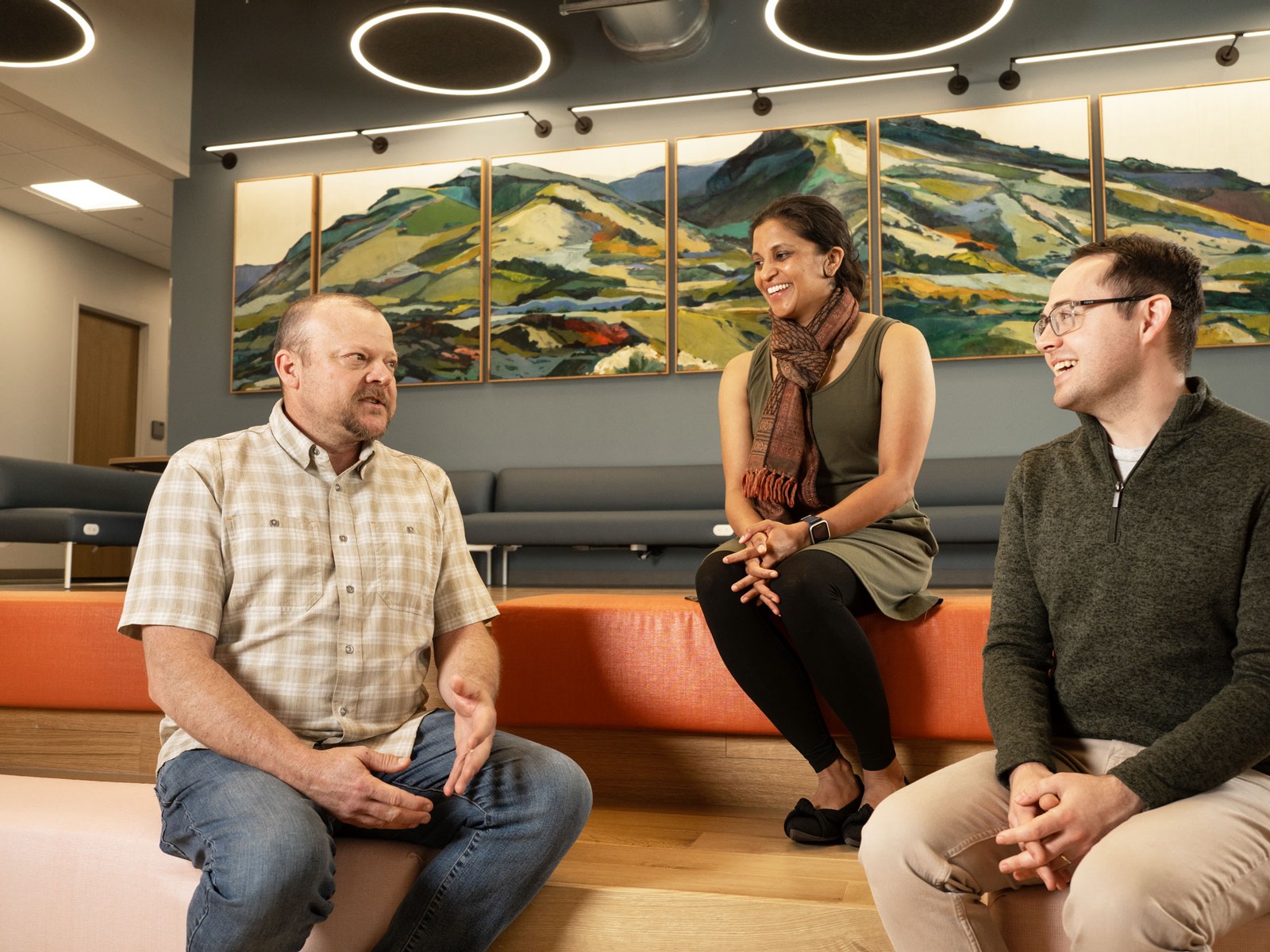
From left, doctoral student Dillon Weatherston, Associate Professor Elizabeth Vargis and Associate Professor Justin Jones. The team led a breakthrough discovery in developing a technology that mimics aging in cells of the human eye. Their work will help advance treatment and a possible cure for age-related macular degeneration.
The rods and cones in your eyes are responsible for helping you see, but what’s responsible for helping them? Retinal pigment epithelium cells are their caretakers; but environmental, genetic and aging factors can strain them and make them less effective. This is known as age-related macular degeneration — a leading cause of blindness.
Age-related macular degeneration, often called AMD, is difficult to study because replicating the conditions of the aging eye in a laboratory is challenging. Researchers at Utah State University are working to change that.
USU Associate Professor Elizabeth Vargis and her doctoral student Dillon Weatherston, along with Associate Professor Justin Jones, developed a model to mimic the effects of aging to improve prevention and treatment to advance research in other age-related diseases, such as Alzheimer’s.
After years of exploring how to control cell growth, Vargis and Weatherston’s latest research breakthrough came after they discovered that a membrane developed from hagfish proteins could be tuned to mimic natural aging. They then observed how retinal pigment epithelium cells from pig eyes responded to the changing hagfish membrane, with the goal of identifying early indicators of AMD.
The team’s findings were published in GeroScience, a leading journal covering aging and age-related diseases.
Using the new model, the researchers successfully replicated the onset of AMD the same way it develops in a human eye. Similar to naturally occurring AMD, the model produced fatty deposits and protein markers that signal early stages of the disease.
“AMD affects so many people, and the way to treat it is with vitamins or monthly injections into the eyeball,” said Vargis, the project’s principal investigator. “It's 2026, and I feel like we should have something better.”
Vitamin treatments can reduce the likelihood of developing AMD, but they are not as effective once progressive vision loss begins, and injections only work during the late stage of the disease.
“Now we've got this model, where over the course of a month of growing cells on it, the cells are behaving similarly to what happens to a person’s eye over the course of 60 years,” Weatherston said.
While the specific findings of the AMD study are important, Vargis says the real breakthrough comes in developing a model that is better able to mimic aging in cells.
Jones’ role in this project was to develop the tunable protein platform upon which the RPE cells grow and which more accurately mimics human eyes. He said by achieving a way to imitate human physiology, future discoveries made with the model will be transferable to other fields of study.
“The power of this research is that it developed a model system that we can test drugs against to help treat and cure AMD,” he said.
The team’s latest research is central to MyxTek Bio, a USU technology spin-out company guided by Jones and Vargis. The company has been recommended for funding from the National Science Foundation for its work in developing and commercializing the AMD model system. The team has filed a non-provisional patent for the technology in hopes of making it more widely available.
“We are incredibly hopeful that between our efforts we can successfully transition this model system to find a cure or more effective treatment for AMD,” Jones said.
This research was funded by the National Institutes of Health, the Retina Research Foundation and Utah State University’s Alzheimer's Disease and Dementia Research Center.
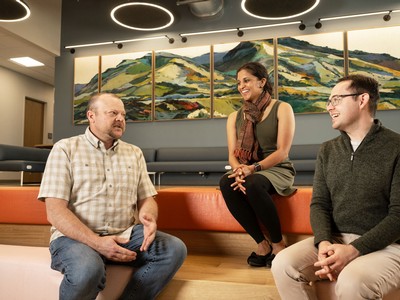
From left, Justin Jones, Elizabeth Vargis and Dillon Weatherston.
WRITER
Libbie Anderson
Public Relations Specialist
College of Engineering
435-797-8361
libbie.anderson@usu.edu
CONTACT
Elizabeth Vargis
Biological Engineering
Associate Professor
435-797-0618
elizabeth.vargis@usu.edu
TOPICS
Research 1181stories Health 395stories STEM 352stories Alzheimer's Disease 42stories Biotechnology 36storiesSHARE
Comments and questions regarding this article may be directed to the contact person listed on this page.