NSF SHINE Award Supports AI-Powered Research to Better Predict Extreme Solar Activity
By Madeline Buskirk |
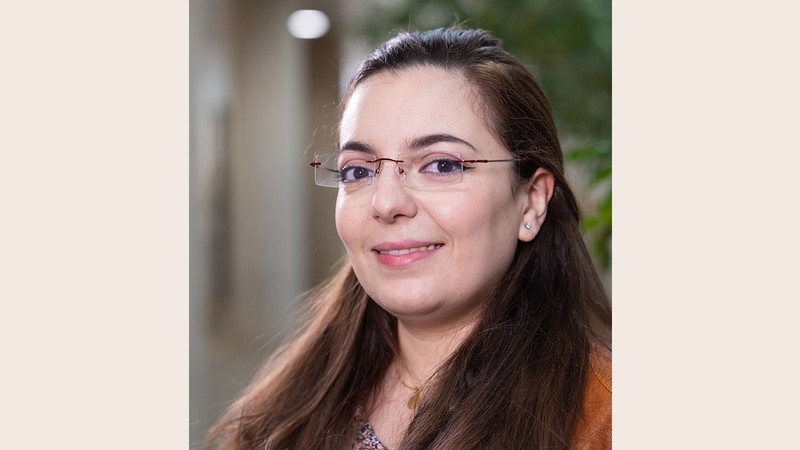
Soukaina Filali Boubrahimi.
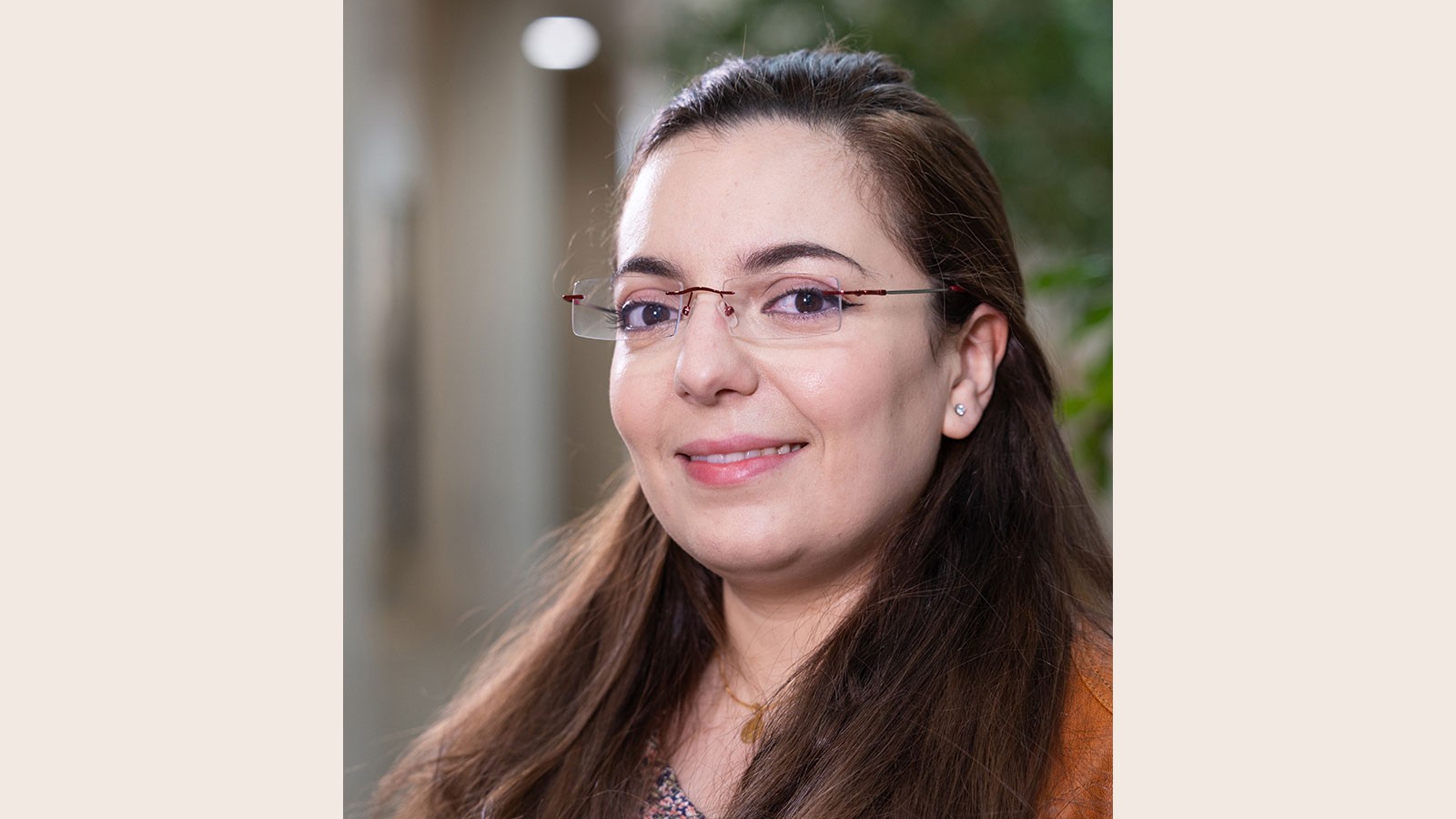
The National Science Foundation has awarded the SHINE (Solar, Heliospheric, and INterplanetary Environment) award to Soukaina Filali Boubrahimi, an associate professor at the School of Computing.
This three-year grant of nearly $600,000 will support new research focused on improving the prediction of dangerous solar radiation storms, known as solar energetic particle events, using artificial intelligence and advanced data science techniques.
“By leveraging multimodal machine learning, this award will support the development of more accurate and interpretable forecasts of solar energetic particle events, helping bridge the gap between cutting-edge AI and real-world space weather operations,” Filali Boubrahimi said.
These solar events occur when the sun releases bursts of high-energy particles into space, potentially disrupting satellites, GPS and navigation systems, radio communications, and power infrastructure, while also posing risks to astronauts during space missions. Because these events are complex and difficult to predict, Filali Boubrahimi is working to better understand the warning signs and solar conditions that occur before they happen.
“This project ultimately seeks to improve our ability to understand and mitigate the impacts of extreme solar activity on modern technological infrastructure,” Filali Boubrahimi added.
The research will analyze data collected over the past two solar cycles from several major space missions and observatories, including NASA’s Solar Dynamics Observatory, the Solar and Heliospheric Observatory, Wind, Geostationary Operational Environmental Satellites and the Advanced Composition Explorer. These instruments continuously monitor the sun and the space environment around Earth.
Filali Boubrahimi will combine multiple types of solar data — including images of the sun, measurements of solar magnetic activity, solar wind conditions and energetic particle observations — into one large, organized database. By studying this information together, she hopes to identify patterns that signal when a solar energetic particle event may be about to occur.
She will then develop advanced artificial intelligence models that can learn from these patterns and improve forecasting accuracy. Some models will examine the “big picture” across all available data, while others will focus on specific types of observations to detect smaller but important clues. Together, these systems will analyze solar activity from multiple perspectives.
In addition to predicting solar energetic particle events, the project will investigate how these solar particles are accelerated and travel through space after an eruption occurs. Machine-learning tools will help group similar events together and improve understanding of the physical processes that drive the most dangerous radiation storms.
The final forecasting system will be made publicly available through the Community Coordinated Modeling Center, helping researchers, government agencies and space weather forecasters improve monitoring and preparedness efforts.
Beyond its scientific goals, the research will also support student training by incorporating real-world space weather data and artificial intelligence methods into data science coursework. Students will gain hands-on experience working with large scientific datasets and modern analytical tools that are increasingly important across science and technology fields.
Filali Boubrahimi has received more than $2.3 million in research funding from the National Science Foundation over the past four years, serving as both a principal investigator and co-principal investigator.
The National Science Foundation was established by Congress in 1950 to promote the progress of science, advance national health, prosperity and welfare, and secure national defense. It supports science and engineering research across all 50 states and U.S. territories.
The SHINE program supports about $3 million in research awards each year to study how the sun produces and sends energy and particles through space toward Earth. Its goal is to improve understanding and prediction of space weather by bringing scientists together to collaborate on these questions.
WRITER
Madeline Buskirk
Public Relations Specialist
College of Engineering
madeline.buskirk@usu.edu
CONTACT
Soukaina Filali Boubrahimi
Assistant Professor
Department of Computer Science
(435)797-1020
soukaina.boubrahimi@usu.edu
TOPICS
Engineering 419stories STEM 352stories Grants 284stories Space 173stories Artificial Intelligence 43storiesSHARE
Comments and questions regarding this article may be directed to the contact person listed on this page.