Student Spotlight: Izzy Wappett on Parallels Between Conservation and Community
By Lael Gilbert |
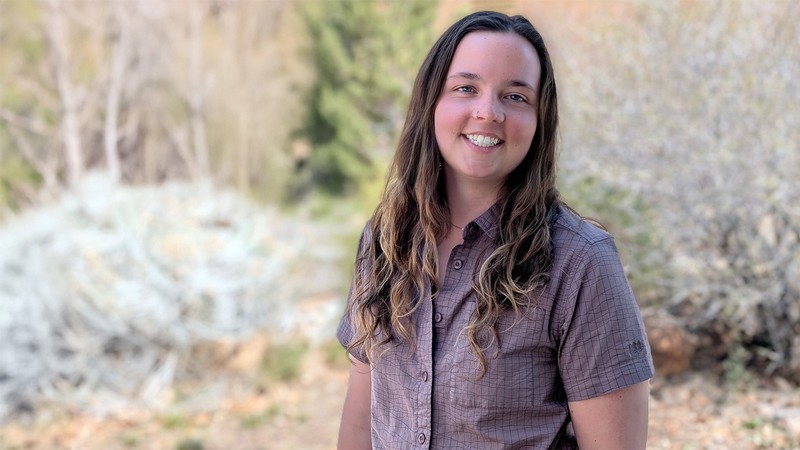
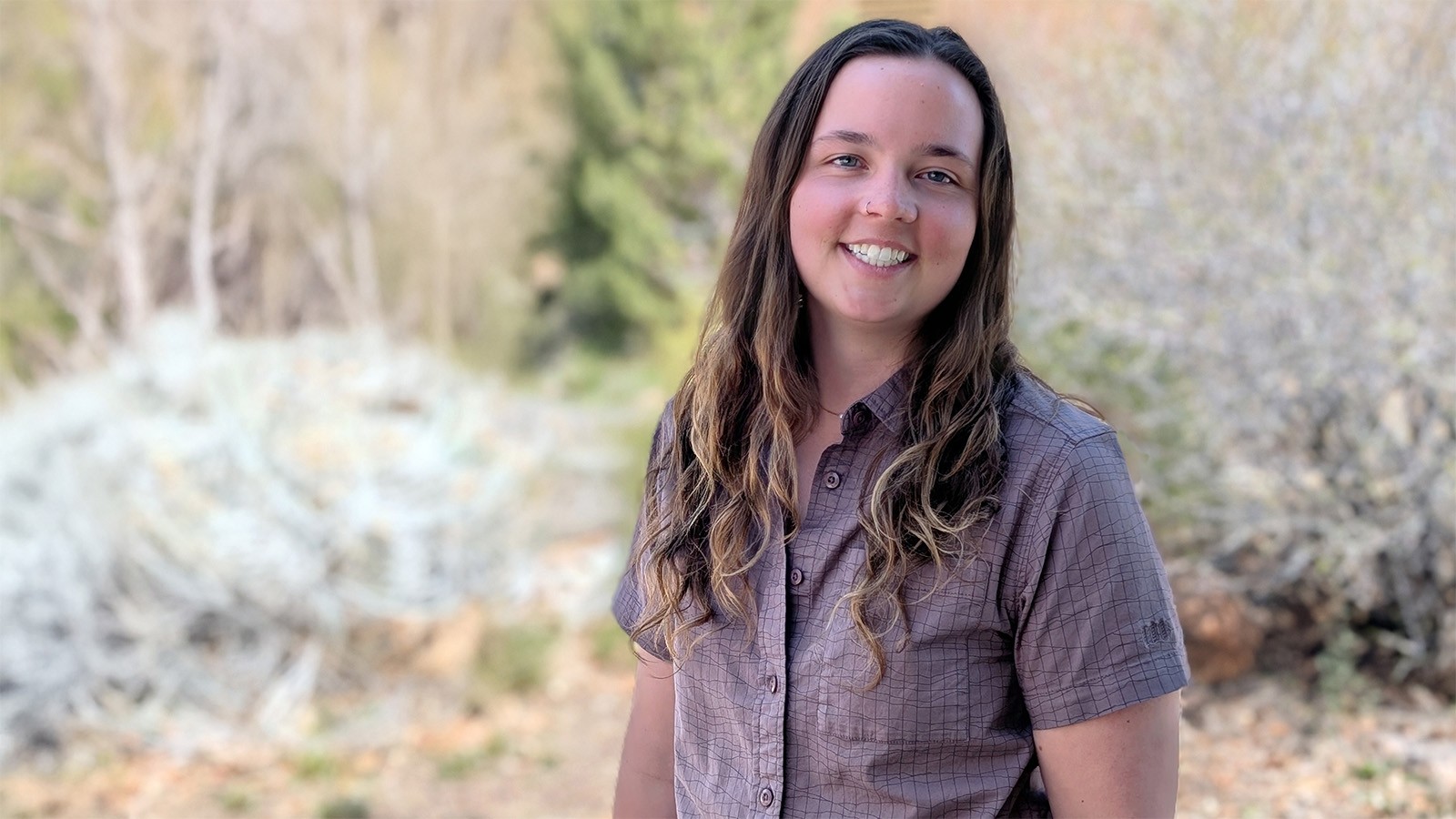
Four years ago, the fates were well aligned for Izzy Wappett to choose a major in the Quinney College of Natural Resources.
She’d been warming up for outdoor adventure by climbing the cliffs of Logan Canyon and running rivers like the Snake and Green. She was offered the prestigious Quinney Scholarship. Her family had a strong and affectionate history with the college.
But Wappett planned to go to medical school, and she assumed a typical pre-med path meant a major like biology, chemistry or nutrition.
After asking around she realized something — the complex world of medicine doesn’t have to begin with a singular focus on anatomy or human biology. Nor should it, necessarily. She could enrich her perspective of human health by developing an understanding of the world where humans live.
“The more I heard about the QCNR community and academic opportunities, the more I wanted to be a part of it,” said Wappett, who is this year’s QCNR valedictorian.
Once she was academically committed, she blitzed into the wider community. She joined the QCNR Student Council and the American Fisheries Society. She attended the annual Logger’s Ball and events like the QCNR Camp, a student orientation and skill-building event in Logan Canyon. She also worked as a trip leader in Outdoor Programs.
“It was so fun to connect, to find my people, to learn from experts and share space that way,” she said. “It has such an incredible sense of belonging here. My expectations of the college started high, and have only gone up from there.”
Majoring in Fisheries and Aquatic Sciences gave Wappett valuable perspective and a deeper understanding of how the world works, she said. Instructors taught skills that she could apply to make ecosystems healthier. Wappett found a treasure trove of parallels between principles of ecosystem restoration and healing the wider world.
“There is so much interconnection between the ideas,” she said. “A healthy riverscape needs to be diverse, it needs to have solid structural integrity that can support natural variation. It needs to follow a natural course — if there is too much interference, that can limit the growth and function of the river. A lot of that is the same for individuals, groups and societies.”
She also learned how to think critically and process complex information that didn’t have black-and-white answers, she said. She learned how to learn.
Working as a peer adviser and teaching assistant for the last two years also taught her that her way of learning was only one among diverse options.
“What works best for me is not necessarily the same for the next student. People learn in lots of different ways and need different resources,” she said. “Everyone thinks in their own way, and that is OK. We can make space for that.”
Meanwhile, a lot of time and effort went into her own homework — the challenging classes in QCNR and prerequisites for medical school — to earn top grades. But through all of it she’s come to love the teaching and learning process, she said.
“I’ve figured out that I really love helping other people,” she said, a good thing for a prospective medical professional to know.
After graduation this spring, Wappett will be traveling across the country supporting crews of wildland firefighters with emergency medical support during the summer season. After that, of course, comes the adventure of applying to medical schools. She’s well prepared, she believes, thanks to a chance to gain a wider perspective about what healthy environments look like, knowing more about her own strengths, and refining her passion for making the world a better place.
WRITER
Lael Gilbert
Public Relations Specialist
S.J. and Jessie E. Quinney College of Agriculture & Natural Resources
435-797-8455
lael.gilbert@usu.edu
SHARE
Comments and questions regarding this article may be directed to the contact person listed on this page.