USU Professor Authors Book About Bad Movies

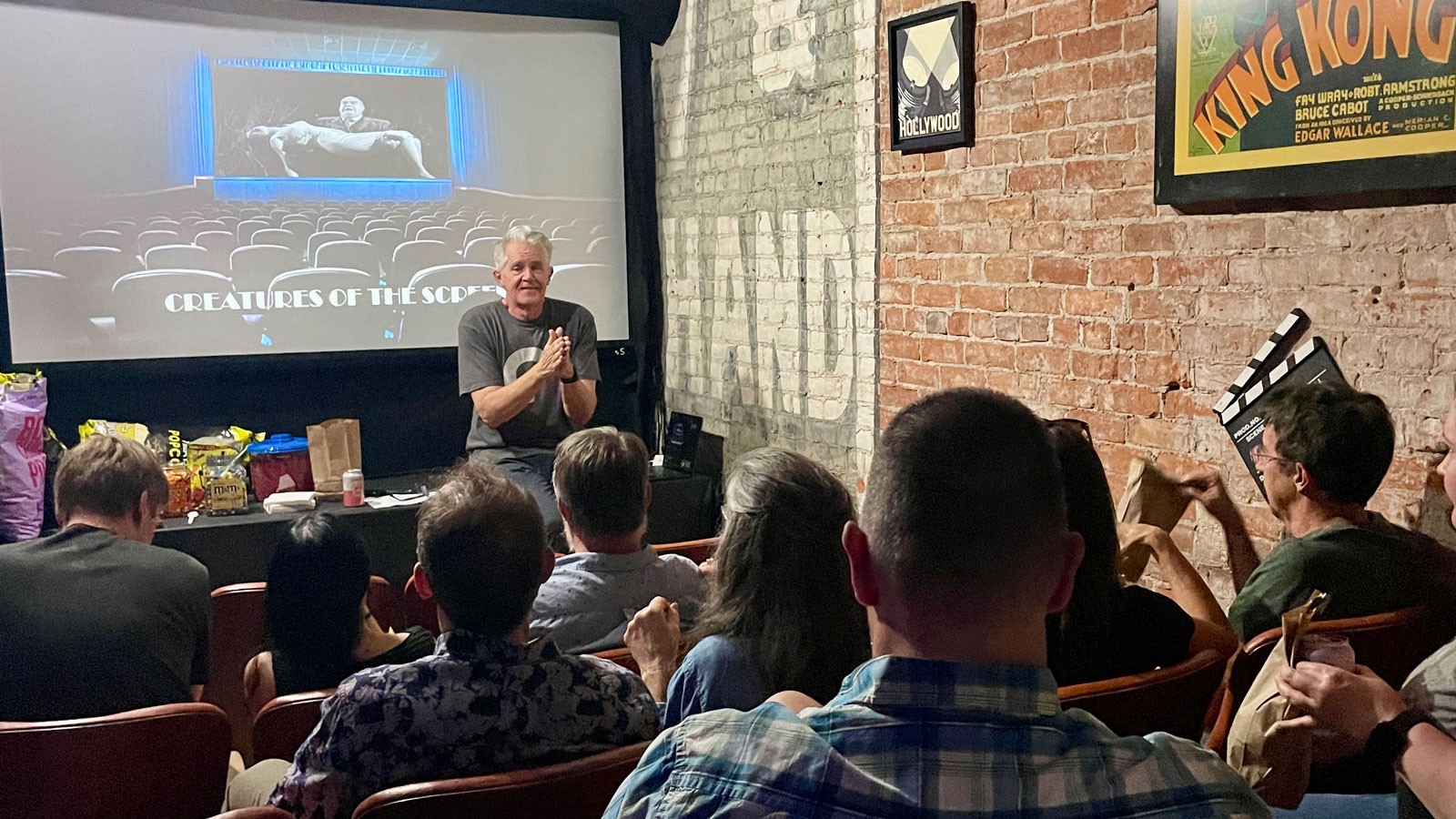
Professor David Wall addresses an audience during a book launch in Ogden on Sept. 6, 2025.
LOGAN — For many, going to the movies between Christmas and New Year’s has become a tradition.
Cold temperatures, combined with shorter days and extra time over the holidays, may have helped pull in the largest Christmas Day box office totals since 2020, more than $68 million in ticket sales on Dec. 25, 2025. And while the latest installment in the “Avatar” series took the top spot, it was not included in the latest round of best picture nominations.
Beyond ticket numbers and Oscar nods, one professor at Utah State University argues that whether a movie is considered good or bad has as much to do with one’s own experiences and a lot less to do with what the movie industry intended.
“I have been teaching film studies for quite a long time and would always begin each new class with a general icebreaker question, asking people to talk about a film that they really like or really hate and why,” said David Wall, USU professor of film and visual studies. “Over the years, I noticed that people were much more enthusiastic and animated talking about films they thought were terrible than those they thought were good.”
His students’ fascination with bad movies helped inspire Wall’s latest project, “Exploring Film Through Bad Cinema,” published by Routledge in fall 2025.
In the book, Wall focuses on the active role that audiences play in shaping the meaning and reception of “bad” films and believes that studying this can bridge popular enjoyment with scholarly analysis. And while the book does not directly address any of the potentially “bad” movies that helped break box office records last month — not even “Anaconda” (2025), which is currently scoring 48% on Rotten Tomatoes — Wall asserts that even poorly received or disreputable films can reveal important insights about culture as well as cinema.
“The evolution of the so-bad-it’s-good way of looking at film has a very interesting history,” he said. “In looking at the appeal of bad film, we see how audiences themselves — whether in theaters or at home, or in online communities — help shape the reception and meaning of these texts.”
On the heels of last week’s list of Academy Award nominees, one may be asking how to truly know if a movie is good or bad. For starters, Wall suggests moving beyond subjective opinions to consider things such as poor technical or formal qualities, like bad acting, clunky dialogue or inept special effects. But Wall says that, inevitably, much of what a person likes or dislikes about a film is informed by one’s own values.
Viewers may label a movie as bad for a variety of reasons, ranging from political or moral objections to feeling like a film’s tone was off — an independent movie that doesn’t feel original, or a comedy that the viewer doesn’t find funny.
“These things often connect to how we feel about the world in moral or political terms and are themselves rooted in cultural discourses beyond the individual. … In that sense, it is a book about cultural value that focuses on film as a way of reading the broader culture,” he said.
Wall oversees the Film Studies minor at USU — a program that has grown in popularity and includes the FILM 3360: Bad Cinema course.
“The class came first,” said Wall, explaining that the book is in conversation with concepts he’s uncovered over the years of teaching film and talking about movies with his students.
“It occurred to me that that might be really interesting way of doing film studies — to essentially teach film studies by analyzing bad films, to think about what goes wrong as a way of thinking about what goes right,” Wall said. “Instead of discussing, for instance, what makes ‘Citizen Kane’ one of the greatest films ever made, we discuss what makes ‘Plan 9 From Outer Space’ one of the worst.”
While there are many films covered in Wall’s book that are not addressed in the course and vice versa — in part, because the view of what defines “bad” cinema is constantly changing — “the goal of both is to encourage folks to enjoyably engage with film from a critically informed perspective.”
And that perspective, Wall says, is more relevant than ever in an increasingly visual world.
“Film studies is a discipline and field of study that develops a broad range of critical thinking skills, especially in terms of media literacy and visual literacy — all highly valued and extremely transferable,” he said. “In critically assessing why a film like Tommy Wiseau’s ‘The Room’ is bad, you will need to objectively approach the text, engage with multiple sources, understand registers of value beyond the film, and be able to articulate the way the film is structured.”
“That,” he said, “is teaching you how to read, question and interpret the visual media in an informed way, so that you can understand and explain it.”
As audiences settle into their living rooms or local theatres this winter, Wall hopes viewers might look at maligned films a little differently — not just as movie failures, but as opportunities to better understand how films work and why they matter. The question, in Wall’s view, isn’t whether a movie is good or bad, but what it reveals about the people watching it and the culture that produces it. And sometimes, the worst movies make for the best conversations.
Comments and questions regarding this article may be directed to the contact person listed on this page.