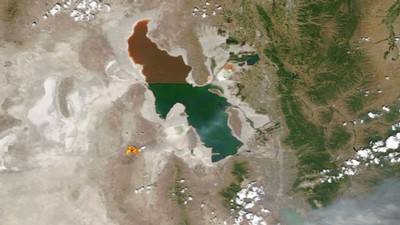
USU Research Helps Reduce Risk of Catastrophic Lake Powell, Lake Mead Levels
By Libbie Anderson |
As reservoir levels across the Western U.S. reach historic lows, the U.S. Bureau of Reclamation concluded a multi-year effort to develop new operations for Lake Powell and Lake Mead. As part of that multi-year effort, Reclamation requested public input.
In response, Utah State University researchers and students, along with University of California researchers, contributed four strategies to reduce the risk of Lake Powell and Lake Mead reaching catastrophic elevations.
Define Catastrophic Elevations and Communicate Buffers
One strategy was to define catastrophic elevations for Lake Powell and Lake Mead where the reservoirs no longer fulfill one or more of their purposes to deliver water, generate hydropower or protect critical infrastructure. This strategy also identified the need to communicate buffer margins that mitigate risk that the volatile Colorado River flow will draw down the reservoirs to catastrophic elevations.
“It was unclear how low Lake Powell and Lake Mead would go,” said Brittany Fager, a USU civil and environmental engineering doctoral student. “Maintaining a buffer volume benefits everyone because the dams can continue to generate hydropower and operate within their design criteria year after year.”
Reclamation’s new plan establishes buffer volumes to protect hydropower generation at both dams.
Responsiveness to Inflow
Another strategy was to manage river flow and reservoir inflow.
“Low flow was not an issue 25 years ago when Lake Powell and Lake Mead were mostly full,” said David Rosenberg, a USU civil and environmental engineering professor with a joint appointment at the Utah Water Research Lab. “Responding to river flow is critical when we have low reservoir storage and low inflow, and that's the issue in front of us right now.”
Moving to Two-Year Operating Plans
Fager and colleagues submitted another strategy that suggested moving the proposed 20-year operating horizon to shorter increments. This allows experimentation, monitoring, and updating releases for the new conditions of low reservoir storage and flow.
“We need the flexibility to adjust as we see the effects of experimental operations and forecasts of future flow,” Fager said. “Updating plans every two years will better allow responses to changing conditions.”
Moving to Monthly Releases
Fager and colleagues also shared another strategy to move to more frequent reservoir release decisions. Current practices set annual releases for Lake Powell in the fall and a possible update in the spring as snow melts. More frequent release decisions give earlier, smaller and smoother adjustments. They also reduce risk when actual river flow is less than forecasted flow.
“If you're operating with reservoirs at such low levels, rapidly changing conditions can crash the system before you get the chance to change reservoir releases,” Fager said. “This strategy provides more opportunities to protect the system.”
Student Impact
USU engineering students in Rosenberg’s river basin management course also contributed public input.
"It was just tremendous to have this level of involvement from students that were less than a year into a Ph.D. program and nine weeks into a semester course,” Rosenberg said. "No one really had any experience with Colorado River or river basin management, so for them to get up to speed that quickly is really cool.”
The project is supported by the Cooperative Institute for Research to Operations in Hydrology with funding from the National Oceanic and Atmospheric Administration. The team's public input is available free on USU Digital Commons here and here.
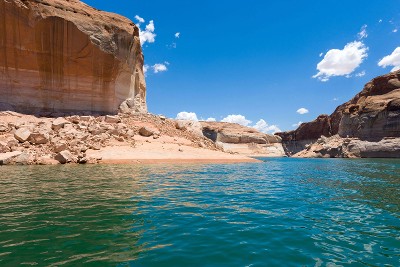
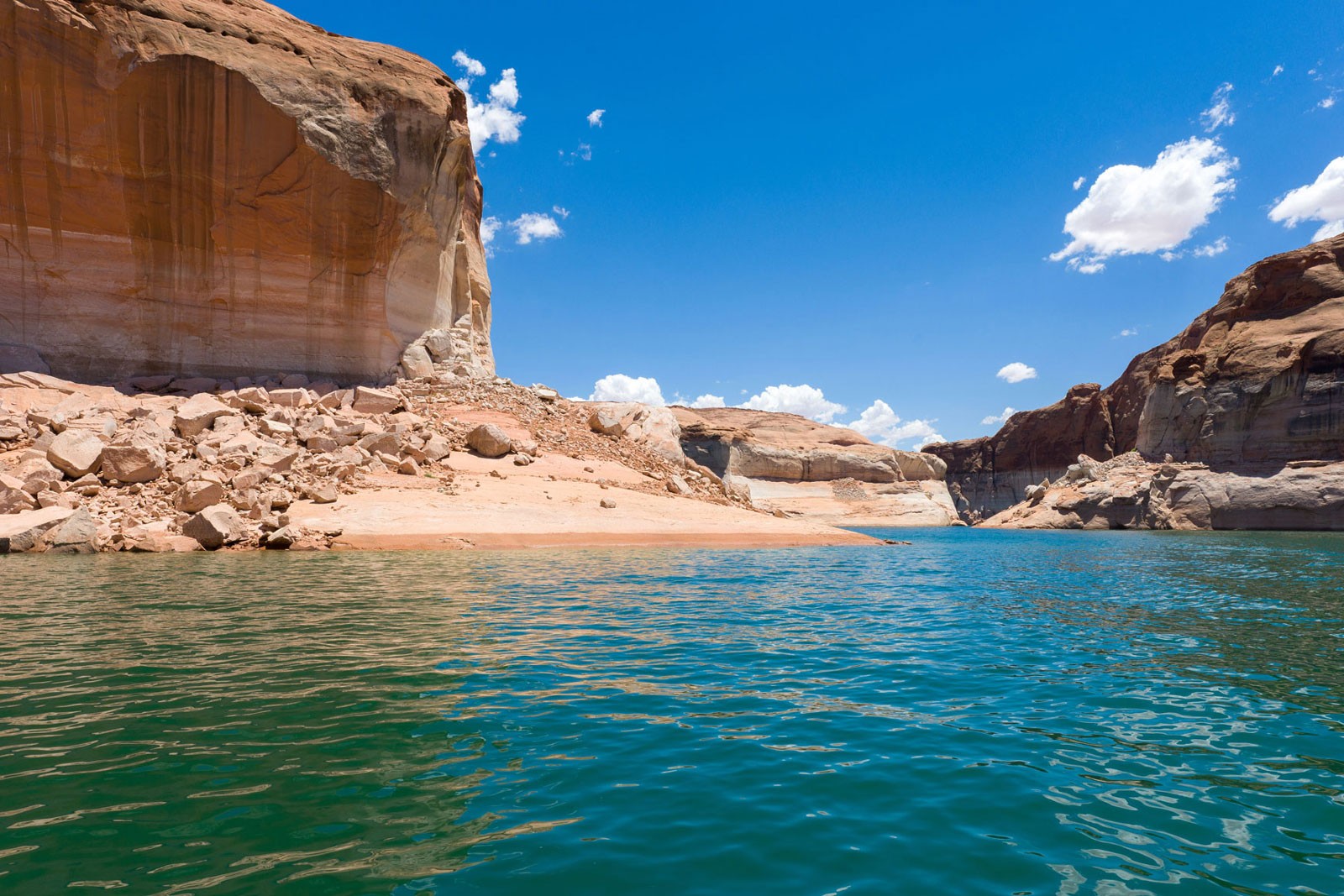
Lake Powell as seen in a file photo. Utah State University researchers and students contributed strategies to reduce the risk of Lake Powell and Lake Mead reaching catastrophic elevations.
WRITER
Libbie Anderson
Public Relations Specialist
College of Engineering
435-797-8361
libbie.anderson@usu.edu
CONTACT
David Rosenberg
Professor
Civil and Environmental Engineering
435-797-8689
david.rosenberg@usu.edu
TOPICS
Research 1184stories Engineering 422stories Water 349stories Land Management 178stories Conservation 101storiesSHARE
Comments and questions regarding this article may be directed to the contact person listed on this page.