
Utah Students Explore STEM Through Space Camp Adventures
Students across Utah pulled on astronaut suits and vests as they prepared for a simulated journey to space. STAR Camp was hosted at various USU STARS GEAR UP partner schools, starting in Sanpete County and ending in Logan, for eighth and ninth-grade students. The camps were hosted by the Douglas Space and Science Foundation, a Utah non-profit working to bring STEM education to more students, partnered with USU STARS GEAR UP for a week of day camps.
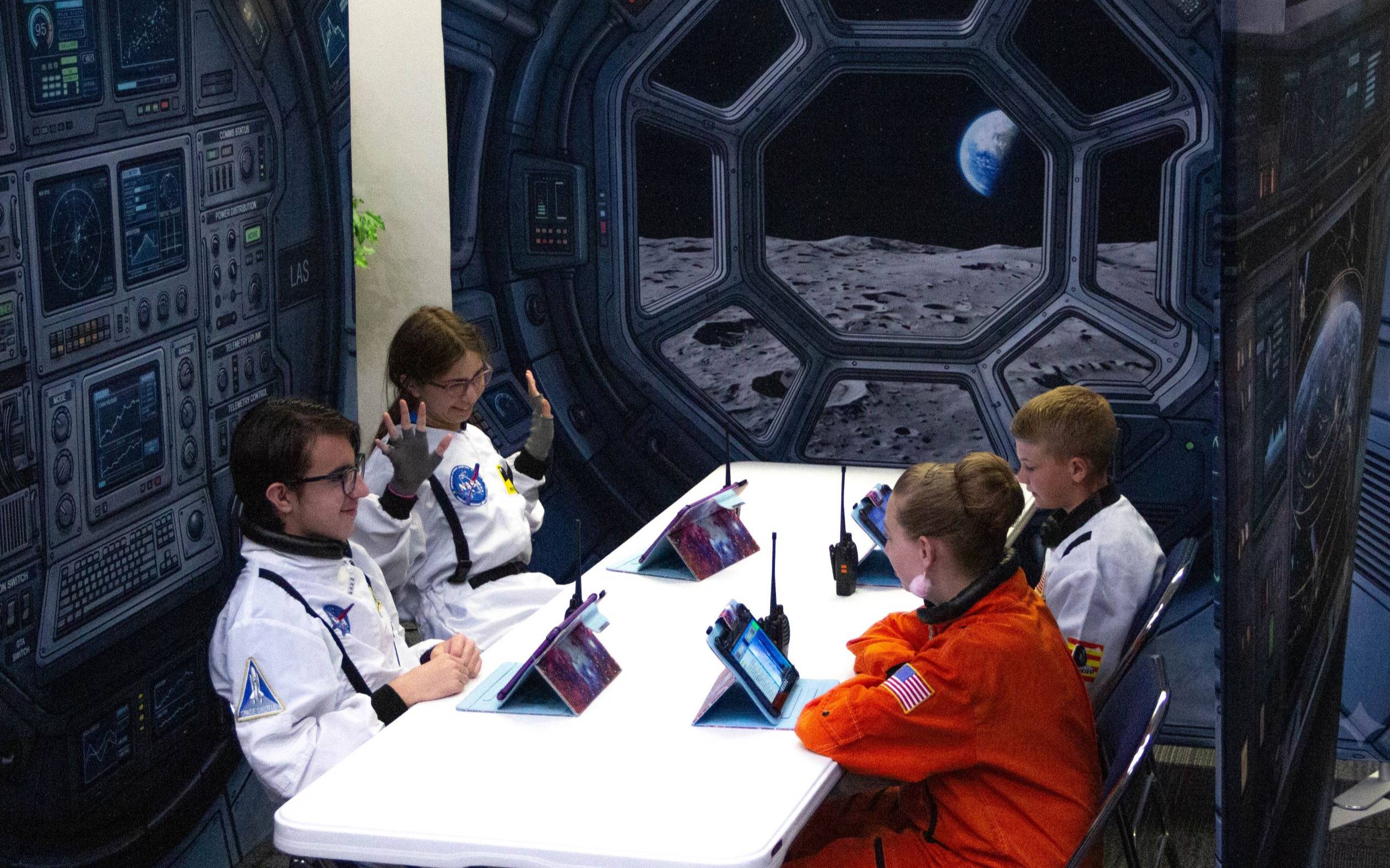
Students midway through their mission
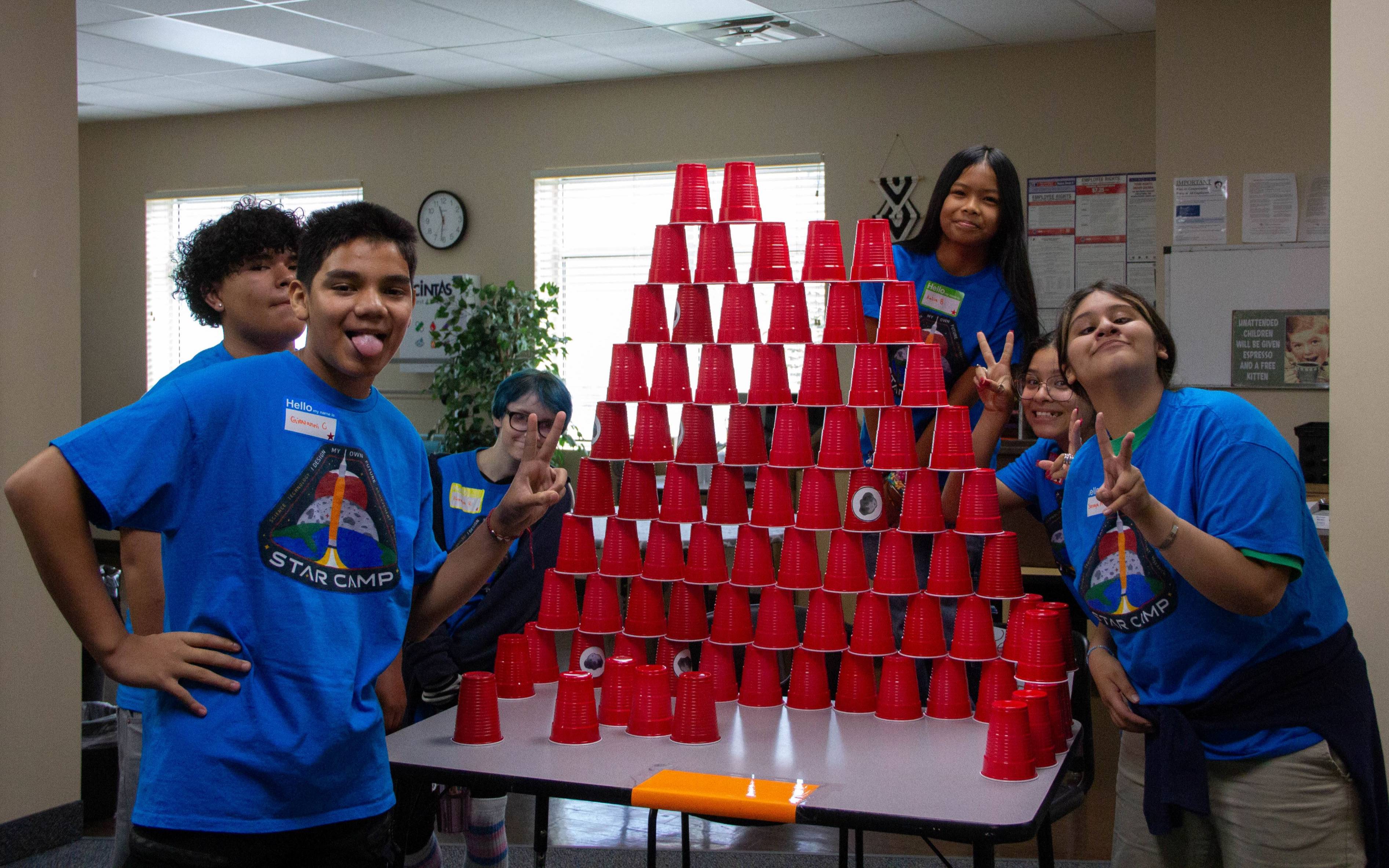
Working together to build a tower
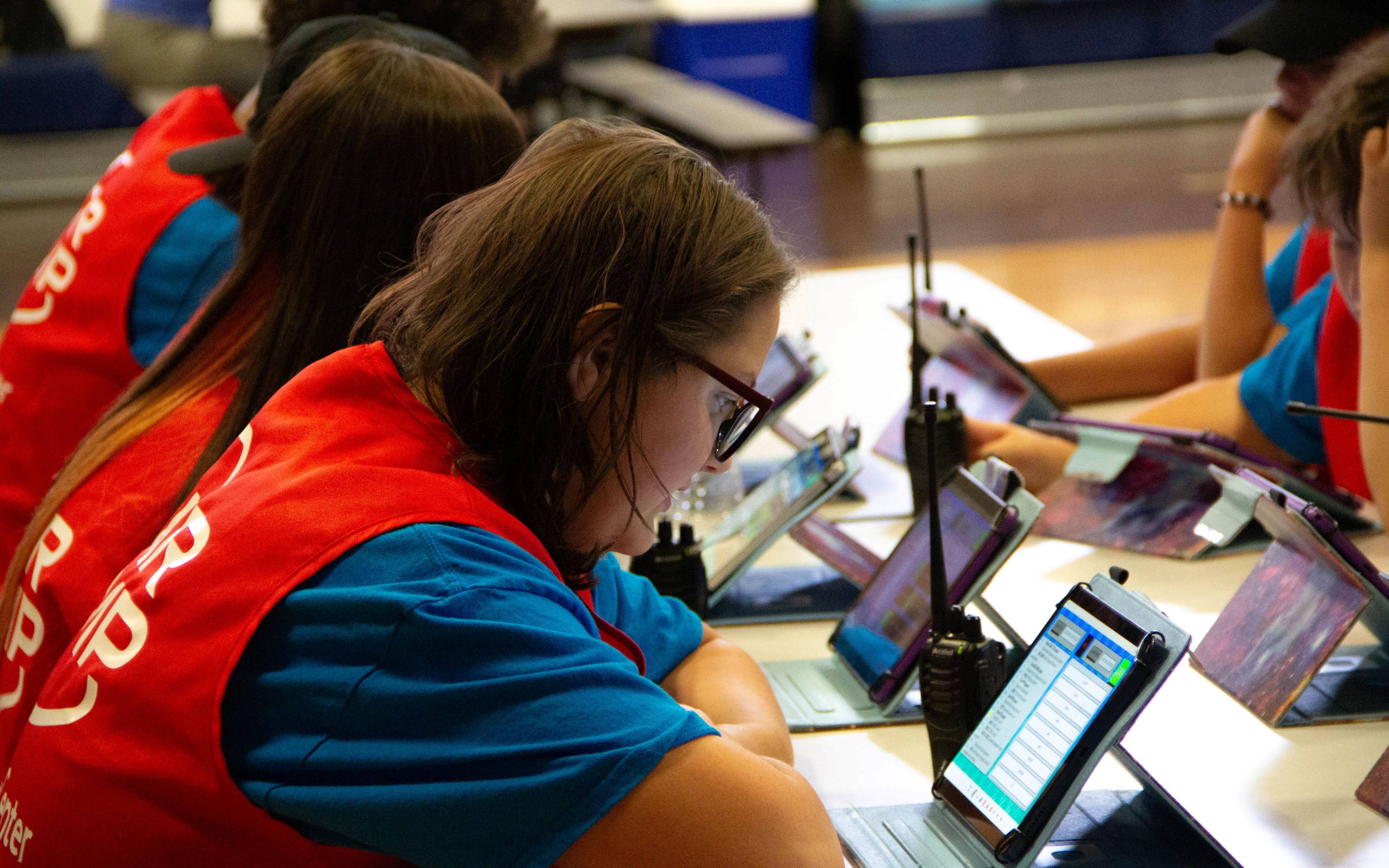
A successful simulated capsule launch!
Through a range of activities, students gained a deeper understanding of what it takes to be both an astronaut and a leader while exploring the possibilities of STEM careers. Students said they learned leadership, teamwork, communication, and how to work with different types of people.
During an activity called “Engineering a Team,” students were challenged to build a tower using plastic cups. The catch was that they could only move the cups using one finger. While some groups built a traditional pyramid-style tower, others experimented with a circular design. Throughout the challenge, students strengthened their leadership muscles by assigning roles, encouraging one another after setbacks, and learning from mistakes.
“It was so fun to see the students get out of their shells,” said Sophie Davies, GEAR UP program assistant.
Students launched rockets through a golf course made from hula hoops. They tracked on a score sheet how many attempts it took to launch the rocket to the target. At the end of the camp, the student with the fewest attempts won a button.
“All of the hands-on and interactive activities were great,” one student participant commented.
One of the highlights of the day was astronaut training camp. Before taking their missions into space, the participants trained like astronauts by completing physical and mental challenges. One of the “stress tests” involved students solving math problems with a calculator. Space Camp staff later amplified the stress by encouraging them to work faster. An additional puzzle increased the difficulty, teaching students that astronauts must remain focused and adaptable under pressure.
“I like that leaders mixed fun with learning,” a student said about the activity.
The next activity, a simulated space mission, quickly became a camp favorite. Students were divided into teams, with one group acting as astronauts and the others serving as mission and operations control. Using tablets and walkie-talkies, students carried out their assigned roles, which included monitoring gauges, assessing weather conditions, and identifying safe landing locations. Working as a team, the groups successfully launched their capsule in 15 minutes.
“It was cool for students to get experiences with technology and work together,” Davies said.
After completing their missions, students designed space capsules using a 3D-printed pen. They drew out all four walls, a functioning door, and a heat shield. The goal of the activity was to create a strong capsule that an astronaut could survive in. The simulated astronaut in this activity was a fragile potato chip. Camp staff evaluated each design by dropping the capsules onto the ground, testing their strength. Several capsules survived multiple rounds of the rigorous test.
Students gained hands-on experience in computer programming when they learned to code Sphere-O robots to simulate Mars rovers. After writing code, students guided the robot through an obstacle course they set up. For additional fun, some of the spheres made animal noises. “I loved meeting new people and getting to do fun activities,” a student said.