
Summer 2025 Newsletter
The purpose of our mid-year newsletter is to inform stakeholders about our team's recent work and accomplishments. We produce an annual report in November of each year that comprehensively documents our research results, funding, and plans for the coming year. This newsletter provides a preview to the upcoming annual report and a less formal look at our team's goings-on. The purpose of all this is to get you involved in our work. If you have questions or suggestions, please reach out!
Team News
Dr. Colleen Jones Joins the BYU Chemistry Department as Visiting Faculty to Advance NSF-Funded Mercury Research
The Bingham Research Center is proud to share that Dr. Colleen Jones has accepted a visiting faculty position in the Department of Chemistry at Brigham Young University (BYU) as part of a National Science Foundation–funded collaboration entitled Verification of Atmospheric Mercury Redox Rates. Dr. Jones will continue her position at the Bingham Center in the fall.
This project seeks to address critical gaps in our understanding of mercury chemistry in the atmosphere, particularly the redox reactions that control mercury's transformation and transport. As part of the initiative, researchers will design and construct a 30-cubic-meter atmospheric simulation chamber to experimentally verify key chemical processes.
These measurements are especially important because many current atmospheric mercury models rely on reaction rates that are based largely on assumptions rather than direct observation. The data generated through this work will provide essential input to improve the accuracy of these models, which are used to inform environmental policy and assess public health risks.
Dr. Jones is excited to represent the Bingham Research Center in this collaborative effort and to contribute to the development of more robust, evidence-based models for atmospheric mercury cycling.
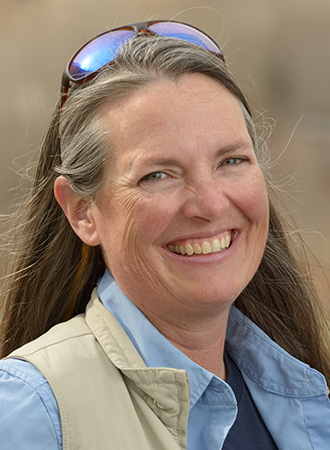
Seth Lyman, Director of the Bingham Research Center at Utah State University, Named as the Newest Member of the Utah Air Quality Board
Dr. Lyman, a Research Professor in the Department of Chemistry and Biochemistry at USU Uintah Basin and the Director of the Bingham Research Center, will serve on the board for four years. The appointment was made official on April 15 by members of the Utah Legislature.
"I'm honored to have been selected to serve on the Utah Air Quality Board," Lyman said. "It's a big responsibility. I love living in the state of Utah, and I'm grateful to be able to give back to the state by serving in this way."
The Utah Air Quality Board enacts rules pertaining to Air Quality activities and develops State Implementation Plans to attain and maintain National Ambient Air Quality Standards. Because of this statutory authority, the Board is the primary air quality policymaker for the State of Utah.

Senator John Curtis Visits the Vernal USU Campus
On April 24, Senator John Curtis visited the Bingham Research Center in Vernal at the USU Uintah Basin Campus. Many of our staff and student employees, along with Uintah Basin Campus Associate Vice President Dr. David Law, met with the Senator to tour our research laboratory and answer questions about the work of the Center.
Senator Curtis was particularly interested in work done by the Bingham Center to understand the environmental impacts of oil and gas development in our region. This was an opportune chance to meet with the Senator personally to showcase the important work conducted by our team members.

Photo credit: Senator Curtis Instagram (@senjohncurtis)
Congratulations to:
- Loknath Dhar recently completed his comprehensive examinations to advance to candidacy for a PhD in Chemistry.
- Justin Allred recently completed his comprehensive examinations to advance to candidacy for a PhD in Soil Science.
- Our high school employees, Elspeth Montague and Tristan Coxson, graduated from Uintah High School on May 23.
- Luke Nielson and Myka Hansen are our new high school employees who will work for the Bingham Research Center and continue attending Uintah High School.

Luke Nielson

Myka Hansen
Winter Ozone Update
The Uinta Basin is one of only two areas in the world that experiences winter ozone. Ozone negatively impacts respiratory health, especially for those who have asthma, COPD or other breathing issues. Young children and older adults are particularly susceptible to its effects.
The Environmental Protection Agency sets the upward limit of 70 ppb for ozone in ambient air. Measurements in excess are in violation and can result in fines and stricter standards. At regulatory monitoring stations during the 2024-2025 winter, the Uinta Basin had zero days of ozone that exceeded the EPA standard. However, because of previous years when ozone exceeded the EPA standard, portions of Uintah and Duchesne counties are designated as moderate non-attainment areas.

Figure: Daily 8-hour average ozone concentrations from December 15, 2024 through March 15, 2025 at seven monitoring stations across the Uinta Basin. The red dashed line shows the EPA National Ambient Air Quality Standard of 70 ppb. All measurements remained below the standard throughout the winter season.
Dr. John Lawson has developed Clyfar, our in-house forecasting model, which is an innovative machine-learning system to predict winter ozone before it occurs. The Center uses an ozone alert program to notify oil and gas companies when ozone is projected to develop in the Basin. The industry can take decisive action to reduce ozone-forming emissions before they reach non-attainment levels.

Since 2010, the Bingham Research Center has worked with stakeholders in government, industry, and environmental organizations to research and resolve this critical issue.
Tracking Trends in Pollutant Emissions
We are engaged in several projects to track trends in air quality and pollutant emissions across the Uinta Basin. The most basic of these is our ongoing work to track changes in ambient concentrations of ozone, NOX, and organic compounds, using data collected from our research stations and regulatory monitoring stations across the Basin. These data show that, given the same meteorological conditions, less wintertime ozone is formed now than would have formed 10 to 15 years ago. This is because emissions of NOX and organic compounds, which are precursors to ozone, have both declined over that time period.
Two oil and gas companies have given us aerial methane survey data, and we have analyzed those data to determine the most common sources of methane emissions, total emission rates, and the frequency of emissions detections per well site. We would like to obtain data from additional companies before we share those findings publicly.
We have also been using a method developed at Harvard University called the Integrated Methane Inversion (IMI). The method uses methane data from the TROPOMI satellite instrument, which is available daily for the Uinta Basin. A 3D photochemical model, GEOS-Chem, is used to determine an initial prediction of ambient methane in the Basin. GEOS-Chem is then run as an "inversion" to determine the amount of methane emissions in the Basin required to achieve the methane measured by TROPOMI. In other words, the method checks whether GEOS-Chem measured the same ambient methane as TROPOMI, and then it adjusts the determination of methane emissions if needed. The figure shows results from 2019 (the first year for which TROPOMI data are available) to 2023.

Figure: Annual average methane emissions in Uintah and Duchesne counties from 2019 through 2023. Emissions were estimated using the Integrated Methane Inversion method. Combined oil and gas production, in units of millions of barrels of oil equivalent, are also shown.
Drone-based Methane Emissions Detection
Traditional methods for measuring methane emissions often involve ground-based techniques that can be time-consuming, limited in spatial coverage, and may not provide real-time data. Additionally, ground-based measurements can miss emissions from hard-to-reach areas, such as remote pipelines and large pieces of equipment or tanks. Drones equipped with advanced sensors and imaging technology offer a promising solution to overcome the limitations of traditional methods.
We are building and testing a drone-based methane emissions measurement system. Two undergraduate students at USU Eastern's drone program have assisted with this project. We have successfully coded a Raspberry Pi with Python to collect data from a Sensit real-time methane analyzer mounted on the drone. We have also designed and 3D-printed a holding column for meteorological instrumentation on the drone and have completed flights practicing appropriate flight patterns. Getting the data to streamline and display visually on an Android tablet is the next phase of our project.

Figure: Test flight of the methane emissions drone.
New Air Quality Website
The UBAIR (air quality) website (ubair.usu.edu) provides current observations and archived time series for relevant weather variables. There has been a long-standing desire to move to a website based on modern packages and with more accessible and interactive data on forecasts and observations. This includes archived text from Ozone Alert emails. More frequent (but less essential) information on forecasts will be placed on the site for those users seeking deeper information. This avoids weighing down email alerts with complex information that most people find as overkill.
Our new site, working in prototype and ready to go onto cloud servers, embraces these new features:
- Interactive map based on Leaflet application technology, with zoom/pan and clickable icons for air-quality values at the monitoring stations
- Time series and heatmaps of forecasts from the CLYFAR model
- Time series of observed meteorology and air-quality conditions
- Archived text from previous Ozone Alert emails
- Further discussion on Ozone Alert matters deemed less essential for the email
- Links to webcams, contact forms, and other experimental products in the future
The website development is assisted by three students, whose training in web development benefits not just their career progression but also our team's development of this new site. Unfortunately, due to firewall and security limitations on university computers, the site was not operational in the 2024/2025 season, and we anticipate a move to Akamai, a cloud server.
Keep in Touch
- Come by our offices at 320 N Aggie Blvd, Vernal, or contact us electronically.
- If you would like to keep up to date about what's going on with Uinta Basin air quality, consider joining the Uinta Basin Ozone Working Group.
- Find us at our booth at the Uinta Basin Energy Summit in September.