
Stable Isotopes and Orographic Rainout in the Uinta Basin
We are testing whether the mountains around the Uinta Basin leave a chemical fingerprint in the rain and snow that reaches the Basin floor. When air rises over a mountain range, water containing the heavier forms (isotopes) of oxygen and hydrogen falls out first, so the moisture that crosses the range is left lighter. The Basin sits downwind of the Wasatch Range during westerly storms and downwind of the Uinta Mountains during northerly storms. We will collect rain and snow on both sides of both ranges and measure their isotopes. This builds on our earlier finding that the Basin floor sits in a snow shadow, and snow cover is one of the main ingredients for high winter ozone.
Michael Davies, Benjamin Burger and John Lawson
Project End: Fall 2027
Funding: USU Quinney College of Agriculture and Natural Resources
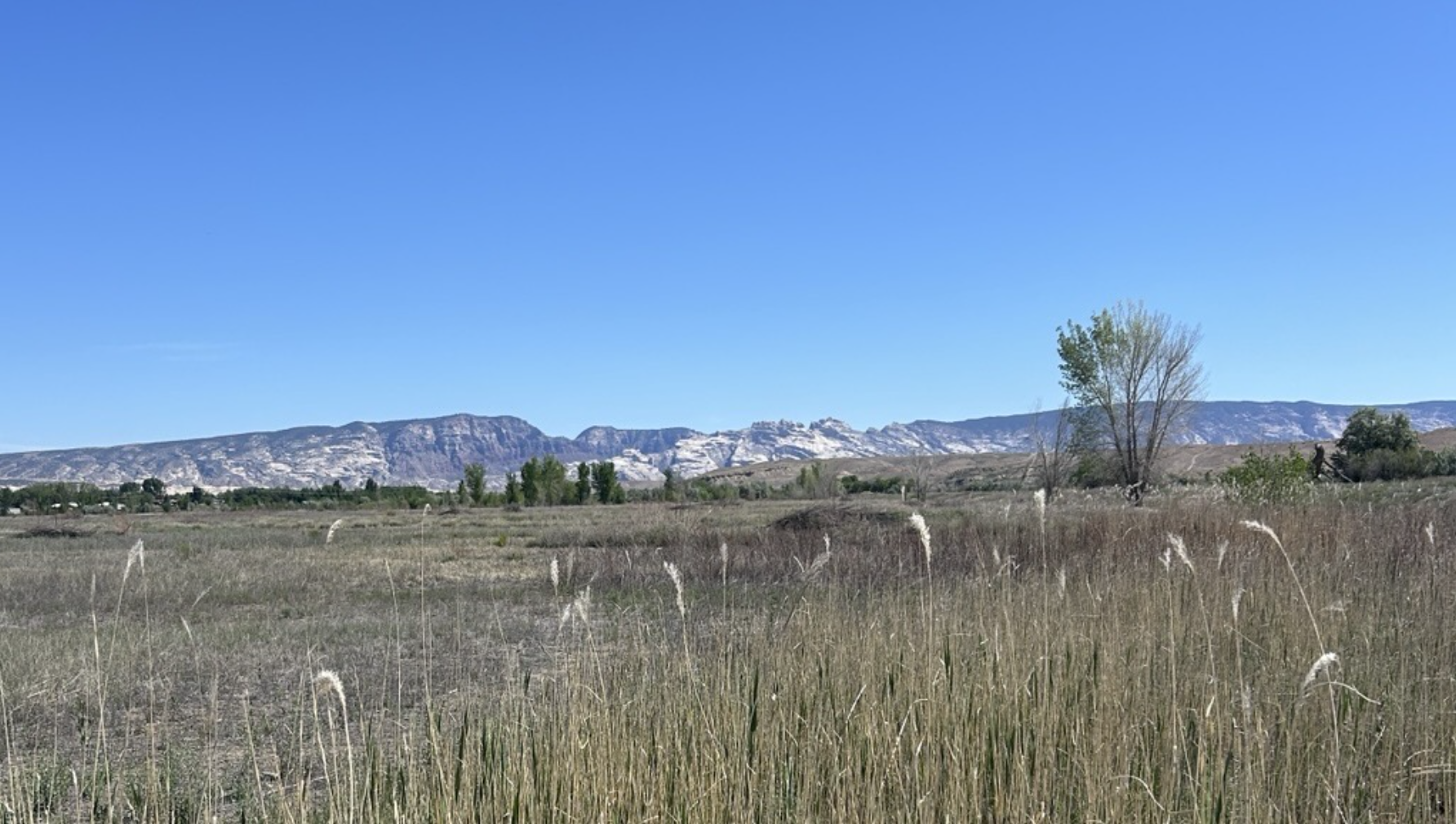
Project Updates
Updated: October 2026
- Recent Developments:
-
The project was funded by a QANR Undergraduate Research Grant in October 2026. Reviewers scored the proposal 82, 90, and 98 to 100.
An analysis of existing data is underway. In the University of Utah water isotope database, groundwater and springs in the Uinta Basin are about 2 parts per thousand lighter in oxygen-18 than water on the windward side of the Wasatch at the same elevation. That fits a rain shadow, but it is not proof yet, because groundwater mixes water from many storms, places, and years. Only five direct rain or snow samples exist for the Uinta area, all south of the Uinta crest. This project fills that gap.
The USU stable isotope laboratory in Logan has confirmed it can analyze the roughly 150 samples the project will collect.
-
- Current and upcoming work:
- Spring 2027: install simple, low-cost collectors at existing weather stations in five areas (west of the Wasatch, the Wasatch Back, the north and south slopes of the Uintas, and the Basin floor). Collect samples after major storms and at least monthly.
- Summer 2027: sample springs and mountain streams.
- Fall 2027: run the samples at the Logan lab, then compare results by elevation, location, and the direction each storm came from.
- Requests to Sigma Xi and the USU Honors Program to fund the laboratory analysis are under review.
- This study is also Michael's USU Honors capstone project.
- Problems:
- None to report.