
Emissions Estimates for Various Oil and Gas Facility Types
We are working with project partners to complete the remaining modeling efforts for the study. The results will then be summarized and submitted as a peer-reviewed scientific publication to share the findings with the broader research community.
Seth Lyman
Project End: December 2026
Funding: Utah Legislature, SSD1, several local energy companies
Project Updates
Updated July 2026
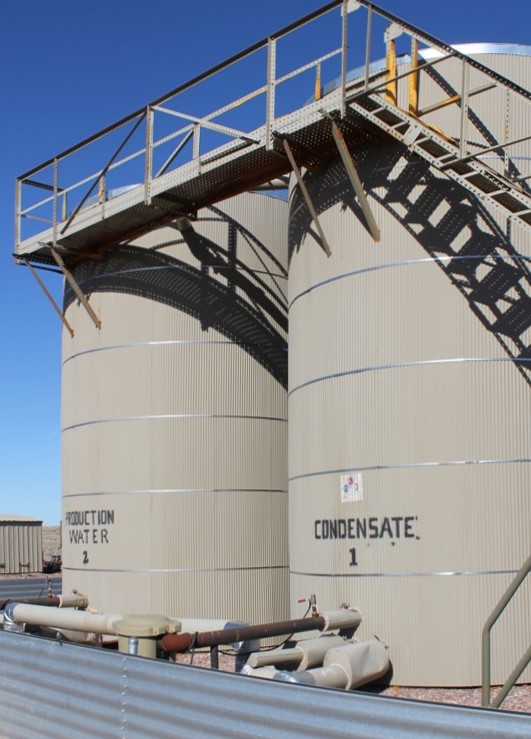
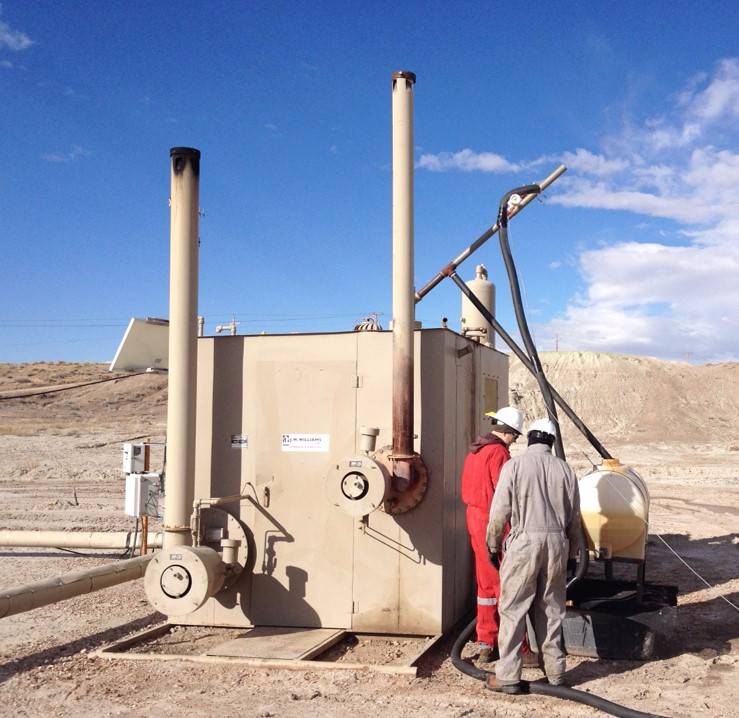
For this project we are evaluating laboratory and modeling methods used to determine organic compound emission factors from oil storage tanks.
- Major Findings:
- Results show that different laboratory measurement techniques and modeling approaches can lead to noticeable differences in the estimated emission factors. Understanding and comparing these methods is an important step toward improving the accuracy and consistency of emissions estimates.
- The study is examining the overall uncertainty involved in estimating emissions from storage tanks. This includes evaluating how uncertainty is introduced at each step of the process, from laboratory measurements to modeling methods used to develop emission factors. Understanding these uncertainties will help improve the reliability of emissions estimates.
- Results show that different laboratory measurement techniques and modeling approaches can lead to noticeable differences in the estimated emission factors. Understanding and comparing these methods is an important step toward improving the accuracy and consistency of emissions estimates.
- Current and Upcoming Work:
- Project partners have completed most of the modeling work for the study. A scientific paper describing the results is currently in preparation and is approximately 75% complete.
- Project partners have completed most of the modeling work for the study. A scientific paper describing the results is currently in preparation and is approximately 75% complete.
- Problems:
- This project is behind schedule but it should be complete this spring.
More Information
Developing Methods to Determine Oil Storage Tank Emission Factors
We have been working with the Utah Petroleum Association and several oil and gas companies over the past 2 years on a project to investigate methods for determining emission factors for oil storage tanks in the Uinta Basin. For the study, we collected replicate pressurized oil samples from four different oil wells and sent the samples to three different laboratories for analysis. The laboratories analyzed the pressurized liquid and conducted flash liberation analyses, wherein pressurized oil samples were depressurized, and the evolved gas and residual oil were analyzed. We have analyzed the laboratory results and compared the outputs from the three labs.
Investigators at the University of Houston are now using the laboratory results with computational models to determine the ratio of evolved gas to residual oil and the composition of evolved gas in field conditions. This will allow us to analyze the variability in results caused by different model platforms and methods. We will determine whether some laboratories and methods produce more reliable results than others and compare the results of this study to existing datasets.
The desired outcomes of this work are:
- A robust agreed methodology by which emission factors for Uinta Basin waxy crude can be determined.
- Improvements in understanding the uncertainty in emission factors derived from field samples collected in the Uinta Basin (e.g., 1.0 lb/bbl ± 0.5 lb/bbl, with ± uncertainty calculated from sampling, measurement, and analysis uncertainty evaluations).
- Comparison of emission factor uncertainty to variability in existing high-quality emission factor data for the Uinta Basin, and
- A publication describing the study and its outcomes.
Utah Division of Air Quality recently led a tank emission factor study for the Uinta Basin (Wilson et al., 2020). The Division of Air Quality study’s primary purpose was to determine emission factors, whereas the primary purpose of the work proposed here is to determine how methods for determining emission factors compare, why they differ, and what methods are the most defensible.
Additional information can be found in the study proposal.