
Trends and Issues Intersecting Land, Water & Air in Utah
Trends and Issues Intersecting Land, Water & Air in Utah
Cross-Cutting Issues
Trends and Issues Intersecting Land, Water & Air in Utah
Cross-Cutting Issues
Utah’s ecological issues are inevitably complex and integrally connected to larger systems. The many challenges affecting Utah’s land, water, and air are impacted by multiple factors, some of which can magnify potential effects on human health, ecological viability, community development, and quality of life. This chapter highlights five topics that combine multiple issues involving the dynamics of land, water, and air. In a state that capitalizes on the strengths of our natural resources, it’s critical to understand and manage these multi-faceted aspects of natural systems to find viable, efficient, and socially acceptable solutions. Interdisciplinary research helps to define those relationships and toseek for potential solutions.
The Shrinking Shoreline of the Great Salt Lake
Takeaway
The Great Salt Lake’s greatest challenge is the possibility for desiccation; it has dropped 16.5 feet, lost 65% of its volume and exposed 56% of the dust-producing lakebed since 1865. Less water in the Great Salt Lake creates negative impacts on Utah's wildlife, industry, air quality,and snowpack.
An analysis from the Utah Division of Water Resources and researchers at Utah State University¹ indicates that demands from agricultural, municipal sources, and other water development projects have diverted 39% of the Great Salt Lake’s inflow, dropping the lake’s level by 11 feet. An ongoing 20-year drought has decreased water levels an additional 5.5 feet. Utah’s planned development of the lake’s major tributary, the Bear River², and potential water development by Idaho and Wyoming³ threaten to decrease the water level even further, harming millions of birds that use the lake, the brine shrimp industry, mineral extraction, and recreationists who contribute $1.6 billion to Utah’s economy (2021 dollars)⁴. Dust from the dry lakebed also decreases air quality and diminishes snowpack in the mountains⁵. The Utah Legislature has already taken initial steps to save the lake from desiccation by recognizing the declining levels⁶, funding water conservation research, and modifying state laws to allow water banking⁷, which could eventually return diverted flows to the lake.
Utah’s current drought may be a harbinger of the predicted 10-20% decrease in runoff to the lake due to climate change⁸, a shift that will put additional stress on the Great Salt Lake and all of Utah. But an opportunity is closely available; Utahns have the second-highest municipal and industrial per capita water use in the United States, offering leaders a chance to conserve water, some of which could be returned to the Great Salt Lake⁹.
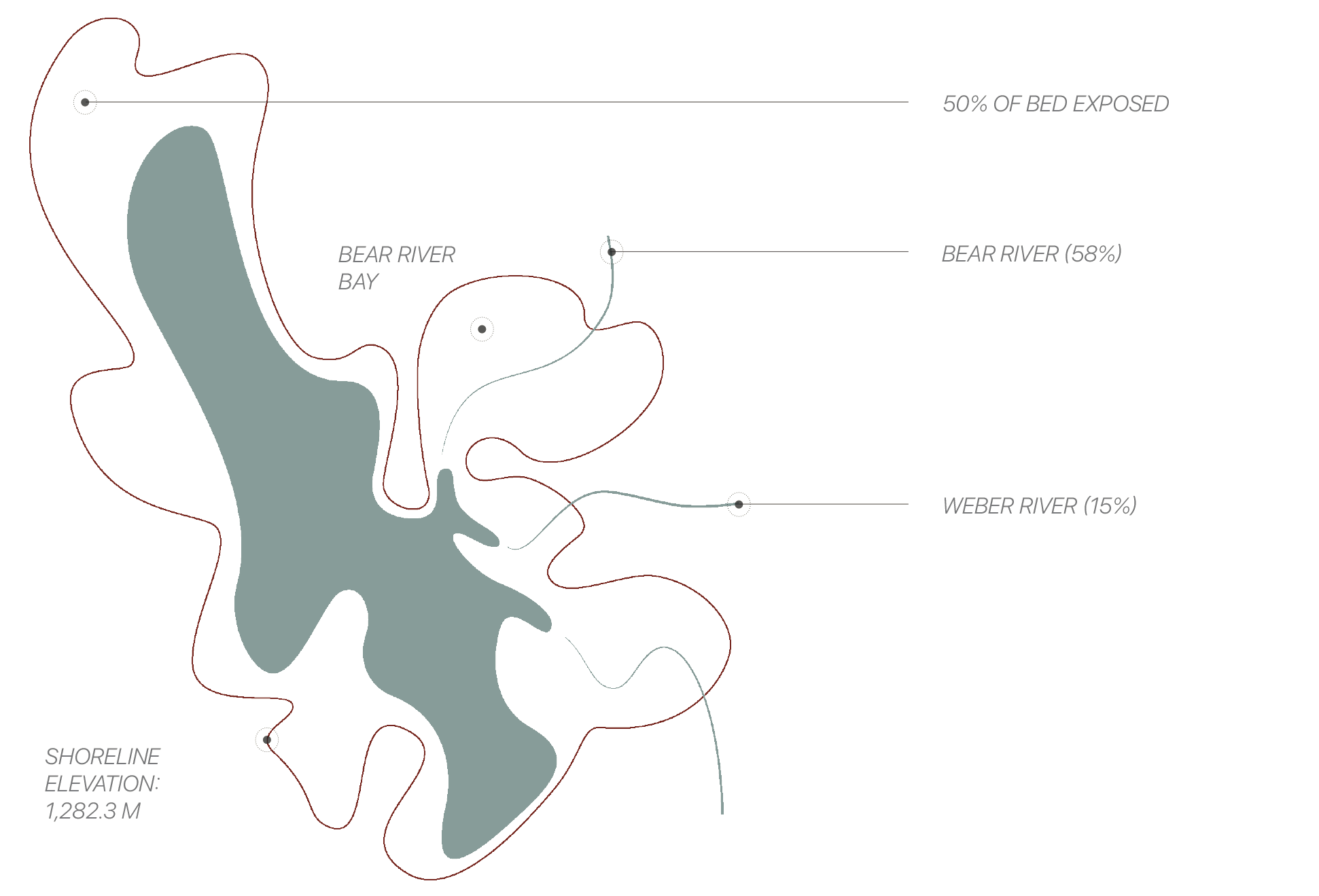
Figure 1
The Great Salt Lake's changing shoreline. — 2021
Credit: Wayne Wurtbaugh, 2021
Agriculture at the Center of Land, Water, and Air Opportunities
Takeaway
Because agricultural activities encompass one-third of the state’s lands, they are inevitably impacted by Utah’s natural system, and in turn influence land, water, and air dynamics more than any other industry.
Agriculture was the first industry in Utah and remains integral to the state economy ($1.8 billion annually). It is a way of life for many communities (18,400 farms) and is valued¹¹ by the majority of citizens in the state. Utah’s natural systems are inevitably tied to agriculture, although impacts vary by sector, including both large and (an increasing number of) small farms; livestock, crop, and greenhouse production; feed, food, and fiber processing; distribution; and retail businesses. Like many other industries, agriculture is laden with tradeoffs and opportunities for improvement. Due to its extensive impact on people and its visible presence on the land, misconceptions and misinformation about agriculture are widespread. Significant challenges for Utah agriculture include drought and climate change, shifting markets, and addressing environmental regulations. State and local agencies and institutions are working to mitigate and address a variety of challenges through legislation, research, education, extension, and technical and financial assistance programs. This includes cutting-edge research disseminated to the statewide industry through outreach efforts such as USU Crops, Horticulture Program, Small Farms Program, and Utah Pests. Related state programs and partnerships include OpenET, which uses publicly available data to provide satellite-based information on evapotranspiration. Researchers have found that Utah agriculture can be strengthened by preserving productive land, optimizing water use, building soil health, enhancing farm profitability, diversifying crops, managing pests, and improving access to locally grown food.
Wildfire as an Increasing Threat to Utah's Natural Resources
Takeaway
The size and severity of wildfires seems steady, but drought is bringing change.
Although wildfires in Utah have burned between 6,000 and 600,000 acres per year, there haven’t been clear trends upward over the last two decades (Fig. 2). The increasing likelihood of hotter and drier days, though, could result in more damaging fires that will threaten communities, worsen air quality, reduce water quality, and reduce reservoir capacity. Across the West, human-caused climate change has accounted for 45% of the total forest area burned from 1984 to 2015¹². It’s estimated that the changing climate now increases the number of extreme fire days by 10 per season everywhere in the West. Utah will likely follow fire patterns in other western states, where upward trends have been clear¹³.
Outlook
Managers in Utah need to consider moving their primary management emphasis from excluding fire to managing lands in a way that promotes best-case-scenario post-fire outcomes. Since we can’t afford to treat all land to minimize risk and optimize post-fire conditions, identifying areas with a serious risk of bad outcomes (for people and ecosystems) or good outcomes (places where fire could benefit the ecosystem) may be the most effective long-term solution. The best treatments to reduce fire risk are prescribed fire or managed wildfire—we need to find ways to better understand and implement small, controlled fires. To further reduce potential negative impacts of wildfire in the coming decades, Utah should consider reductions in greenhouse gas emissions commensurate with reductions taken on by other states.
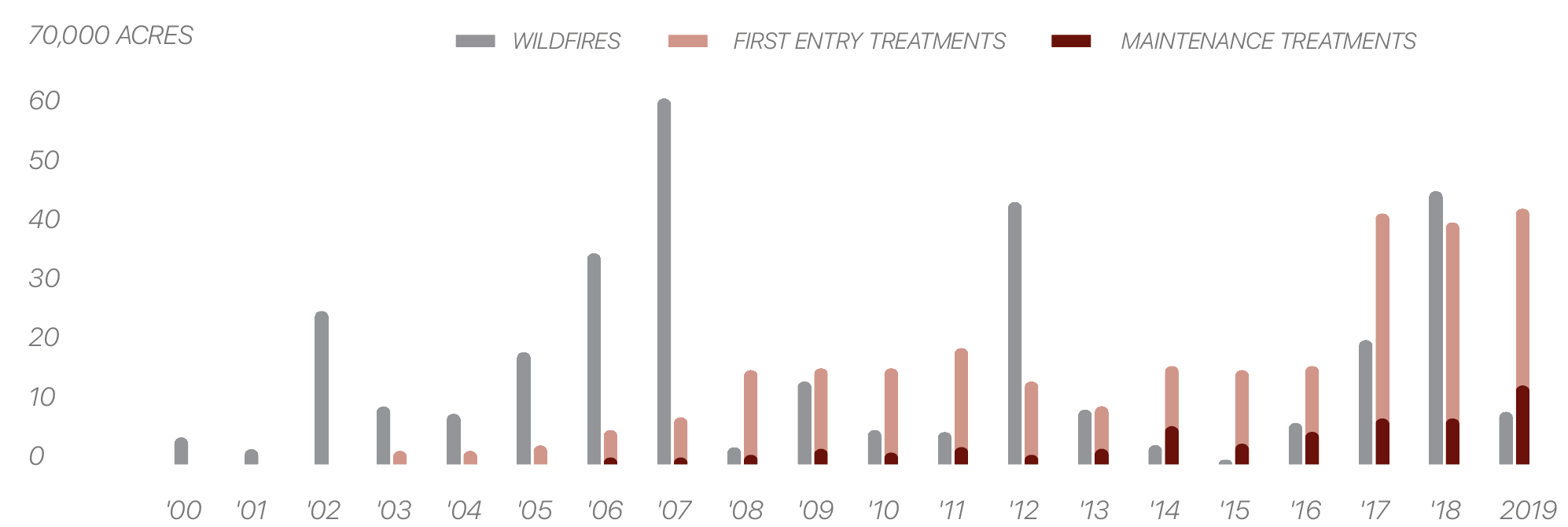
Figure 2
Acres burned by wildfire in Utah and acres treated on federal lands — 2020
Data: US Forest Service and Bureau of Land Management (BLM) 2021.
Credit: Dr. Larissa Yocom 2021.
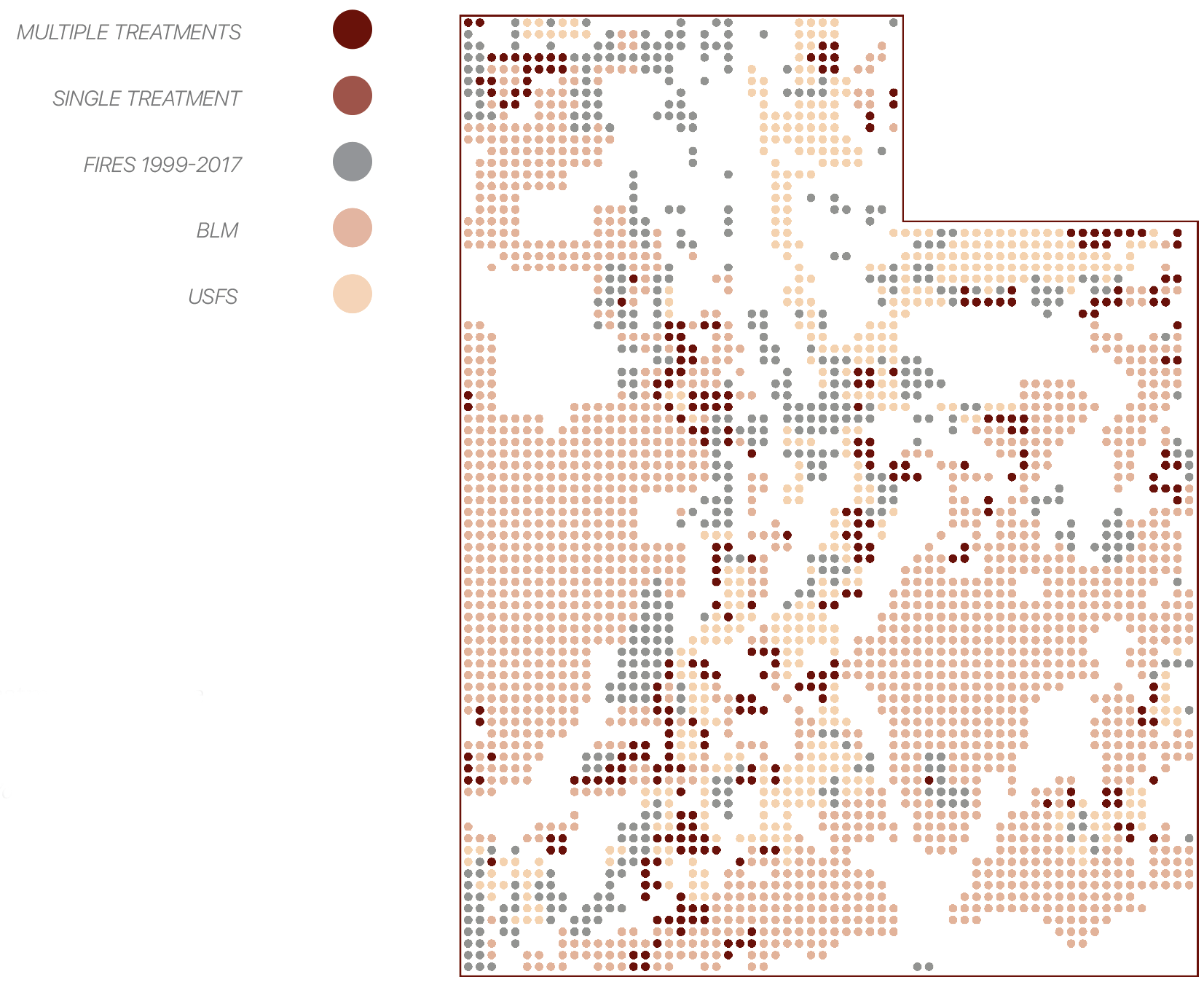
Figure 3
Utah fire and treatment coverage between 1997-2017 — 2018
Data: US Forest Service and BLM
Credit: Dr. Larissa Yocom
Managing Utah's Threatened and Endangered Species
Takeaway
State and federal agencies collaborate to manage species of special concern.
Utah is home to a variety of threatened and endangered species and a host of overabundant, invasive species. The Utah Division of Wildlife Resources manages 13 animal and 21 plant species categorized as threatened or endangered by the U.S. Fish and Wildlife Service. An additional 166 species are managed for conservation. Utah Wildlife Action Plans provide a long-term conservation plan of all wildlife species in Utah. The Utah Watershed Restoration Initiative maintains functioning ecosystems to benefit all wildlife. The success of such conservation programs, among other programs, demonstrates the importance of public-private partnerships.
Outlook
Two fish species, June sucker and Razorback sucker, were removed from the endangered species list due to recent increases in their populations (Fig. 4). Successful protection of sage grouse habitat and dedicated population monitoring has kept this species from endangered species status. The collaboration of community groups and wildlife agencies result in successful management of species of conservation concern. Unfortunately, the numbers of wild horses and burros have increased dramatically in Utah rangelands (Fig. 5). These animals currently exceed the carrying capacity of designated habitat areas, causing degradation to rangelands. The federally protected status of wild horses and burros creates difficulties for the U.S. Bureau of Land Management in their efforts to reduce horse populations. Continued research on reproductive biology and consideration of policy modifications are needed to assist agencies in managing these exotic populations.
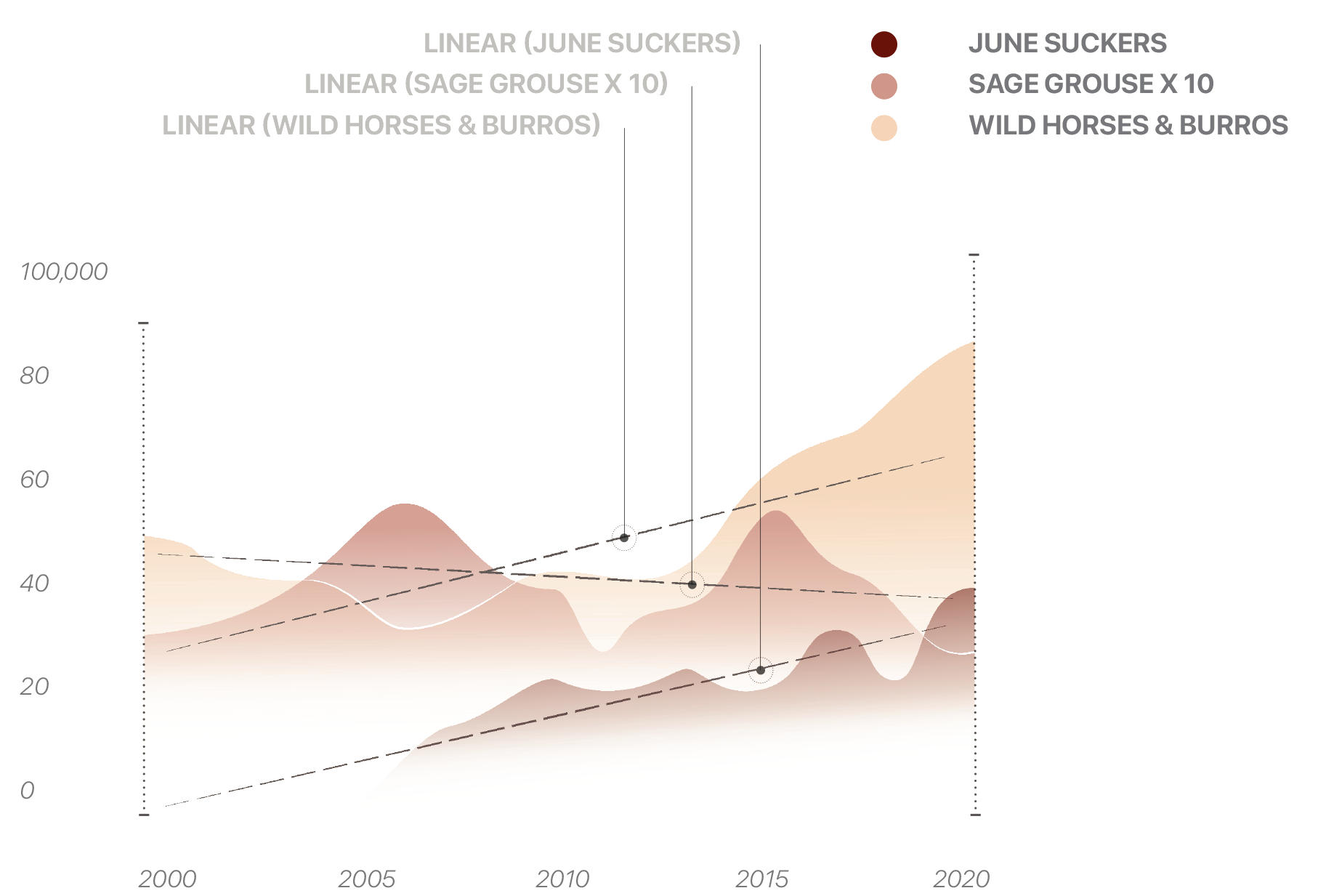
Figure 4
Annual abundance of spawning June Sucker in Provo River inflow to Utah Lake, wild horse and burros in habitat mangement areas, and male Sage Grouse on leks in designated mangement areas. — 1998-2018
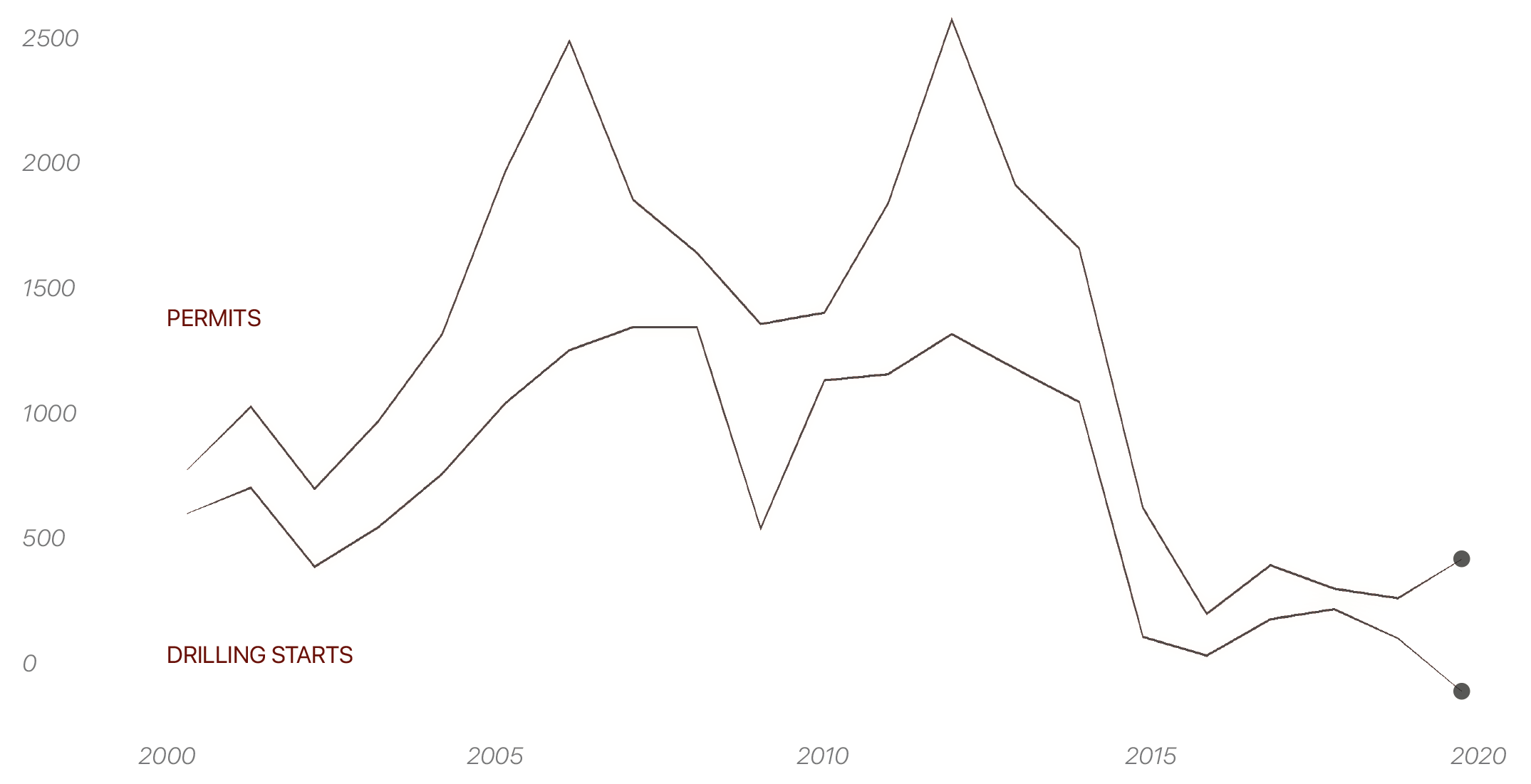
Figure 5
Number of oil & gas permits and drilling starts in Utah — 2000-2020
Balancing Utah's Mineral Needs and Challenges
Takeaway
Current technologies allow oil, gas, mineral, and geothermal resources to be more efficiently harvested from Utah lands but also continue to have significant environmental impacts.
Utah is taking part in a world-wide energy boom that has pushed the U.S. to prominence in oil and gas production. A combination of horizontal drilling and hydraulic fracturing has allowed Utah to greatly increase oil and gas production over several decades. Economic and political factors influence the number of wells drilled, but technological efficiencies allow for steadily increasing production.
More efficient technologies reduce the land footprint of oil and gas wells but increase water use and the production of wastewater — with recycling efforts somewhat mitigating the load. Methane emissions from wells continues to be a problem that negatively influences climate.
New approaches to extraction of rare earth minerals from briny waters have allowed Utah industries to increase production in this area. Compass Minerals International reported recent discoveries of 2.4 million metric tons of lithium at a solar evaporation site on the Great Salt Lake near Ogden. Lithium is essential for the production of batteries for electric vehicles and energy storage in solar arrays.
The U.S. Department of Energy is providing over $200 million toward private research near Milford, Utah, that seeks to provide electricity from geothermal activity from enhanced geothermal systems. FORGE Laboratory is currently drilling wells to develop large-scale geothermal reservoirs that may eventually have the capacity to replace coal-fired power plants.
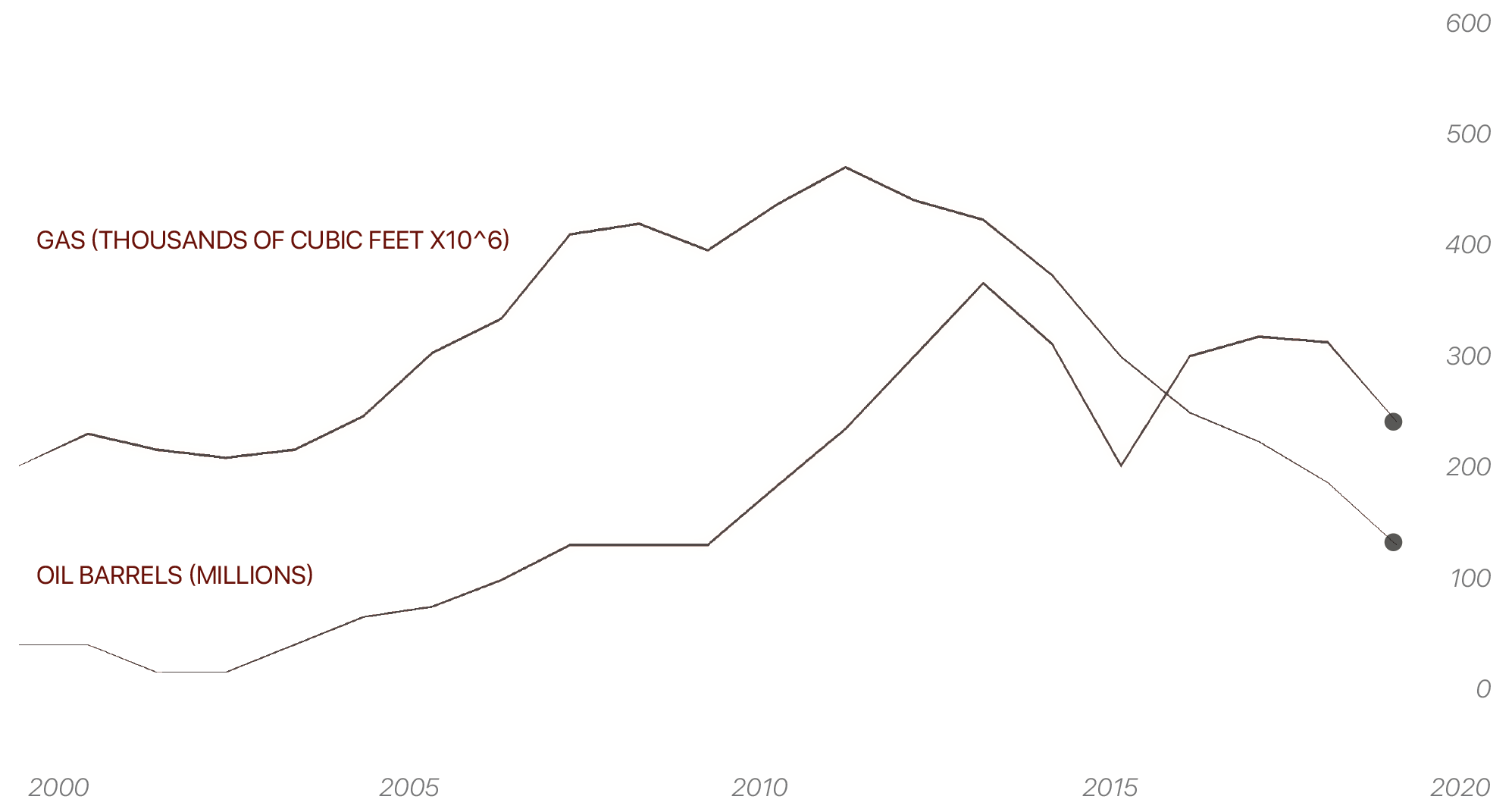
Figure 6
Annual production of oil (100,000 barrels) and gas (thousands of Cubic Feet x 10^6) in Utah— 2000-2020
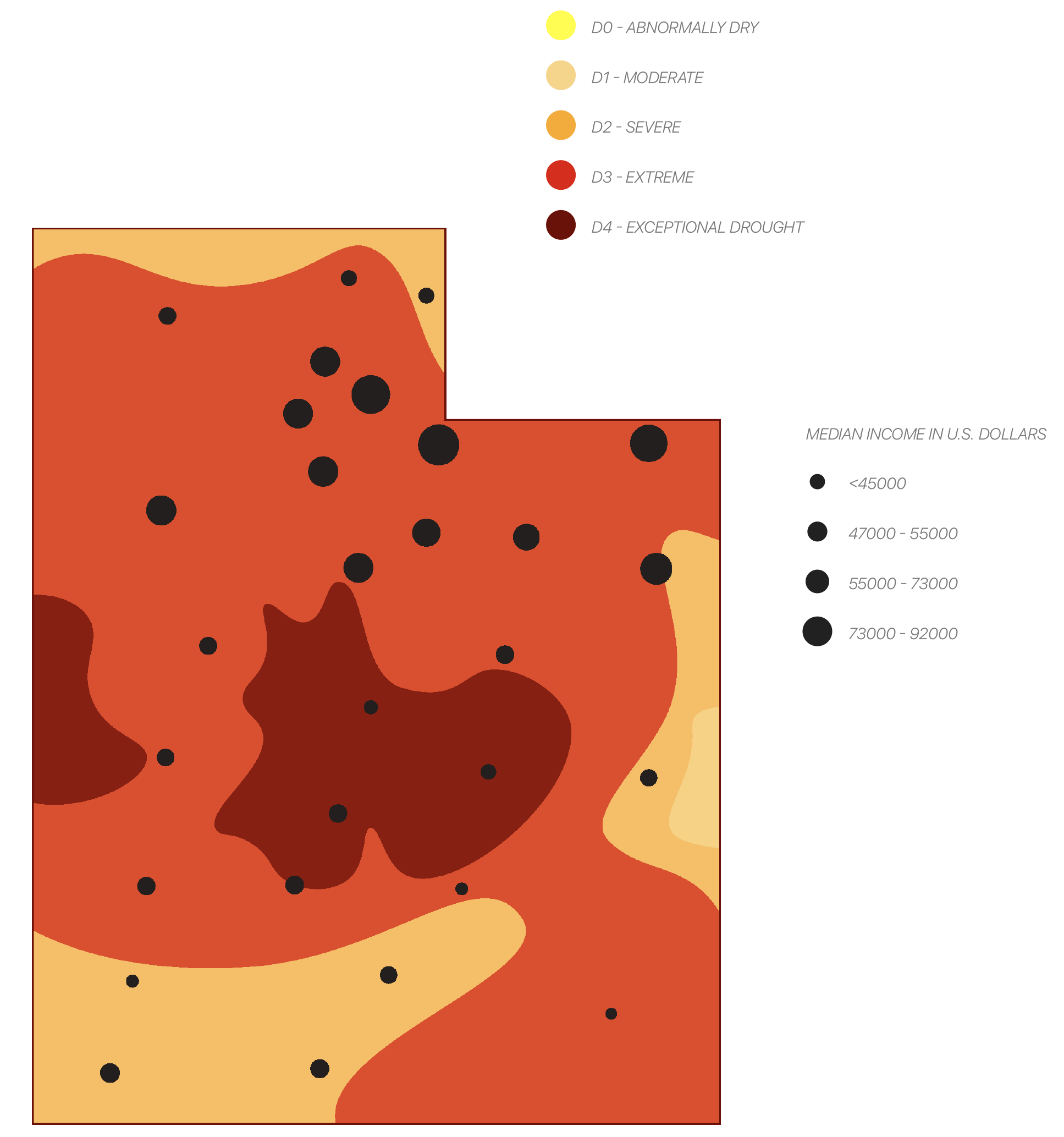
Figure 7
Utah drought conditions and median income. — 2021
Equity of Environmental Impacts
Takeaway
Environmental disparities must be addressed so that leaders can create greater access to water, land, recreation, and healthy environmentsfor all Utahns.
Utah has been bequeathed with a wealth of extractive, geographical and ecological resources. But use and access to these resources are not representative of the state’s population. In outdoor recreation, most recreationists are white (92-98%), while other racial and ethnic groups such as Black, Hispanic, and Hawaiian and Pacific Islanders are underrepresented in all major national forests in Utah. When it comes to water availability, drought conditions affect all Utahns, but exceptional drought conditions often occur in lower-income counties, which also experienced more fires in 2021. Disparities in water use are evident in places like Salt Lake City, where homeowners in wealthier neighborhoods may use about five times the water than in lower income areas. Lower income households may also pay a higher proportion of their total summertime water costs through property taxes, compared to wealthier households. Some of the areas with the poorest air quality from human-caused sources are found in Salt Lake City around industrial areas, where there is the highest proportion of people of color with the lowest income. These communities are disproportionately influenced by poor air quality, specifically PM2.5 and ozone. These environmental disparities may be lessened through education and outreach to underserved communities to promote outdoor recreation activities, mitigation plans for drought and fire hazards, air quality, and water conservation measures for all Utahns.
WHAT’S NEXT FOR UTAH’S CROSS-CUTTING ISSUES
Summary
Emerging issues in managing Utah’s land, water, and air are intertwined by nature. Increased air temperature depletes soil moisture resulting in decreased runoff from rainfall, thus further diminishing water storage in our lakes and reservoirs. Water shortages caused by drought reduce our ability to grow irrigated crops, shrinking food production and farm income. Whether we examine the linkages among dry lake-bed dust to the melting of snow in alpine meadows, or the impacts of forest fires on air quality, we find that pulling on the threads of one issue affects
entire landscapes. Utah’s lower income citizens often bear the largest share of these negative environmental impacts. Examining these issues as large, complex systems provides opportunities to efficiently focus on many of the issues highlightedin this report. The collaboration and cooperationof natural resource agencies, university researchers, and community partnerships provide a path to address the most pressing of these concerns. The information in this report is meant to provide guidance and motivation to address and solve these concerns.