
TAKEAWAY
Forage production on rangelands has been impacted by drought and may take years to recover.
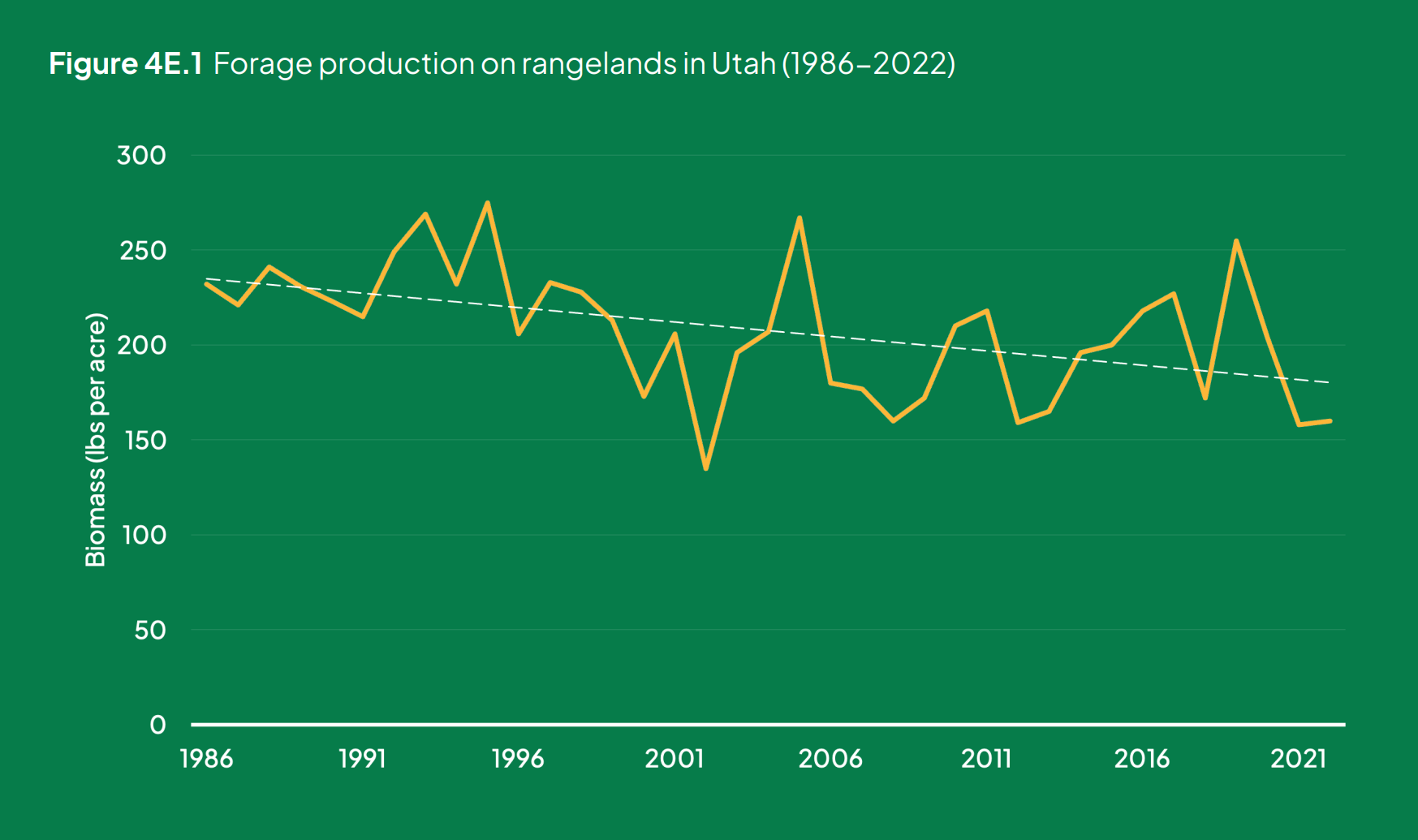
In 2021 and 2022, Utah saw a 25 percent reduction in forage production.
Eighty percent of Utah land is rangeland, and the most common use for that land is livestock grazing and wildlife habitat. Utah has experienced severe drought that negatively impacts the growth of the grasses and forbs (flowering plants) that livestock and wildlife rely on for forage. Since 2000, forage production has been below average; around half of those years had a 10-20 percent reduction, and more than one-fourth had more than 20 percent reduction (Figure 4E.1). In 2021 and 2022, Utah saw around a 25 percent reduction in forage production. These figures represent a significant loss for livestock producers and wildlife populations.
Forage production can take two to three years to recover after drought[1]. The condition of rangelands before drought is vital for determining how well they recover following drought. When managing grazing during and following drought, rangeland managers must carefully consider grazing timing and intensity to ensure that forage plants have the time to recover. As droughts intensify or become more frequent, as they are forecasted to do, managers will have to carefully evaluate grazing strategies to ensure proper care of rangelands. It’s important that the people most affected understand this dynamic—Utah State University Rangeland Extension has planned and presented drought grazing strategies at 15 workshops in the past two years, reaching around 775 livestock producers and land managers.
References
- Reynolds, H. G. (1954). Meeting Drought on Southern Arizona Rangelands. Journal of Range Management, 7(1), 33-40.