TAKEAWAY
Winter ozone and other pollutants have been decreasing in the Uinta Basin, but the future is uncertain.
Winter ozone has decreased, and continued effort is needed to maintain the trend.
The Uinta Basin occasionally experiences high ozone during winter months. Ozone is a respiratory irritant that impacts human health, and it is regulated by the U.S. Environmental Protection Agency. Most of the pollution that leads to winter ozone in the basin is emitted from the local oil and gas industry, and regulation that targets the industry may have a detrimental impact on the Uinta Basin economy. Winter ozone only occurs when snow cover blankets the basin and multi-day temperature inversions occur.
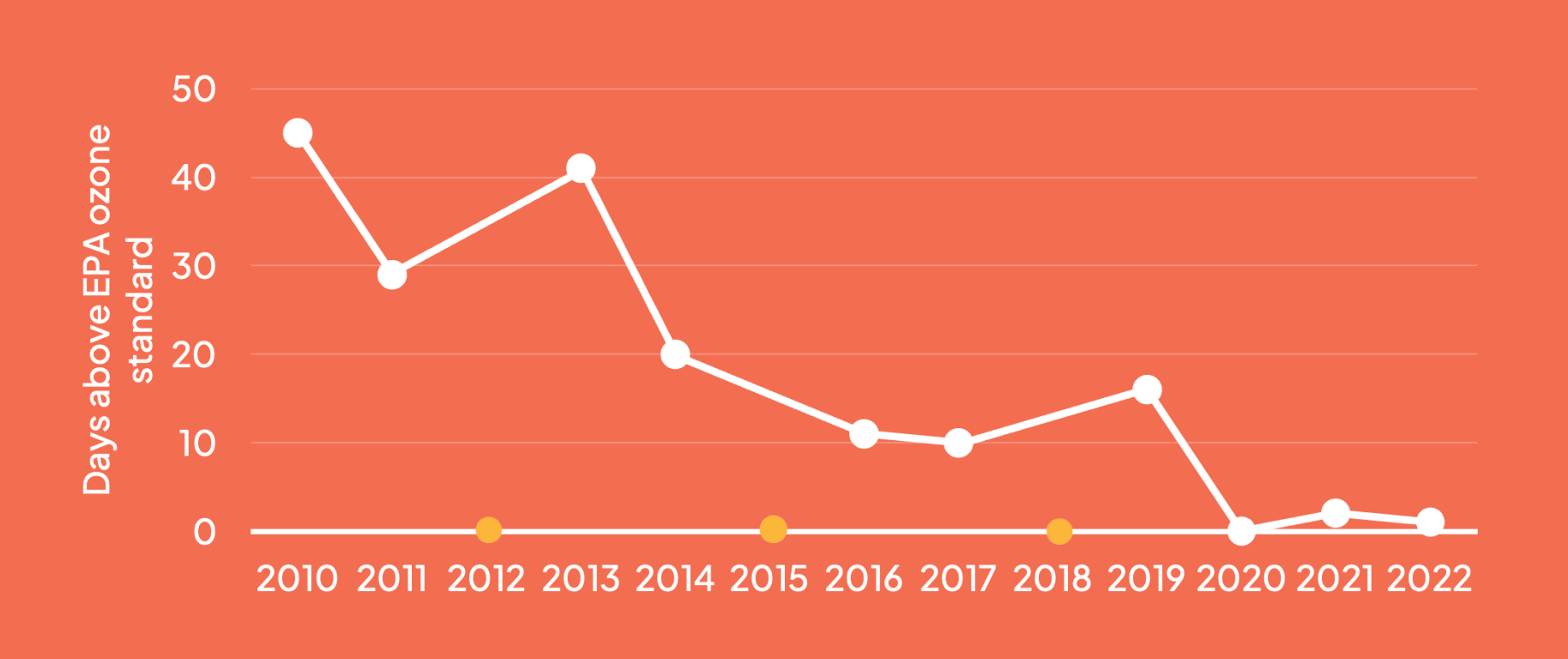
Winter ozone levels, and the number of high-ozone days per winter, have both decreased dramatically in the 12 years since the phenomenon was first discovered in the Uinta Basin. The pollutants that react in the air to make ozone have also decreased. Some of the decrease is due to changes enacted by oil and gas companies that have led to reduced emissions, including both voluntary and regulatorily required changes. Another driver of the decrease in winter ozone is the steep decline in natural gas production that occurred in the Uinta Basin from 2015 through 2020 because of a market downturn. Mild winter weather may also have kept high-ozone days low. That trend could be halted if the Uinta Basin experiences more colder, snowy winters.
Oil and gas drilling and production in the Uinta Basin have increased since 2021 in response to market increases, and this could mean a reversal of the declining ozone trend. All oil and gas activity results in some emissions to the atmosphere, but, if new activity incorporates pollution controls, the impact on winter ozone could be small. The Uinta Basin has met the EPA ozone standard during the past three winters. Continued effort by industry and regulatory agencies can help ensure this trend continues.