TAKEAWAY
Ranchers can benefit from a few simple, flexible tools to reduce livestock depredation.
Livestock production is important to western communities and economies. In Utah, many livestock producers use a mixture of private and public lands for livestock grazing. That land also provides habitat and homes for wild animal carnivores, including mountain lions, black bears, bobcats, and coyotes. While these predators primarily eat native prey species (elk, deer, rabbits, and rodents), they also kill livestock. Loss of livestock to predators can determine if a livestock producer is profitable or not each year. Of the many challenges to raising livestock, some, like natural forage conditions, can’t be controlled by producers, making it even more important to take actions that increase the survival and productivity of livestock. While lethal removal of predators may stop carnivores from killing livestock, this is reactive, and often draws negative attention from the public and the media. As a result, public funding is becoming more uncertain for these purposes. The use of nonlethal tools to prevent livestock depredation by carnivores is an increasingly attractive alternative approach for individuals, non-profit organizations, and state and federal agencies.
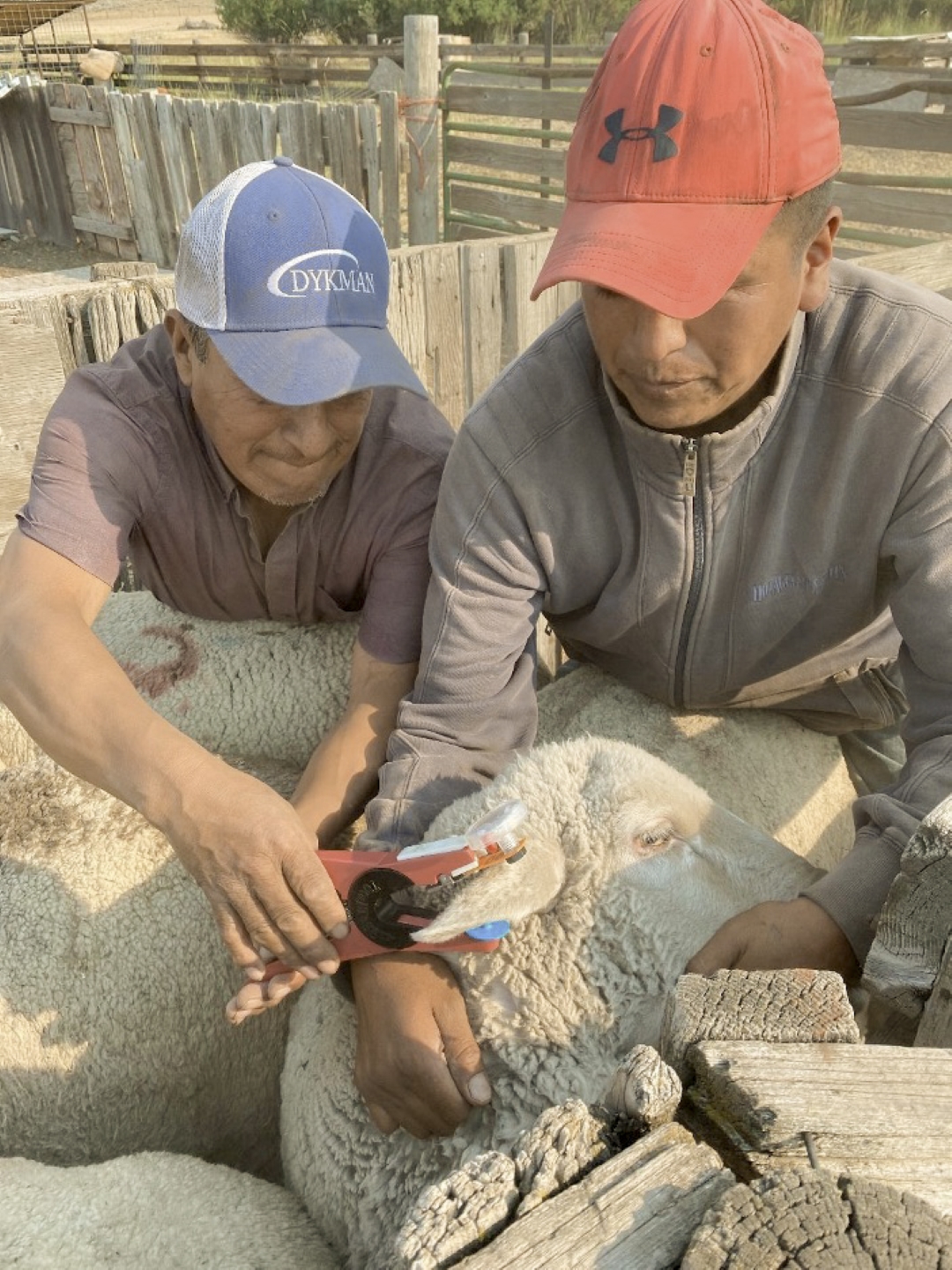
Research at Utah State University aims to improve livestock production even while carnivores are present on public and private lands. We have worked to identify causes of mortality in livestock, improve the efficacy of nonlethal tools, and develop new tools to prevent conflicts. We’ve shown that reducing the spacing between flags on fladry-marked fences (with a line of brightly-colored flags hung along a pasture perimeter) creates a stronger barrier that can prevent coyotes from entering pastures; flashing ear tags can limit depredation by coyotes and wolves on livestock on open range and in pastures; and certain breeds of trained livestock guard dogs can increase livestock survival and protect grain silos from bear raids. Implementing these cost-effective tools can decrease depredation and help producers sleep better at night.