TAKEAWAY
Low water levels in reservoirs are due to declining natural runoff, slowly increasing consumptive uses in the Upper Basin, and releases to the Lower Basin.
The Colorado River, a vital water supply for 40 million people, is in peril. In fall 2022, Lake Powell and Lake Mead each dropped to less than 30 percent full and came dangerously close to reaching levels at which electricity could no longer be generated through the dams. If continuing at current rates, warming and low water levels from Lake Powell may shift the entire ecosystem in the Grand Canyon.
Low water levels are due to three factors: declining natural runoff, slowly increasing consumptive uses in the Upper Basin, and releases to the Lower Basin. Collectively, human use, evaporative loss, and downstream releases exceed reservoir inflows. We are using more water than is naturally available.
Since 2000, the natural flow of the Colorado River near Lake Powell has been 15 percent less than average flows between 1930 and 1999. Natural flow is the amount of water that would flow in the river in the absence of human activity, estimated by the Bureau of Reclamation. Between 2001 and 2022, natural flow averaged 12.3 million acre feet per year (af/yr). During the same period, consumptive uses and evaporative losses upstream from and within Lake Powell averaged 4.57 million af/yr, and releases to downstream users were 8.81 million af/yr. Upstream uses, losses, and releases downstream exceeded natural flows by approximately 1 million af/yr during the last two decades. That deficit was covered by partially draining Lake Powell and Flaming Gorge reservoirs.
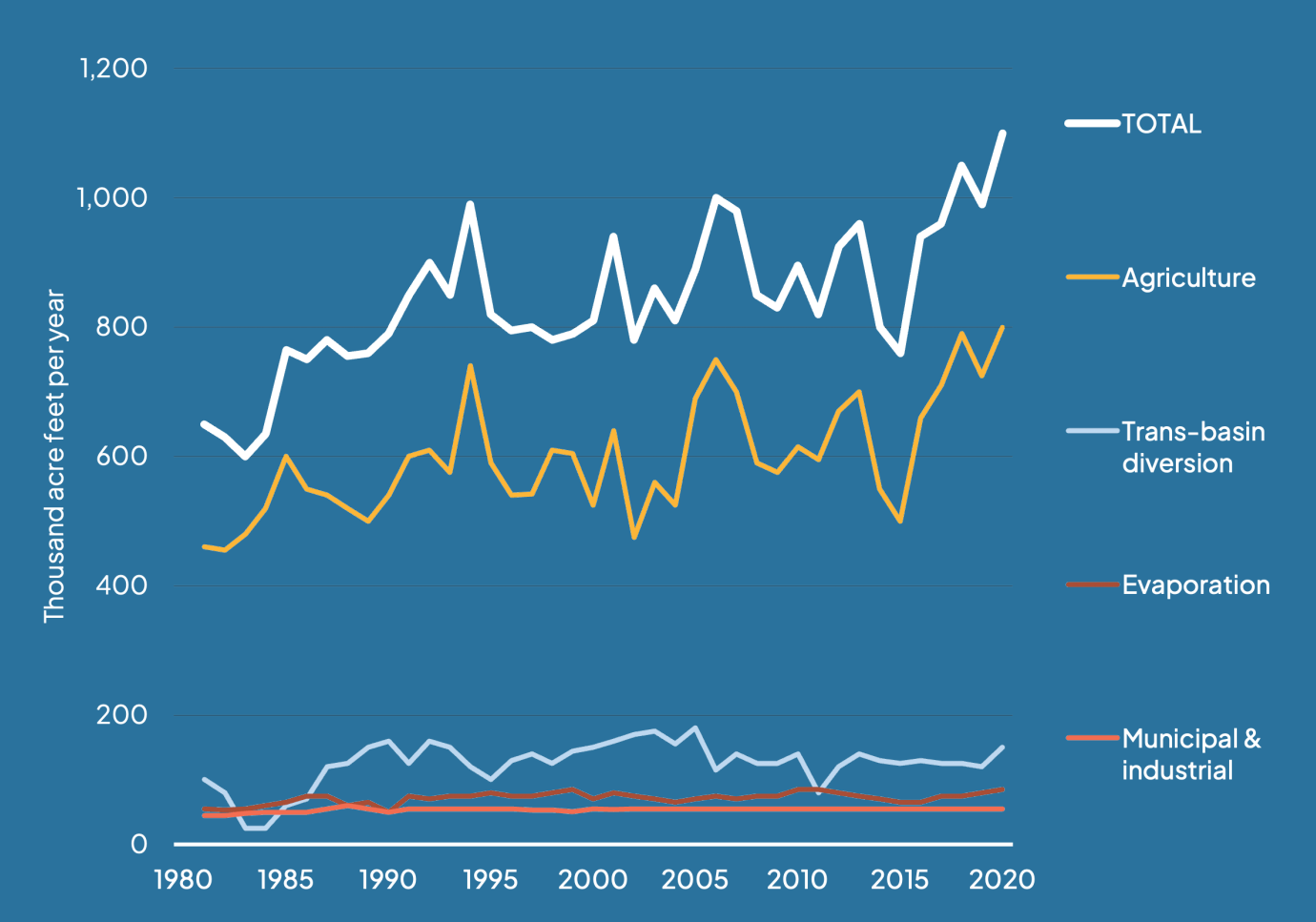
Accounting for evaporation from local reservoirs but excluding evaporation from Flaming Gorge and Lake Powell, approximately 904,000 af/yr of water was consumed in Utah between 2001-20, 23 percent of the total consumptive water use in the Upper Basin. According to consumptive water use data published by the Bureau of Reclamation, Utah’s total use of Colorado River water steadily increased during the last 40 years, from 659,000 af/yr (1981-85) to 1 million af/ yr (2016-20). Between 2001 and 2020, 70 percent of water use was by agriculture—primarily irrigation. The second largest use of water was export, primarily to the Wasatch Front. Water use by agriculture increased by 33 percent during the 21st century—from 555,000 af/yr (2001-05) to 738,000 af/yr (2016-20).
A warming world results in less winter snowpack reaching stream channels. Continued decreases in natural runoff are to be expected in the future. Consumptive uses throughout the entire Colorado River watershed, including in Utah, should be managed so that our use matches our supply. There is tremendous disagreement as to how reductions in use should be defined and implemented, but we can expect that the states and economic sectors that presently use the most water will be asked to significantly reduce their use. There are countless devils in the details of these ongoing negotiations about who will reduce their use and by how much.