
TAKEAWAY
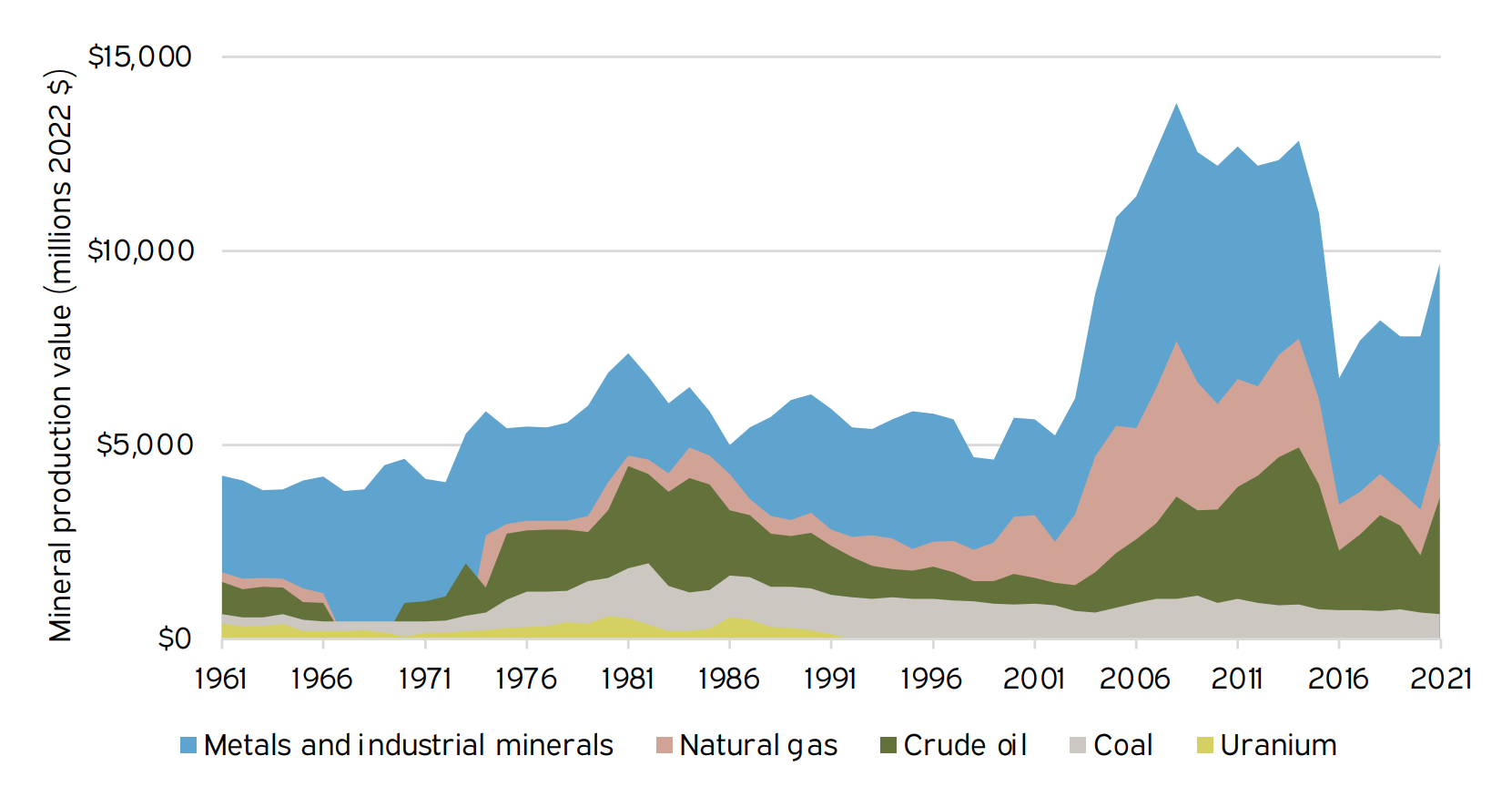
Utah’s extractive industries encompass a wide range of raw material extraction processes, presenting challenges in quantifying their overall economic impact. At the same time, they play a significant role in the state’s economy.
Utah's petroleum and mining can contribute billions of dollars annually to the state's economy.
The term “extractive industries” broadly refers to companies or individuals involved in the extraction of energy resources and mineral materials from the earth, which are utilized by consumers globally. These resources include crude oil, natural gas, coal, metals, salts, chemicals, strategic and critical minerals, fuel minerals like uranium and vanadium, as well as construction materials such as stone and rock.
In the United States, these raw products are subject to free market business transactions, with some being traded in futures contracts on national commodity exchanges. These resources and materials, which play a role in maintaining a certain standard of living, possess intrinsic value to the public and economic value that drives businesses to invest in and profit from their conversion into usable products. It’s worth noting that even agricultural commodities rely on mineral fertilizers, chemicals for crop cultivation, metals for machinery fabrication, and refined petroleum and hydrocarbons for power generation.
In the state of Utah, there exists a substantial economic presence in the petroleum and mining extractive industries. It is important to acknowledge that both of these industries consist of three key components:
- An upstream sector that involves the extraction of raw materials from the ground.
- A midstream sector responsible for transporting these raw materials to processing facilities.
- A downstream sector focused on processing or refining raw materials into consumable products that are then distributed to end-users.
However, it is challenging to locate comprehensive studies that accurately represent the economic impact of all three operational sectors. Some studies aggregate economic value from both upstream and downstream sectors while disregarding the financial contributions of the midstream sector. Additionally, other reports may depict the benefits of tax and royalty revenue to the government based on wellhead or market values of produced commodities, without considering the value-added contributions from midstream transportation or downstream processing.
It is indeed a complex task to correlate the total economic value of all operational sectors, whether collectively or individually. The operational sectors associated with Utah’s petroleum and mining industries can potentially contribute billions of dollars annually to the state’s economy, possibly accounting for a significant portion of the yearly gross product, estimated at around 10-15%.
References
- Utah State Tax Commission. (2022). Revenue Summary, Final Fiscal Year 2021-2022, a summary of various state taxes collected, including Oil and Gas Severance Tax and Mining Severance Tax. Retrieved September 27, 2023. https://tax.utah.gov/esu/revenuereports/2022-revenuesummary.pdf
- McCarty, T., Wang, Z., Kim, M.K., and Evans J. (2022). The Economic Contribution of Utah’s Energy and Mining Industries: Miscellaneous Publication 176. Utah Department of Natural Resources Utah Geological Survey and Utah State University. https://ugspub.nr.utah.gov/publications/misc_pubs/mp-176.pdf
- PricewaterhouseCoopers. (2023). The Economic Contribution of Utah’s Petroleum Industry: 2020-2024. Utah Petroleum Association. https://utahpetroleum.org/wp-content/uploads/2023/04/UPA-Economic-andFiscal-Impact-Final-Report_04112023.pdf
- Utah Department of Natural Resources Division of Oil, Gas, and Mining. (2023). Statistics. https://oilgas.utah.gov/statistics.php