BEAR LAKE VALLEY DEVELOPMENT | JARED RAGLAND
TAKEAWAY
Policy makers in Utah and Idaho need to work with Bear Lake Valley stakeholders to protect the “Caribbean of the Rockies.”
Multiple collaborative teams proposed a number of large-scale projects, which would accommodate and lessen the impact of growth on the environment yet maximize social and ecological benefits.
The Bear Lake Valley straddles two different states and two counties. It is home to several municipalities, lands managed by both federal and state agencies, and Bear Lake. This once-tranquil valley is experiencing complex challenges faced by many other western gateway communities: explosive growth, dated infrastructure, lack of workforce housing, traffic congestion, and spiking seasonal visitation, all straining the community’s social fabric. The presence of additional developments could significantly impact the preservation of the valley’s small-town aspects. The greater peril is the potential loss of water quality and the impact of growth on the lake’s natural systems, which will ultimately affect the livelihood of people who make the Bear Lake Valley their home.
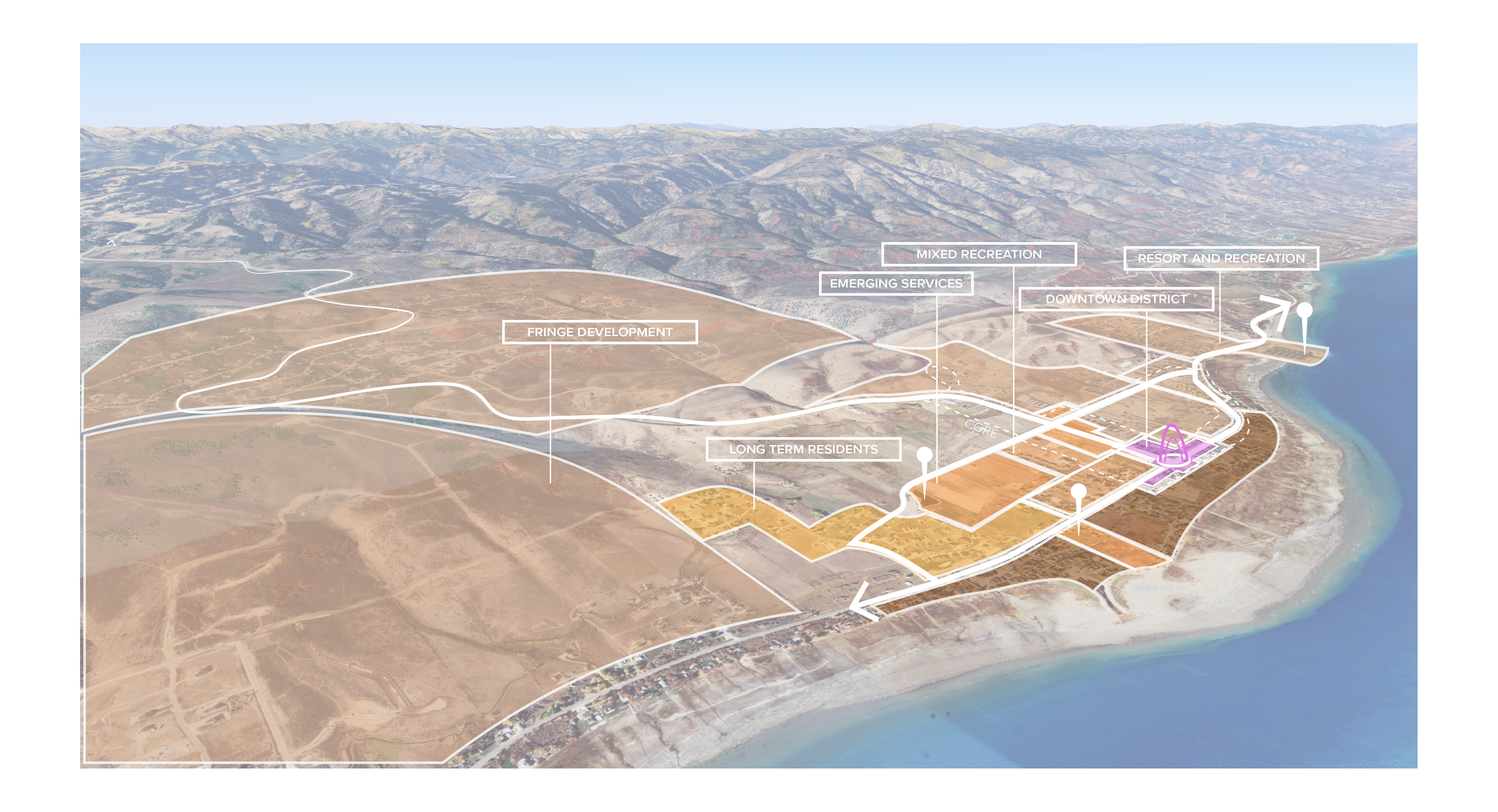
Utah State University’s Landscape Architecture and Environmental Planning’s charrette program spent two semesters focusing on protecting the health of Bear Lake by identifying sensitive ecological areas, designing infrastructure, and shaping the distribution of land use (Figure 5.A.1). Multiple collaborative teams proposed a number of large-scale projects, which would accommodate and lessen the impact of growth on the environment yet maximize social and ecological benefits.
At the end of the charette, one fact was clear: unless the valley’s leaders and policy makers unite across jurisdictional boundaries to create a community vision, the ecological and community assets that make Bear Lake Valley special will be compromised.
Figure 5.A.1 A current community structure diagram of Garden City, Bear Lake’s primary gateway community