COMMUNITY ON THE SHORES OF BEAR LAKE | JARED RAGLAND
TAKEAWAY
More frequent communication across more channels can better align Bear Lake managers and local stakeholders.
Bear Lake management strategies and processes are guided by a comprehensive management plan, created by Utah’s Division of Forestry, Fire, and State Lands. The goal of the plan, recently updated in 2022, is to set objectives for balancing the lake’s many competing values, including ecological health, recreation, navigation, beauty, and economic benefits. Events such as low water levels in Great Salt Lake and increased outdoor recreation following the COVID pandemic added urgency and importance to implementing the updated plan more effectively.
USU researchers interviewed practitioners and stakeholders to understand how they viewed the plan’s regulations and their expectation about how the lake should be managed. Large gaps exist in some of those groups’ perceptions. Stakeholder groups have varying objectives, motives, and perspectives that change over time, and state land managers reevaluate and reprioritize management concerns based on their interpretations of Bear Lake’s needs.
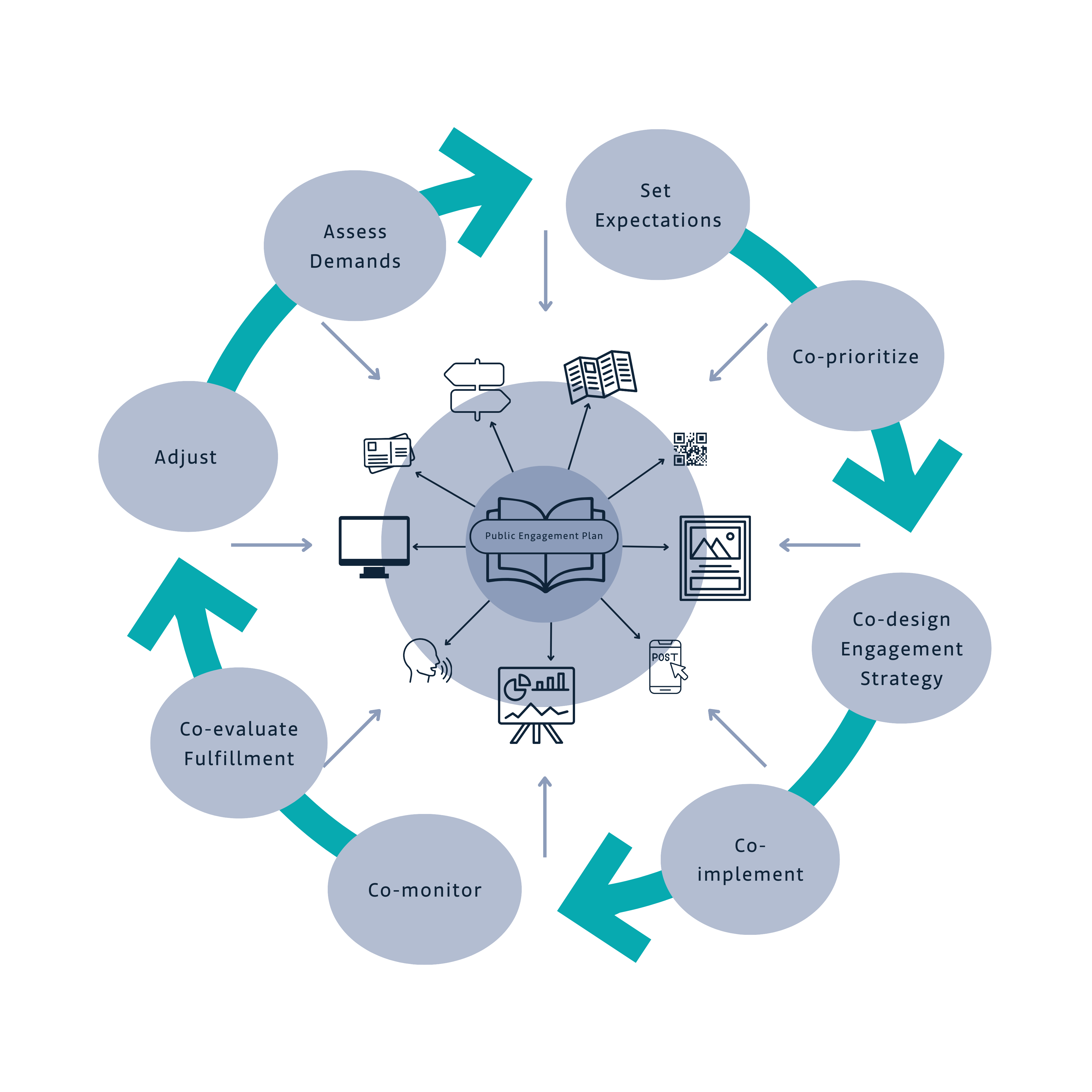
Opportunities exist to better align these groups’ differing perceptions and expectations, through expanding communication on lake management beyond the comprehensive management plan. Because requirements for the state’s role on Bear Lake—and how the public perceives that role changes over time, state land managers can engage with the public more frequently using different communication touchpoints. Forestry, Fire, and State Lands can host regular meetings in which land managers and community partners co-prioritize concerns together. Other touchpoints include a website geared toward visitors and property owners, short videos about regulations or permitting, or interactive flyers to educate tourists. These interactions will help the state achieve management outcomes and tailor their communication to a wider audience.
Figure 5.B.1 Adaptive management and public engagement plan