EURASIAN WATERMILFOIL | JARED RAGLAND
TAKEAWAY
Controlling invasive Eurasian watermilfoil in Bear Lake will require specially designed methods because the lake’s unique water chemistry spurs the plants’ growth and impedes herbicides.
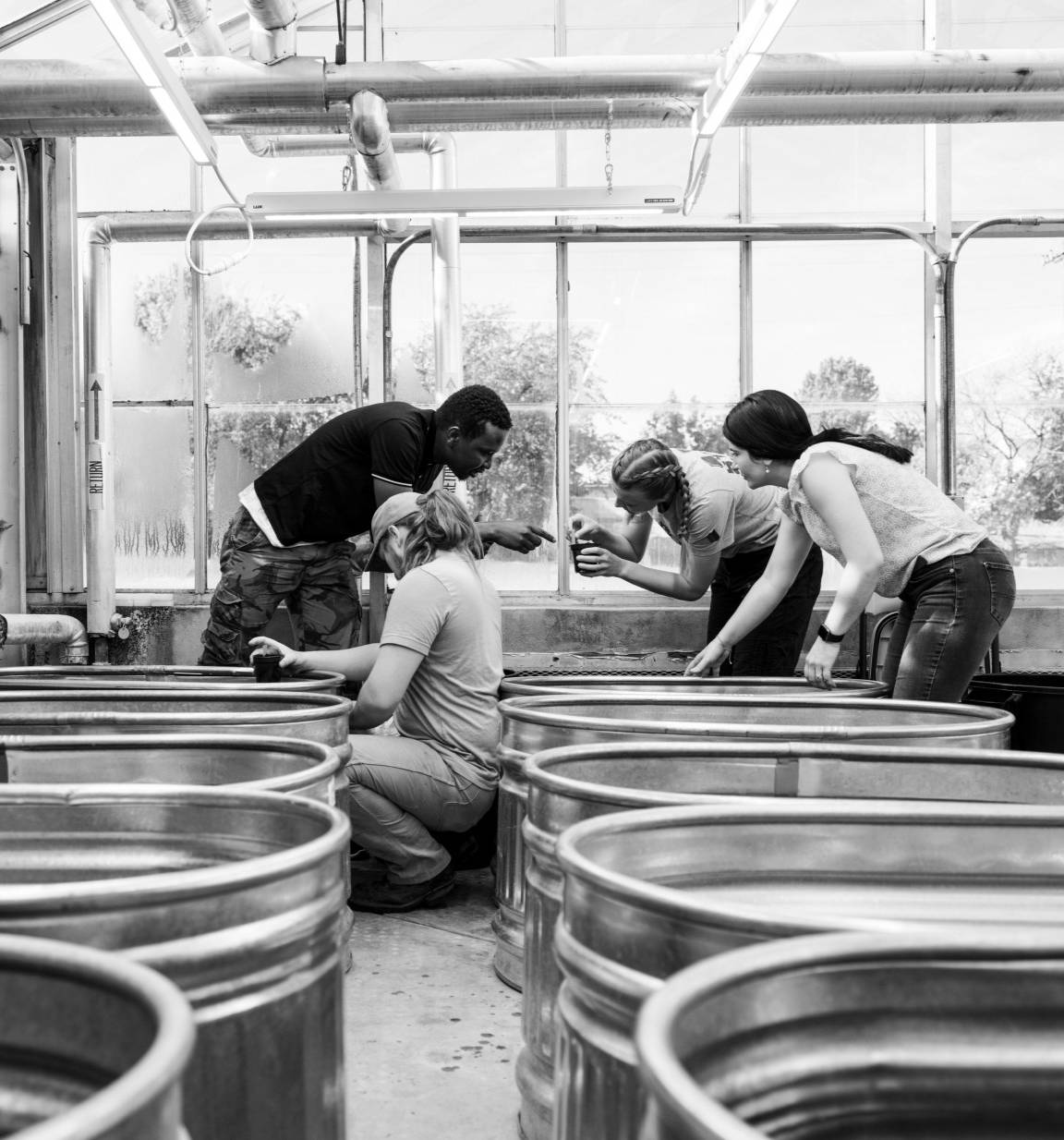
DR. ORTIZ AND USU STUDENTS STUDY EURASIAN WATERMILFOIL | JARED RAGLAND
Eurasian watermilfoil is an invasive aquatic plant that disrupts natural ecosystems and degrades water quality. It forms dense canopies that adversely affect fish populations, water temperature, and oxygen levels. Additionally, Eurasian watermilfoil hinders recreational activities such as boating, fishing, and swimming, lowers property values, and promotes the spread of disease vectors.
To support management decisions for Bear Lake, USU weed scientists investigated the behavior and effectiveness of commonly used herbicides to control Eurasian watermilfoil, along with the influence of Bear Lake’s unique water chemistry on Eurasian watermilfoil growth.
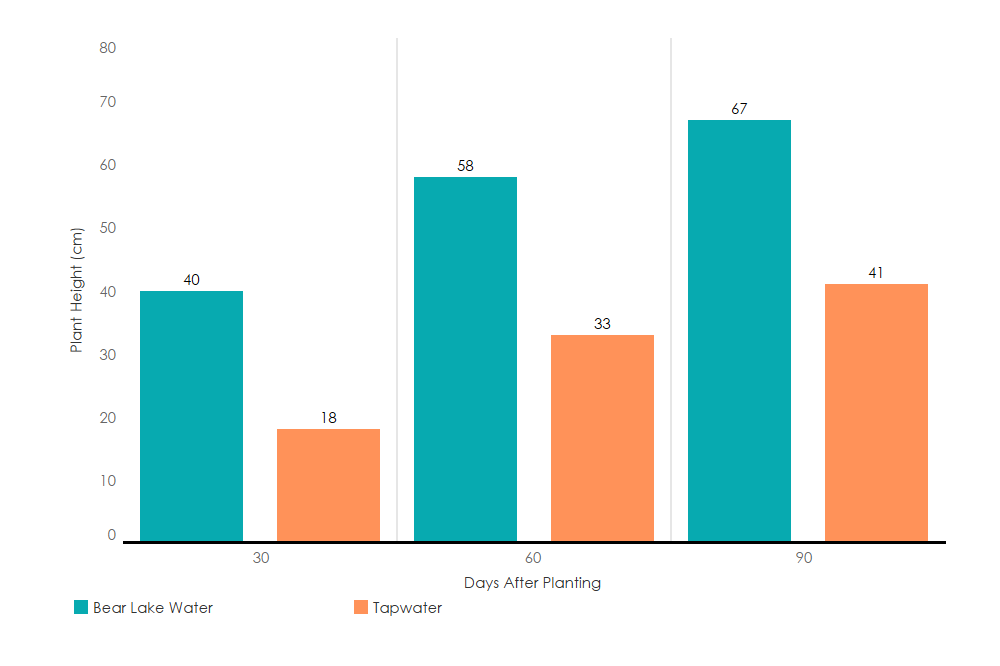
Eurasian watermilfoil plants were grown in the Utah State University Research Greenhouse using either Bear Lake water or tap water and monitored over three months. Researchers also assessed herbicides’ degradation and how effective they were in controlling Eurasian watermilfoil in Bear Lake water. Results demonstrated Eurasian watermilfoil’s significant adaptability and potential for rapid colonization in Bear Lake water. The invasive plant grew vigorously in Bear Lake water, with significant increases in plant height (Figure 5.E.1), the number of shoots per plant, and both aboveground and belowground biomass compared to plants grown in tap water.
Herbicides degraded in Bear Lake water much as they did in tap water, indicating that the unique chemistry of Bear Lake water does not impact herbicide behavior. However, due to the vigorous plant growth in Bear Lake water, a 24-hour exposure to 2,4-D herbicide only achieved 64% control in Bear Lake water, compared to 92% in tap water. This greatly reduced effectiveness highlights the need for tailored management strategies to address Eurasian watermilfoil infestation in Bear Lake.
Figure 5.E.1 Average plant height of Eurasian watermilfoil growth in Bear Lake water and tap water at 30, 60, and 90 days after planting