Contrails Over Utah Lake | Aaron Fortin
TAKEAWAY
Science from the age of steam helps explain contrail formations. Depending on atmospheric circumstances, sometimes they are visible and at other times invisible.
Terms to Know
Contrail: Line-shaped clouds formed by aircraft exhaust mixing with moist cold air.
During the age of steam, in the late 19th century, it was critically important to understand how the liquid phases of water would change with temperature. Two scientists, a French engineer Émile Clapeyron and a German physicist Rudolf Clausius, derived the relationship in 1834—in recognition of their achievement, the relationship is called the Clausius-Clapeyron equation. In a nutshell, the Clausius-Clapeyron equation explains the amount of moisture in the atmosphere.
Commercial aircraft fly at high altitudes where the air is very cold. Per the Clausius-Clapeyron equation, it doesn’t take much water vapor, produced by the plane’s engines, to condense onto the engine’s soot particles and form a cloud, which subsequently freezes to form ice crystals. This reaction results in a thin wispy appearance, also known as a cirrus cloud. These clouds are referred to as aircraft contrails—a contraction of condensation trails.
So, why don’t all commercial aircraft produce persistent contrails? The answer lies in the fact that the cold air at altitude is very dry, so much so that the ice crystals sublimate (pass directly from solid to vapor.) This process, along with the fact that the aircraft is moving very fast, explains the transitory nature of the contrails. There are atmospheric circumstances where the air at altitude becomes humid, like the approach of a storm front. In these cases, the ice particles cannot sublimate, and so contrails can hang on for longer, remaining visible in the sky. This explains why sometimes we see contrails but often we do not.
Figure 3.D.1 Contrails Recorded In Logan, UT, Before Rainstorm.
After several dry months, the North American Monsoon transported upper-level moisture Northward to Cache Valley, resulting in visible contrails and high cirrus seen here on the USU campus on September 8th, 2025. The following day 200th of-an-inch of rain was measured at USU’s weather observatory.
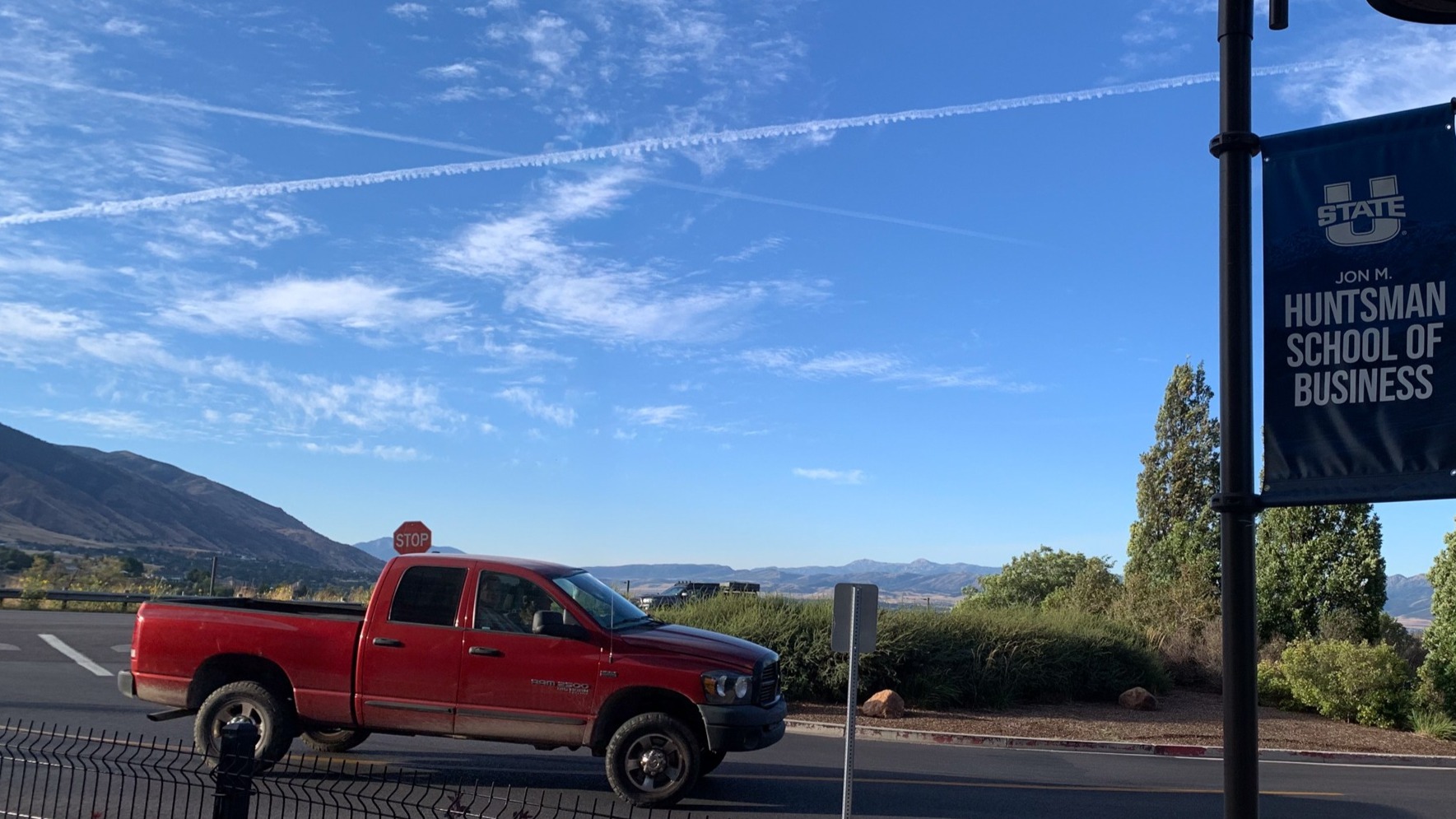
Figure 3.D.2 The Clausius-Clapeyron equation can predict when aircraft contrails will be visible and invisible based on atmospheric conditions.