Utah core reasearch center, Salt Lake City, UT | Aaron Fortin
TAKEAWAY
Through planning and forethought, Utah can provide important supplies of critical minerals vital to energy generation and technology while avoiding environmental conflicts
Terms to Know
Critical Minerals: Essential minerals needed for technology, energy, or defense with limited supply.
Critical minerals are used in energy and technology industries, helping to drive economic growth. Utah’s diverse geology means it has a wealth of minerals. Responsible extraction and processing of minerals domestically reduces supply chain issues, reduces pollution, and brings economic benefits to local communities.
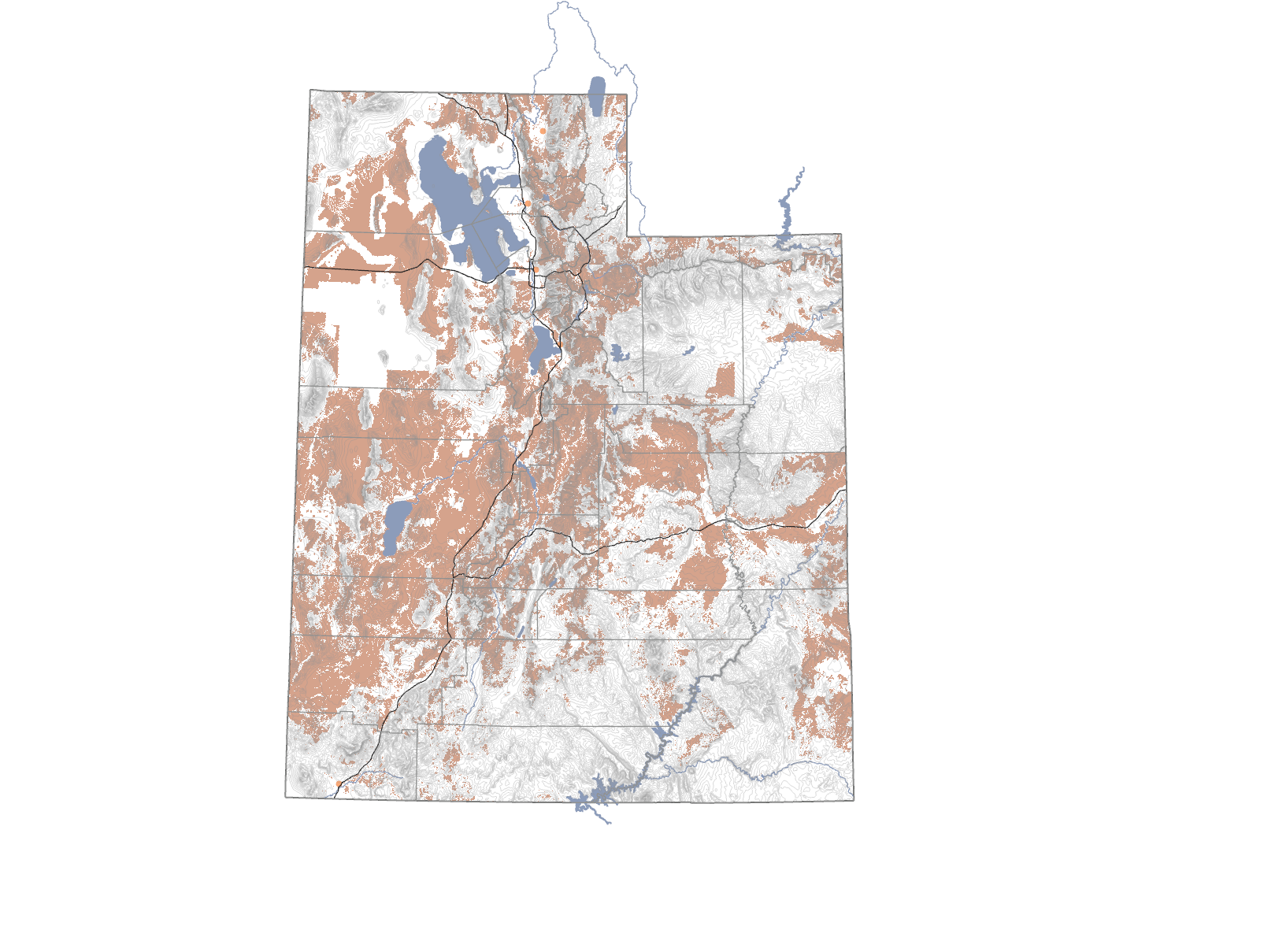
Mines can take decades to explore, permit, and build. By understanding the locations of high and low environmental conflict areas before exploration and permitting, unnecessary environmental impacts can be avoided, and the mine can be approved more quickly. Environmental conflict occurs in areas with high ecological, recreational, and tribal value. The Nature Conservancy’s analysis of 59 critical minerals across six western states provides a broad view of where environmental conflict occurs along with mining impacts. The analysis identified over 17,000 square miles, or more than 21% of the state of Utah, as lower conflict lands overlapping with mineral resources. The analysis also identified geographic areas with high environmental conflict, including urban areas, endangered species habitat, tribal lands, and national parks. Mineral extraction on lower conflict lands should have reduced permitting hurdles and lower impacts on the environment.
Broad studies like this are just a starting point. Additional information such as field data, water availability, and consultation with local communities and tribes is necessary to identify conflict areas that cannot be identified using larger datasets. A key takeaway from the study is that with appropriate planning and consultation, Utah and other western states can provide domestic production of critical minerals while avoiding environmental conflicts.
Figure 4.E.1 Lower Conflict Areas Comprising 21% of Utah’s Land