
agricultural land near bear lake bird refuge | aaron fortin
TAKEAWAY
The pressures of global economics and real estate development can conflict with farmers’ efforts to steward water resources.
Terms to Know
Codesign: Collaborative process where researchers and stakeholders design solutions together.
While farmers must necessarily play a key role in water conservation, they are not solely responsible for the conditions that have led to the Great Salt Lake’s decline, nor can they be the only actors accountable to solve the problem. Indeed, interview-based research indicates that farmers feel deeply protective of Utah’s land and water. They believe—often spiritually—in using the Great Salt Lake Basin’s finite natural resources to strengthen their communities. As demand for housing in the Basin grows, and as profit margins in agriculture continue to fall, farmers feel increasing pressure to sell to real estate developers or maintain water-intensive land use—even though their hearts and heritage remain with the care of the land. An anonymous farmer who was part of the research said, “We’re kind of in an agricultural death zone… I think sometimes we’re putting growth ahead of the stability of everybody else who lives here.” Utah needs both food and housing, along with a collective effort to stabilize water usage throughout the Basin. Policies enabling farmers to choose to steward water more conservatively while also earning a fair return on their labors will enable farmers to choose water conservation and remain in agriculture. And Great Salt Lake, too, can build greater resiliency if the region engages in more serious conversations about managing growth. Conservative economic expansion and growth that prioritizes and defends both ecology and heritage will create opportunities to better steward water. Solutions should be codesigned with farmers to take seriously their financial needs and place-based values. Those processes will better preserve the long-term stability of the region as a whole.
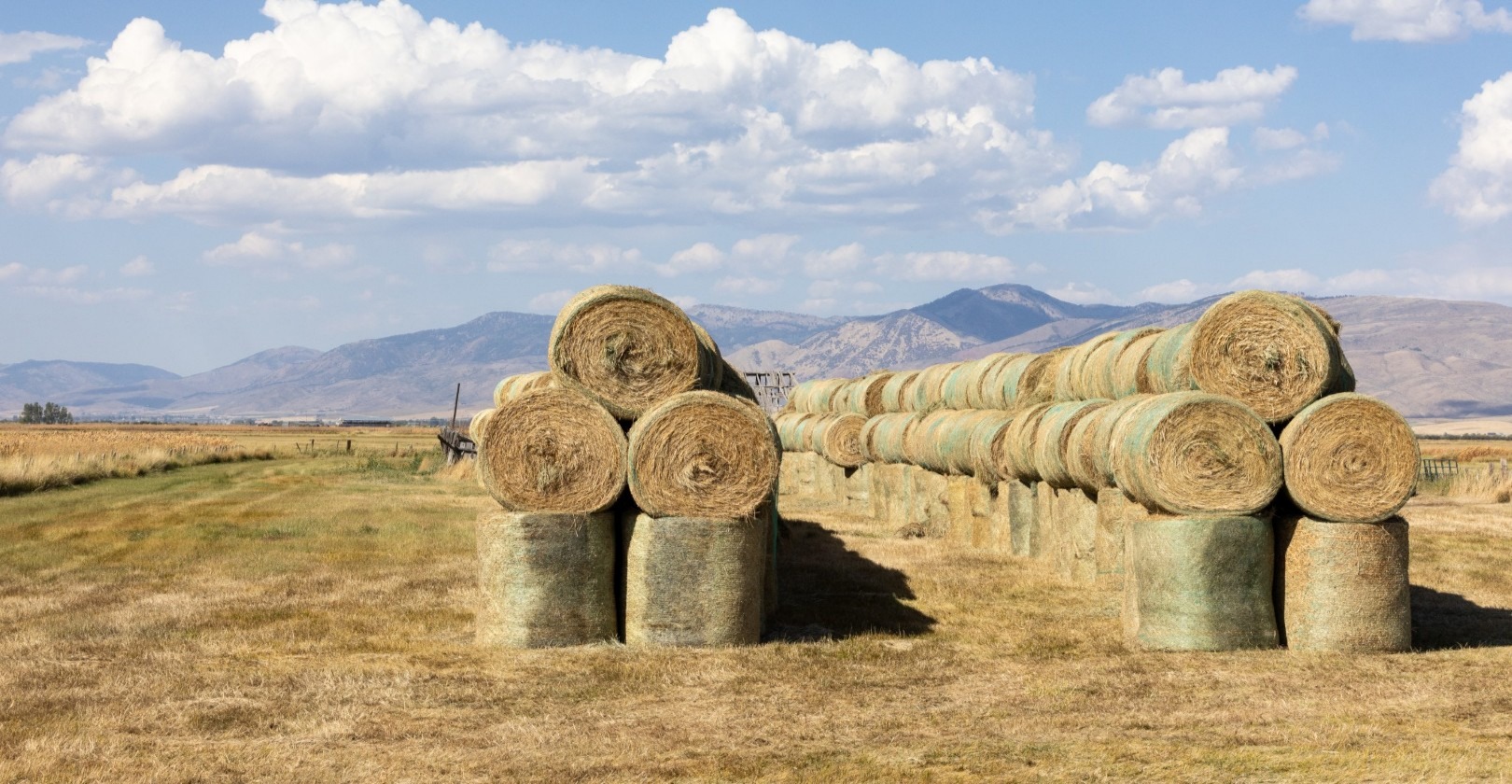
Hay Bale Near Bear Lake Bird Refuge | Aaron Fortin
References
- 5.C.1. Watkins, B. N. (2025). ‘Once Our Land is Gone, It’s Gone’: Farmer Perspectives on Growth, Embeddedness, and the Future of Food in the Great Salt Lake Basin. [Thesis, Utah State University]. https://digitalcommons.usu.edu/etd2023/455.