
Wildfire Aftermath Sevier River Area | Aaron Fortin
TAKEAWAY
Wildfire resilience can be increased using community preparedness strategies, pre-fire fuel reduction methods, and post-fire planting.
Wildfire resilience in the human context is the ability for people, homes, communities, and infrastructure to withstand wildfire without significant disruption to health or livelihoods. This can be enhanced through wildfire-ready construction materials, vegetation management, and planning. Effective wildfire preparations include minor improvements such as installing screens on home vents to major interventions like planning development to minimize wildfire risk.
In the context of wildland ecosystems, wildfire resilience refers to the ability of an ecosystem to return to a similar condition after a fire, through natural processes or through management activities such as hillslope stabilization or planting. In Utah, many ecosystems are naturally wildfire resilient. Some of our native species have a long history of recovering or even thriving after fire, though it may take time. In some ecosystems, resilience can be fostered prior to fire through active vegetation and fuel management. A loss of resilience occurs when a wildfire burns in an uncharacteristic way for an ecosystem, or when heat or drought overwhelm recovery processes. This means that in some burned areas, ecosystems may not return to pre-fire conditions.
Recent research shows that planting aspen in post-fire settings can be successful in Utah to create wildlife habitat, stabilize soil, and possibly serve as a fire break where it grows in pure groves. However, enhancing wildfire resilience prior to wildfire, by preparing human communities and wildland ecosystems, is more likely to achieve success than reacting to wildfire after it occurs.
Enhancing wildfire resilience prior to wildfire, by preparing human communities and wildland ecosystems, is more likely to achieve success than reacting to wildfire after it occurs.
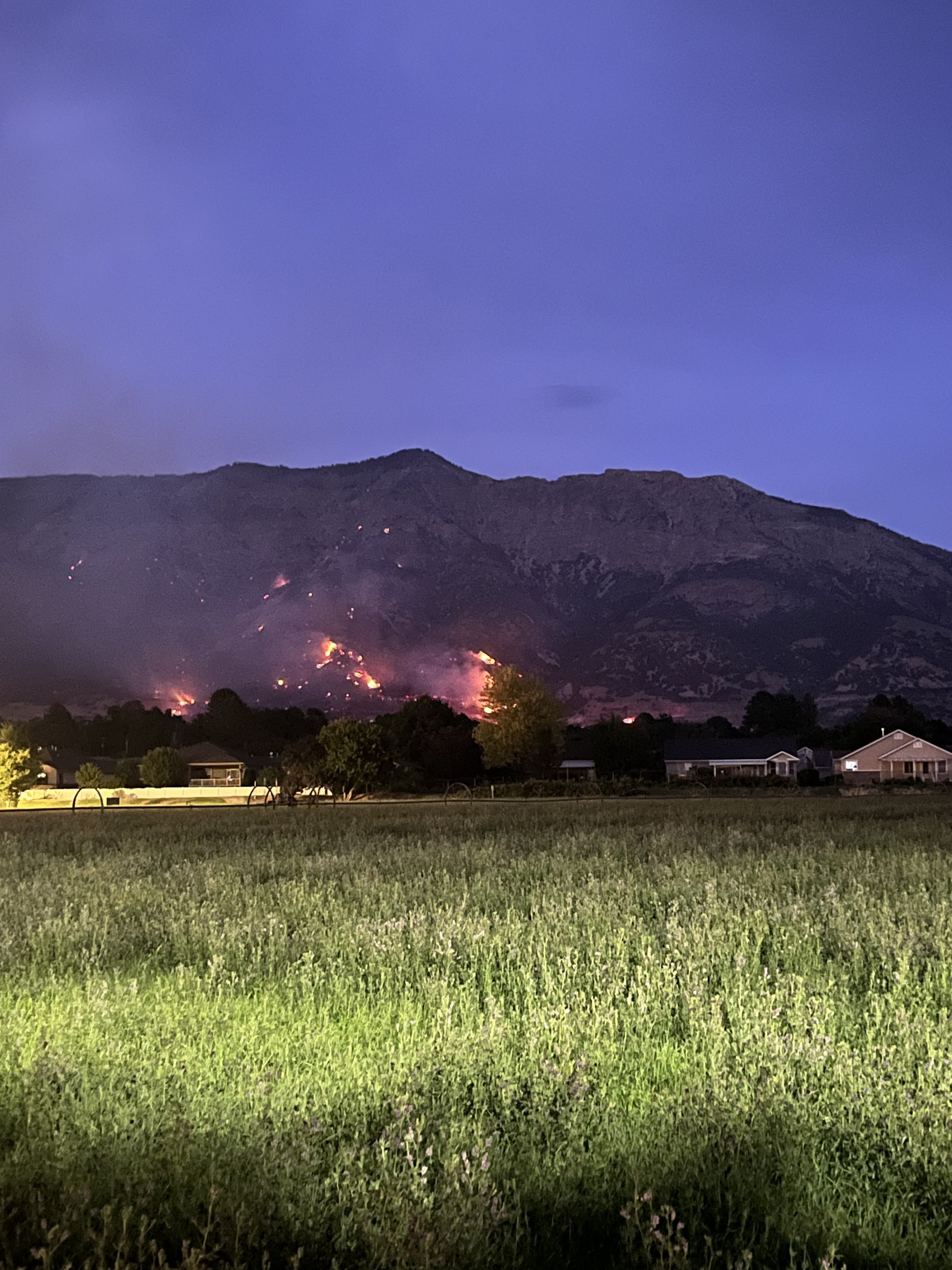
Willard Peak Wildfire | Kori Ann Kurtzeborn
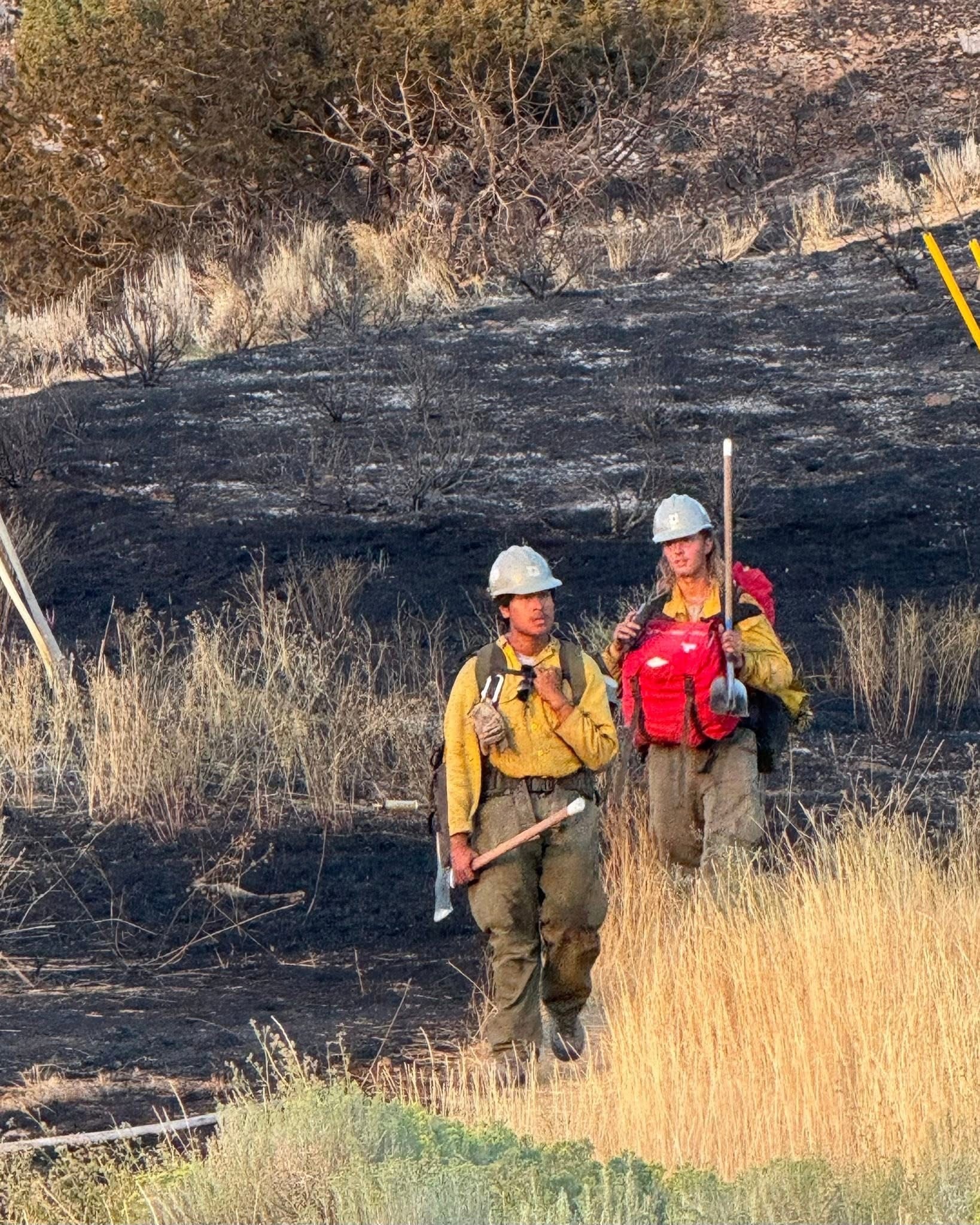
Fire Fighters, Logan, UT | Steve Smith
References
- 5.D.1. Nesbit, K. A., Yocom, L. L., Trudgeon, A. M., DeRose, R. J., & Rogers, P. C. (2023). Tamm review: Quaking aspen’s influence on fire occurrence, behavior, and severity. Forest Ecology and Management, 531, 120752. https://doi.org/10.1016/j.foreco.2022.120752
- 5.D.2. Nesbit, K. A., Yocom, L. L., Trudgeon, A. M., Rogers, P. C., McAvoy, D. J., Lane, E., & DeRose, R. J. (2024). Stand composition and development stage affect fuel characteristics of quaking aspen forests in Utah, USA. Canadian Journal of Forest Research, 55, 1–13. https://doi.org/10.1139/cjfr-2024-0095
- 5.D.3. Yocom, L. L., Kreider, M. R., Burney, O. T., Parsons, T., Choi, R. T., Liese, E. K., & Mock, K. E. (2025). Experiments to enhance post-fire aspen seedling survival and growth. New Forests, 56(4), 41. https://doi.org/10.1007/s11056-025-10097-7