
Start by Believing
Nationally, 4 out of 5 students do not report the sexual violence they experienced to law enforcement according to RAINN, and only a small minority of survivors file a formal complaint with university authorities. In USU’s 2017 campus climate survey on sexual misconduct, 57% of survivors said they feared being blamed or not being believed, and more than a third said they told no one about their experience at all. The most common reasons survivors stayed silent included concerns about privacy, shame, not thinking their experience was serious enough, and the fear of not being believed.
Since USU launched its Start by Believing efforts, the share of survivors who did not tell anyone about their experience dropped from nearly 38% to 17%. When someone tells you they were sexually assaulted, knowing how to respond is critical. A negative response can worsen trauma for survivors and foster an environment where perpetrators face no consequences for their crimes.
When you Start by Believing, you help stop this cycle. Improving our personal and professional reactions encourages more people to disclose their own experiences with sexual assault so they can get essential support. It starts with you.
End the silence. Stop the cycle of Violence. Start by Believing
How to "Start by Believing"
What to Say if Someone Discloses to You
- Listen with empathy and validate the person disclosing to you. For example:
- “I’m sorry this happened. I’m here for you.”
- “You can tell me as much or as little as you want.”
- “It’s not your fault.”
- “I’m glad you told me. What can I do to support you?”
- Avoiding asking “why” questions. These can sound accusatory and make survivors blame themselves. It is not your responsibility to investigate or to determine if a crime or policy violation was committed.
- Trust the person disclosing to you to know what is best for themselves. Often, survivors have had the ability to make their own decisions stripped away from them; it’s our role to put that power back in their hands by supporting their choices.
- Know the resources available, including victim advocacy and reporting options, and ask if they need help getting connected.
- Recognize that healing from trauma is not black and white, and each survivor will heal at their own pace and in their own way. Because of this, someone may not be ready or able to report to either police or Title IX right away, or ever. That is okay.
- Understand why survivors may delay reporting and that waiting to report does not mean that they are lying. Survivors often say fear of their perpetrator or retaliation from the perpetrator’s friends kept them from reporting. A perpetrator often has some sort of power over a victim – social, economic, emotional, or academic – that makes it more difficult for a victim to come forward. Those who do report, go through a long process that does not guarantee a particular outcome in the justice system.
- Over time, that power dynamic may shift, or a survivor will feel empowered to report their experience after receiving counseling and processing their experience. Authorities encourage reporting at any point.
In Your Social Interactions
Speak up: Many people dramatically overestimate the percentage of sexual assault reports that are false. In fact, research shows that about 2-8% of sexual assault reports to law enforcement are false, far less than many people realize. Challenge these myths when you hear them!
Take a stand: When you hear people blame a victim for their “role” in the sexual assault, remind them that we’ve all made choices that decrease our safety. It is not the choice of the victim that matters – it is the decision of someone else to commit a sexual assault.
Start a conversation: Social media allows you to carry the message farther and faster than ever before. Use your preferred platform to engage in a conversation on what it means to #StartbyBelieving. Print the pledge banner, take a selfie, and share it!
Know where to get help: If someone discloses to you, help them get the resources they need by visiting with one of the victims’ services listed on the back.
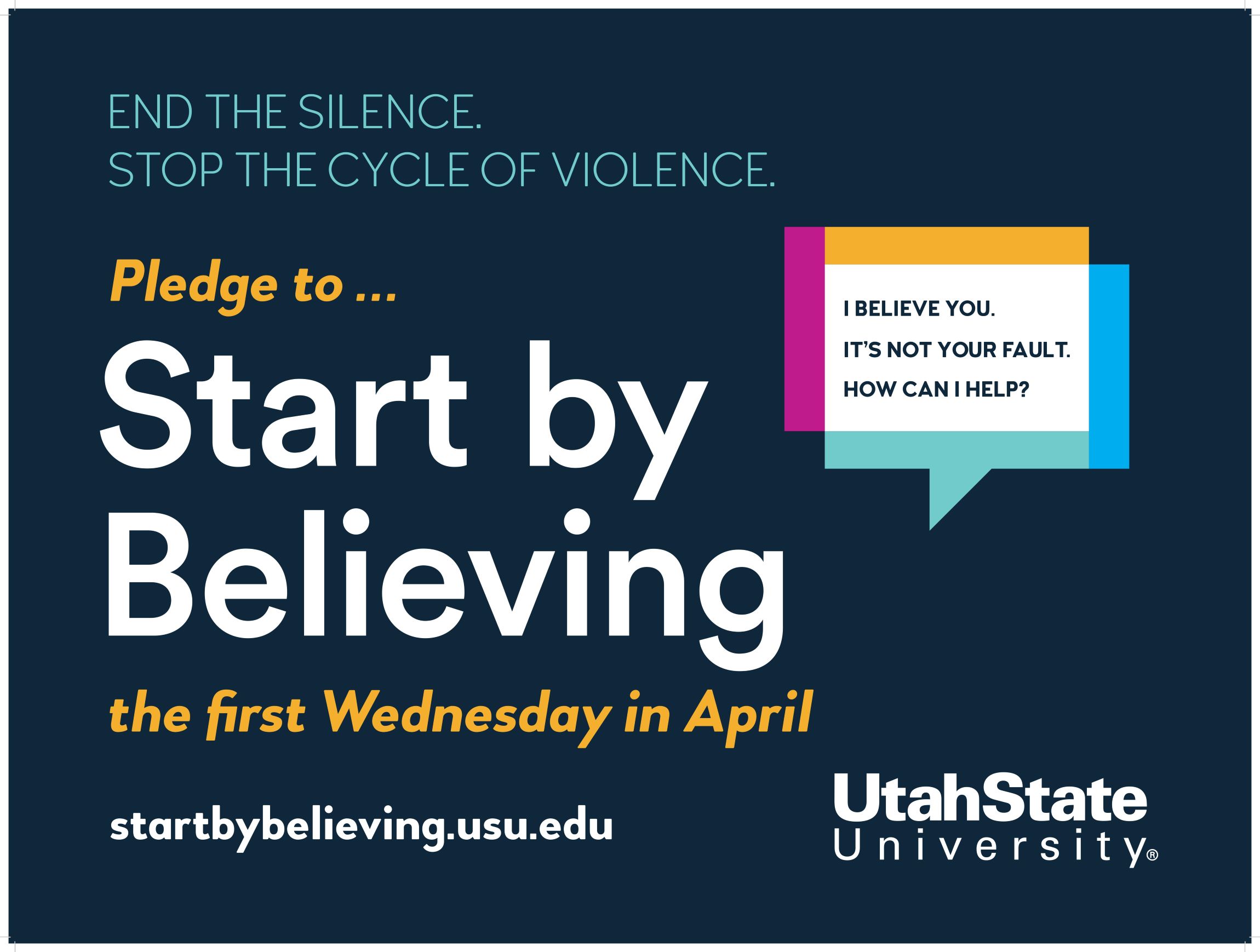
Take the Pledge to Start by Believing
Make your personal commitment to:
- Start by Believing when someone tells you they were sexually assaulted.
- Support survivors on the road to justice and healing.
- Help end the silence.
Add #USUaggies in the "I am" section of the pledge form so we know how many Aggies pledge!
History
Utah was the first designated Start by Believing state in the country in 2015, and USU has been a Start by Believing leader since 2018. In 2021, End Violence Against Women International recognized USU as the only university in the country honored for its ongoing commitment to the campaign. In 2023, USU students and employees represented about 80% of all Start by Believing pledges made statewide.
Additional Information
Learn more about resources and reporting.
Get Frequently Asked Questions for Start by Believing at USU.
Listen to a Start by Believing Aggie Radio podcast.