Ask an Expert: Monsoons Could Impact Utah Wildfire Season
By Julene Reese |
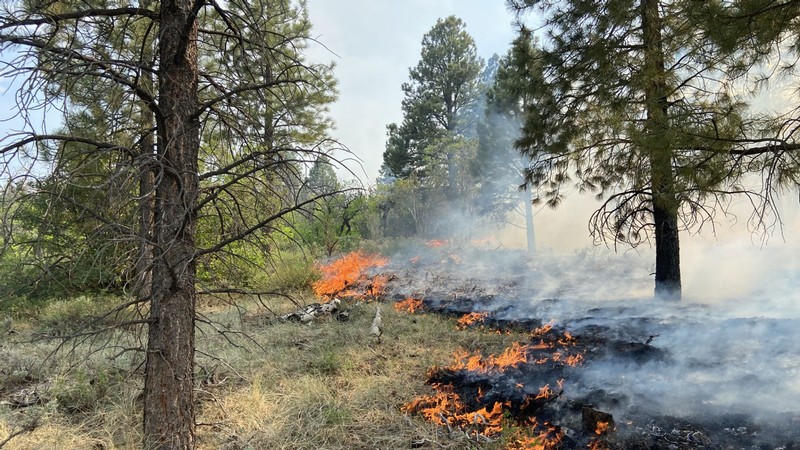
The Bear Fire burns near Ponderosa pine at Price Recreation Site. Ponderosa pine have a strong relationship with frequent and low-intensity wildland fires and rain from the summer monsoons. (Photo credit: USU/Brad Washa)
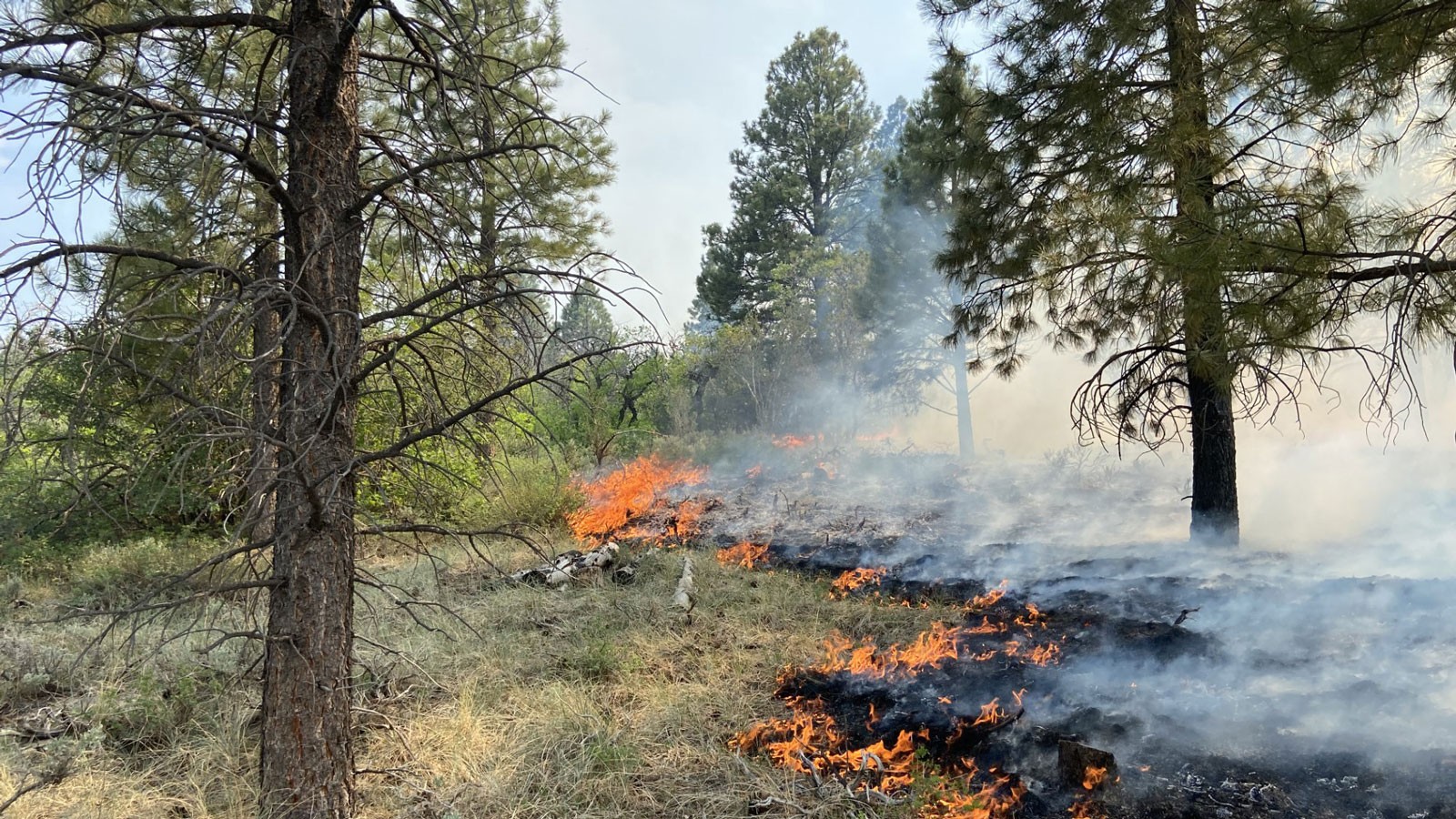
Utah entered the 2026 fire season with record-low snowpack and heightened concerns about wildfires, which are already burning across the state.
As of early July, there have been 390 wildfires across Utah burning nearly 300,000 acres. Of these fires, 278 have been human-caused, 73 caused by lightning and 39 with the cause yet to be determined. While the earlier fires were at middle elevations in grass, brush and pinyon-juniper woodlands, as the fire season continues, fire activity is starting to move into higher elevations. This was seen near Beaver, Utah, where the Cottonwood Fire is moving higher up into timber, burning around the Eagle Point Ski Resort above 9,000 feet.
Monsoons are one variable that could have a large impact on Utah’s wildfire season. The North American Monsoon, also known as the Southwest Monsoon, is a pattern of seasonal increases in thunderstorms and rainfall over large areas of the southwestern United States during the summer. While monsoons can have a statewide impact, Southern Utah tends to be most affected.
Early monsoon: This has already spread into some Utah regions. As the monsoon develops, rain and increased relative humidity can dampen fuels that burn in a wildfire.
Though that sounds helpful, it can cause lightning ignitions. When there is not enough moisture to produce significant rainfall, there can be enough to generate dry lightning with strong outflow winds, referred to as a dry thunderstorm. Lightning with these dry thunderstorms can result in numerous new fire starts, and outflow winds can quickly change the direction a fire moves and its rate of spread. This rapid change in fire behavior can result in dangerous conditions for wildland firefighters.
Robust monsoon: Prolonged elevated relative humidity and widespread rains tend to slow, if not end, the wildfire season. In 2023, remnants of Hurricane Hilary moved into the region during August, effectively ending the wildfire season — not just in Utah but across much of the West.
Underperforming monsoon: This could allow the fire season to extend later into the summer and even fall. An underperforming monsoon can also lead to more dry lightning outbreaks if it remains on the periphery of the deeper monsoon moisture.
Some referred to last summer as the non-soon, since the monsoon was delayed, and several larger, damaging wildfires occurred across Utah. With the monsoon arriving late, precipitation across the state was well below normal for July.
Last year’s Monroe Canyon fire spread quickly during a prolonged period of red-flag days with hot, dry, windy conditions in mid-July.
Monsoons can be a double-edged sword. Along with moisture often comes lightning, which is an ignition source, while elevated moisture during a good monsoon typically keeps new fire starts in check. However, this moisture can mask holdover fires — where a new fire is ignited and smolders, sometimes unseen for days — before conditions dry out and allow the fire to become active and smoke becomes visible. Heavy monsoon thunderstorms can also result in flooding, especially in recent burn areas.
Going into July, the significant wildland fire potential outlook from the Great Basin Coordination Center’s Predictive Services calls for above-normal potential for all of Utah above 3,500 feet in elevation. The Climate Prediction Center monthly precipitation outlook for July also shows an above-normal probability of precipitation.
However, a developing El Nino could suppress the monsoon and potentially delay the arrival of the monsoon until later in July or even August in Utah. Heading into the first week of July, this delayed arrival could cause monsoon moisture to be suppressed across northwest Mexico, with little likelihood of it reaching the Desert Southwest.
If this is the case, there will likely be heightened fire danger continuing into the beginning of July, but the risk of large wildfires may decrease further into July, depending on how the monsoon develops and progresses. People should be vigilant in preventing human-caused wildfires now and always, but especially until the monsoons arrive or until snow falls.
Two videos produced in the past year share wildfire information and preparedness tips. The first focuses on community resiliency: “Learning Opportunities on Firewise out of the Forsyth Fire in Pine Valley."
The second, in collaboration with Brian Schnee of KUTV, is “How to create a firewise landscape around the home.”
For more information on wildfires, visit https://extension.usu.edu/preparedness/wildfires.
WRITER
Julene Reese
Public Relations Specialist
Extension
435-757-6418
julene.reese@usu.edu
CONTACT
J. Bradley Washa
Assistant Professor of Wildland Fire Science
Utah State University Extension
Brad.Washa@usu.edu
SHARE
Comments and questions regarding this article may be directed to the contact person listed on this page.