Internship to Career: USU Industrial Hygiene Undergraduate Lands Dream Position
First-generation college student Andrew Garza gains in-the-workplace experience during summer internship and prepares for post-graduate employment in the copper industry.
By Mary-Ann Muffoletto |

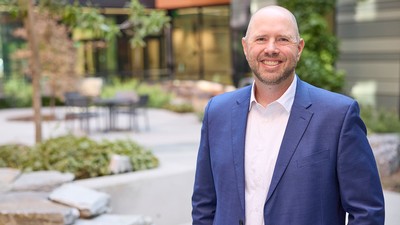
USU industrial hygiene undergraduate and first-generation college student completed a paid summer internship with copper mining and manufacturing company Freeport-McMoRan in Arizona. The Springville, Utah native received a stellar performance review and a permanent job offer upon his graduation from Utah State in spring 2026. (Photo courtesy Freeport-McMoRan)

Utah State University undergraduate Andrew Garza had never heard of industrial hygiene when he began studies at the school’s Logan campus.
“I was interested in chemistry and biochemistry and considered those as possible majors,” says Garza, a first-generation college student from Springville, Utah. “My advisor urged me to consider study of industrial hygiene which, she said, combined many of my interests. I spoke with faculty, learned more about it and decided to pursue it. I’m glad I did.”
Industrial hygiene is the science and practice of protecting the health and safety of people in the workplace. USU’s degree program, one of only four ABET-accredited undergraduate programs in the nation, is administered through the public health program of the Department of Biology. The program’s rigorous coursework combines chemistry, biology and mathematics, with instruction in physical, chemical and biological hazards. Graduates of USU’s program can pursue professional accreditation as certified industrial hygienists and safety professionals.
Garza is among more than 20 USU industrial hygiene scholars who secured paid internships this past summer in 11 states in a diverse range of industries. The Aggie senior spent the summer at copper mining and manufacturing company Freeport-McMoRan’s smelter in Miami, Arizona.
“This was my first experience working in the mining industry, so I learned a lot during my internship,” Garza says. “My assigned project involved air quality sampling and assessing the condition of ventilation hoods throughout the smelter facility.”
Copper sulfide ore is crushed, turned into a concentrated powder and shipped to the smelter in Miami, Arizona, where it is heated to temperatures exceeding molten lava, he says. This helps separate the copper in preparation for final processing.
“The copper is further refined to more than 99.99 percent purity, which is used in our computers, homes and vehicles,” Garza says. “In addition to the extreme heat, it’s a process that releases toxic gases, particulate matter and harmful heavy metals into the workplace air, so enormous care is taken to protect workers involved in its manufacture.”
Garza’s workdays began early, starting with a 20-minute commute from his internship housing to the worksite, with a 5 a.m. check-in.
“The smelter is a 24/7 operation, so each workday began with my supervisor reviewing a stack of email messages about overnight production levels,” he says. “My assignment was compiling an inventory and assessment of every ventilation hood in the facility — about 60 — along with their location, condition, operational values and maintenance history.”
Assessment of those hoods put Garza’s knowledge of math, physics and chemical hazards, along with his skills in use of measurement tools for airflow and contaminants, to the test.
“I put together a detailed report, which I presented at an end-of-internship conference at corporate headquarters in Phoenix,” he says. “Senior management attended and, little did I know, the president of North American operations was in the room during my presentation. It was intimidating, but it was also a great experience.”
Though workdays were long and the weather was hot, Garza says his employer provided generous perks.
“My housing was included in the internship, along with prescription safety glasses, work boots and other personal protective equipment,” he says. “The company paid for transportation to the internship site, along with transportation and lodging for site visits and trips to corporate headquarters in Phoenix. I also had access to a gym and pool, free of charge.”
At the conclusion of his internship, Freeport-McMoRan presented Garza with a stellar performance review, along with an employment offer as an industrial hygienist/health and safety professional upon his graduation from USU next spring. The Aggie scholar accepted.
“I’m excited to work with a safety team I’ve already gotten to know,” he says. “Looking forward to this position gives me extra motivation and a sense of purpose in my academic work.”
Garza says his faculty mentor, Principal Lecturer John Flores, who leads USU’s industrial hygiene internship program, guided the undergrad to his summer internship assignment.
“John has many contacts with industry, including alumni of USU’s IH program,” he says. “He bends over backwards to help his students in their studies, in finding internships and giving advice to help them succeed professionally.”
Garza says he also visited USU’s Career Design Center, where he received help in polishing his resume and learning how to write cover letters to apply for internships.
He says USU’s student chapter of the American Industrial Hygiene Association has also been an important source of support and camaraderie.
“My classmates in IH are great and create such a friendly, inclusive atmosphere,” Garza says. “We study and work on projects together, and take the time for social activities, too.”
Among his favorite club activities are “Lunch-and-Learn” gatherings, where health and safety professionals from varied industries are invited to USU to talk with students, share information about their work and offer career advice. Many of these professionals, Garza says, are USU industrial hygiene alumni.
“We’re welcomed into a wide network of professionals, who are helpful and provide a lot of encouragement,” he says. “Our professors in the IH Program, John Flores, Carl Farley and Scott Bernhardt, are also amazing. I’m very grateful for my USU experience.”
WRITER
Mary-Ann Muffoletto
Communications Specialist
College of Arts & Sciences
435-797-3517
maryann.muffoletto@usu.edu
CONTACT
John Flores
Principal Lecturer
Department of Biology
435-797-8194
john.flores@usu.edu
SHARE
Comments and questions regarding this article may be directed to the contact person listed on this page.