New Report Details Half Century of Change for Summit County Climate
By Lael Gilbert |
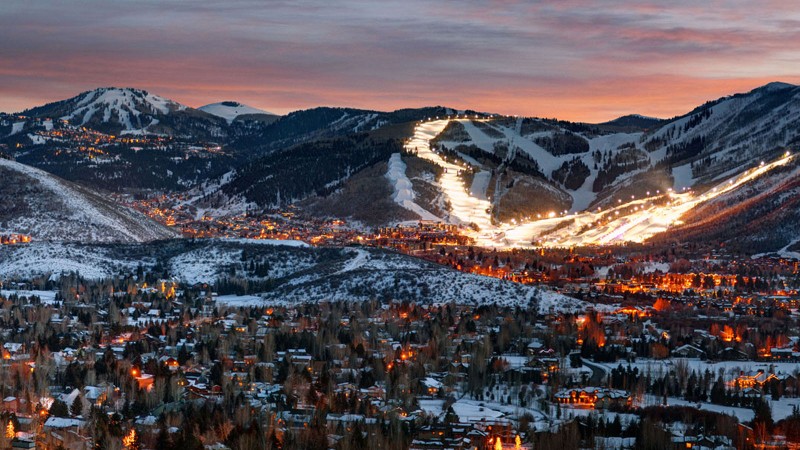
(Photo credit: Peteyshead, CC BY-SA 4.0. https://commons.wikimedia.org/wiki/File:Park_City_overview.jpg)
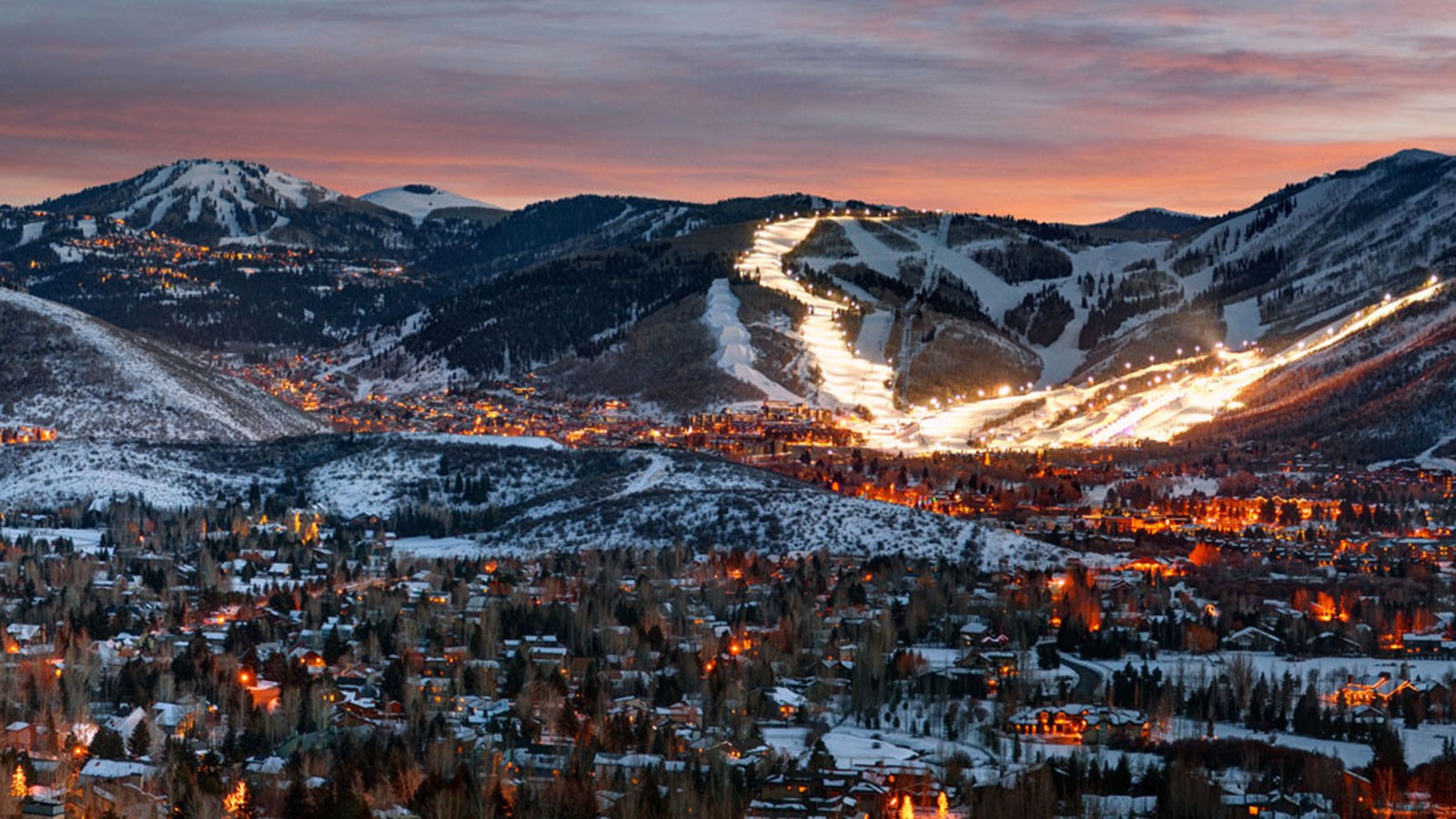
Over the past 50 years life in Summit County has changed significantly — and not just real estate prices. Nights are warmer, less snow is falling, and the growing season is getting longer.
A team led by Utah State University climate ecologist Scott Hotaling, in collaboration with the Summit County Health Department, examined five decades of climate observations to understand changes in temperature, snowpack, growing seasons, and wildfire patterns in Utah’s high-elevation county — and to consider what the next 50 years may bring.
“People often think about climate change as one-off events — like a low snowpack or a heat wave,” said Hotaling, an Extension specialist in the Quinney College’s Department of Wildland Resources. “Or maybe we think of it at big geographic scales. But we have a lot more observations now to be able to consider the impacts locally from a holistic perspective.”
Summit County is geographically and economically unique. As the highest mean elevation county in the state, it has world-class ski resorts that neighbor agricultural lands, high alpine tundra, and conifer forests that give way to sagebrush foothills and rangelands. Park City, the county's largest city, is a hub for tourism, outdoor adventure, and a well-rooted community.
Records show that the county has shifted warmer over the last half-century, with the major difference showing up at night. Since 1980, the average daily low temperature rose 0.8 °F every decade, even while daily highs remained relatively steady.
“I knew there had been changes, but these results were profound,” Hotaling said. “That much change in temperature, even if it feels relatively small, can have a big impact on forests with invasive pests like mountain pine beetle, and of course snowpack accumulating slower and melting faster.”
There has been a significant decline in snowpack in the county since 1985, according to the report, with more winter precipitation arriving as rain, even at higher elevations. From 1985 to 2000, winter precipitation almost exclusively arrived as snow. But starting in 2010, as much as 40% of total winter precipitation was rain with the highest percentage on record last winter.
“Summit County's identity and economy are tied to snow,” Hotaling said. “With peak snowpack dropping nearly 30% over four decades, that’s a fundamental shift with big impacts for economics and ecology.”
The county’s growing season has also lengthened. Consecutive frost-free days nearly doubled since 1979, from 51 to 95 days each summer, adding nearly one day every year.
While this change may benefit some forms of agriculture and recreation, warmer summers and shifting precipitation also mean increased risk for wildfire. Summit County has mostly avoided the largest megafires as seen in other parts of the region, but the wildfire roulette will eventually land, Hotaling said. Recent data indicate that Utah will see more late-season wildfires in the coming decades.
“The trends show us where things are generally heading, but in terms of impact, the next 50 years really depends on how communities choose to prepare,” Hotaling said.
Planning and adaptation are important, he said. This can include taking advantage of tools to bolster and protect water resources, planning for more and bigger wildfires, and considering opportunities to bolster renewable energy sources like solar power.
“Winters, like the most recent one where we had one of the worst snowpacks on record followed by a lot of wildfire activity, really represent a preview of what’s to come,” he said. “Thinking ahead, what will we wish we had done sooner? The sooner we start working toward solutions, the better.”
WRITER
Lael Gilbert
Public Relations Specialist
S.J. and Jessie E. Quinney College of Agriculture & Natural Resources
435-797-8455
lael.gilbert@usu.edu
CONTACT
Scott Hotaling
Assistant Professor
Watershed Sciences
scott.hotaling@usu.edu
TOPICS
Research 1193stories Utah 508stories Agriculture 285stories Climate 184stories Recreation 84storiesSHARE
Comments and questions regarding this article may be directed to the contact person listed on this page.