Study Finds 'Beauty Bias' Shapes Who Gets Picked to Lead


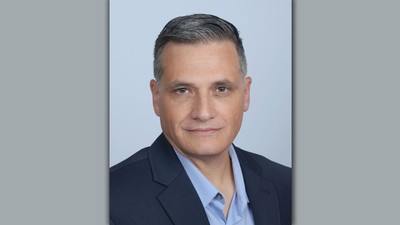
LOGAN, Utah — A new meta-analysis coauthored by Utah State University’s Gary R. Thurgood shows that physical attractiveness meaningfully sways who emerges as a leader — across classrooms, companies and even executive suites.
The paper, published OnlineFirst in the Journal of Management, integrates decades of research and concludes that attractiveness is consistently linked to leader emergence, largely because observers infer that attractive people are “warmer,” and, to a lesser extent, more competent.
Thurgood, an associate professor in the Jon M. Huntsman School of Business at USU, coauthored the study with Stephen H. Courtright and colleagues.
What the researchers found:
- The link is real — and sizable. Pooling 65 independent samples, the authors report a robust positive relationship between physical attractiveness and leader emergence. In other words, attractive people are more likely to be granted informal or formal leadership status by peers, raters or selection committees.
- Warmth drives the effect. Perceptions that an attractive person is friendly, trustworthy and empathetic explain more of the bias than perceptions of raw competence.
- Not just “for the guys.” Contrary to the classic “beauty is beastly” claim, the effect holds equally for men and women.
- Context matters. The bias is stronger in informal settings (think team projects or peer infuence) than in structured hiring or promotion processes. It also appears slightly stronger among college-student raters than full-time employees, and somewhat stronger in collectivist cultures — yet it shows up across executive and non-executive roles alike.
“Leader emergence” refers to the process by which someone becomes influential enough to be seen as the leader, whether or not they hold a formal title. By synthesizing prior studies through meta-analysis, the authors provide one of the clearest estimates to date of how much looks can tilt that process.
Why it matters for campuses and companies
The findings raise uncomfortable, and practical, questions for organizations that prize merit. If warmth inferences are unconsciously tied to attractiveness, promising leaders who don’t match prevailing beauty norms may be overlooked, especially in early-career or classroom settings where informal influence dominates. The authors argue that organizations should acknowledge and actively mitigate beauty bias in leadership identification and development.
What leaders can do about it
- Add structure where influence is informal. Use rubrics and multi-rater feedback to identify team leads in classes, internships, and early career programs.
- Train raters on warmth competence. Explicitly separate interpersonal behavior evidence (warmth) from look-based assumptions; require concrete examples.
- Broaden “early leader” pipelines. Rotate stretch assignments and speaking roles so influence isn’t conferred by first impressions alone.
About the paper
- Title: The Beauty Bias and Leader Emergence: A Theoretical Integration, Extension, and Meta-Analysis.
- Authors: Stephen Courtright; Gary R. Thurgood; Huiyao Liao; Timothy J. Morgan; Jiexin Wang.
- Journal: Journal of Management (SAGE); OnlineFirst May 13,
- DOI: 1177/01492063251330199.
About Gary R. Thurgood
Thurgood is an associate professor in USU’s Huntsman School of Business (Management Department), with expertise in organizational behavior and human resource management. For readers who want to dive into the study, the publisher’s page and institutional repository listing are available online.
CONTACT
Megan Bowen
Director of Marketing
Jon M. Huntsman School of Business
megan.bowen@usu.edu
SHARE
Comments and questions regarding this article may be directed to the contact person listed on this page.