USU Breaks Ground on Highly Anticipated new Moab Campus
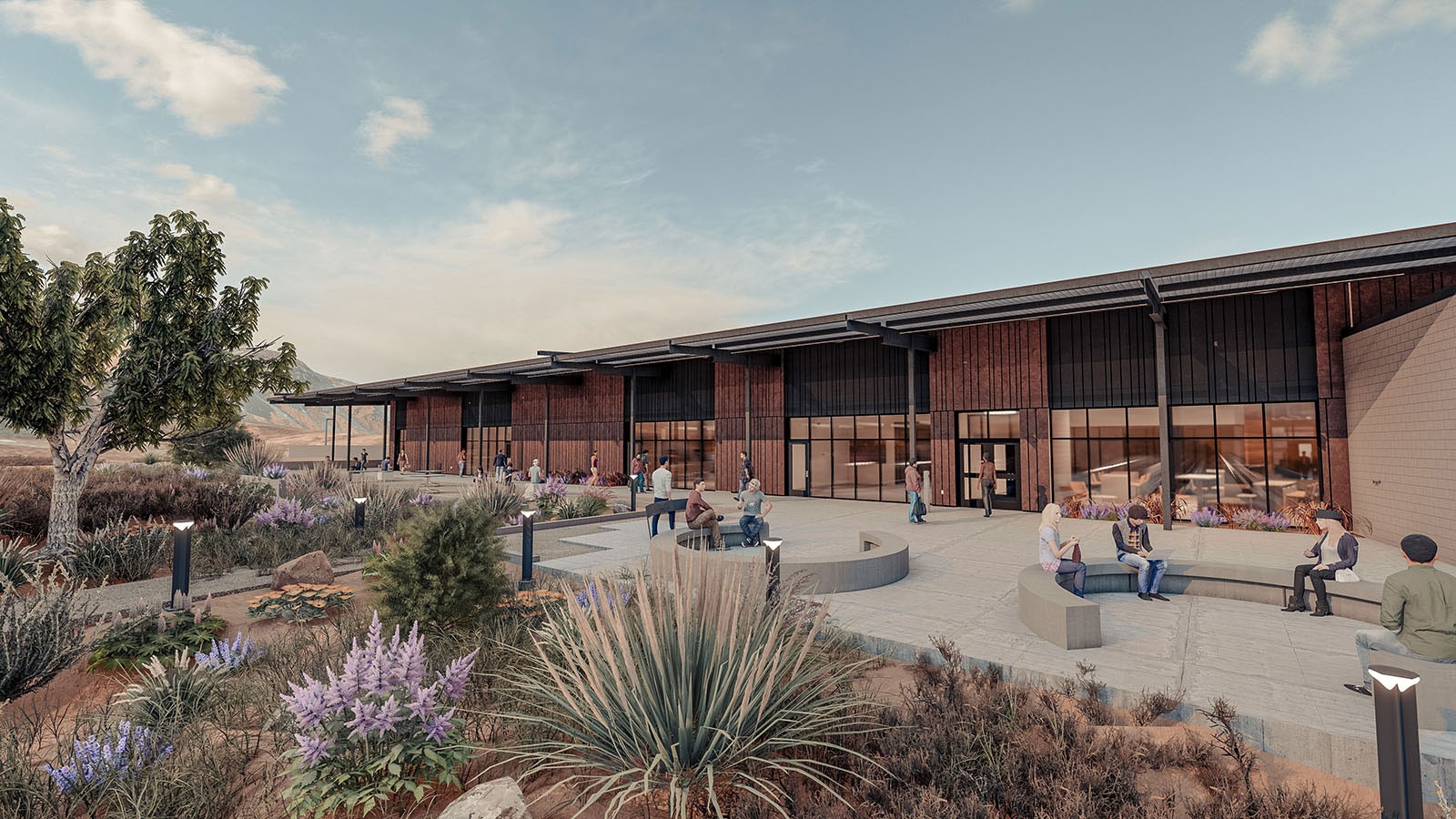
USU Moab's new campus will be a combustion-free, net-zero energy building that is passively designed to harness solar energy. The building features, which are all designed to reduce the campus’ carbon footprint, will meet silver-level LEED certification when construction is completed. The state-of-the-art facility will have indoor and outdoor spaces for hands-on learning experiences. Students and visitors will enjoy a campus reflecting Moab’s natural landscape, linking them to their broader ecosystem.
Utah State University Moab’s new academic building is now under construction. The long-anticipated facility, located south of town off Aggie Boulevard, will be home to USU Moab classes, Career & Technical Education programs and Extension. USU has served the Grand County community for over 50 years and the new location will further expand its educational offerings.
While a formal groundbreaking ceremony was not possible due to the COVID-19 pandemic, USU still celebrated its Groundbreaking Day virtually. USU President Noelle Cockett shared her comments from Logan on behalf of all administration involved in the project in a video released featuring renderings of the new campus building.
“We are so excited to be able to bring this project to fruition after literally years of effort by several individuals and the community,” said Cockett in her remarks. “We are especially thankful to the leadership of Moab City, to the officials in Grand County, and the State Legislature for helping us secure the funding that we needed to make this new building possible. We’ll be able to expand our educational opportunities that we deliver to this area, including several technical education programs, such as fabrication welding, building construction and health professions.”
USU Moab’s new campus will be a combustion-free, net-zero energy building that is passively designed to harness solar energy. Some of the building’s features include ground-source heating and cooling, photovoltaic solar parking canopies, PVC-free interior finishes, natural day lighting and natural material construction. These building features, which are all designed to reduce the campus’ carbon footprint, will meet silver-level LEED certification when construction is completed.
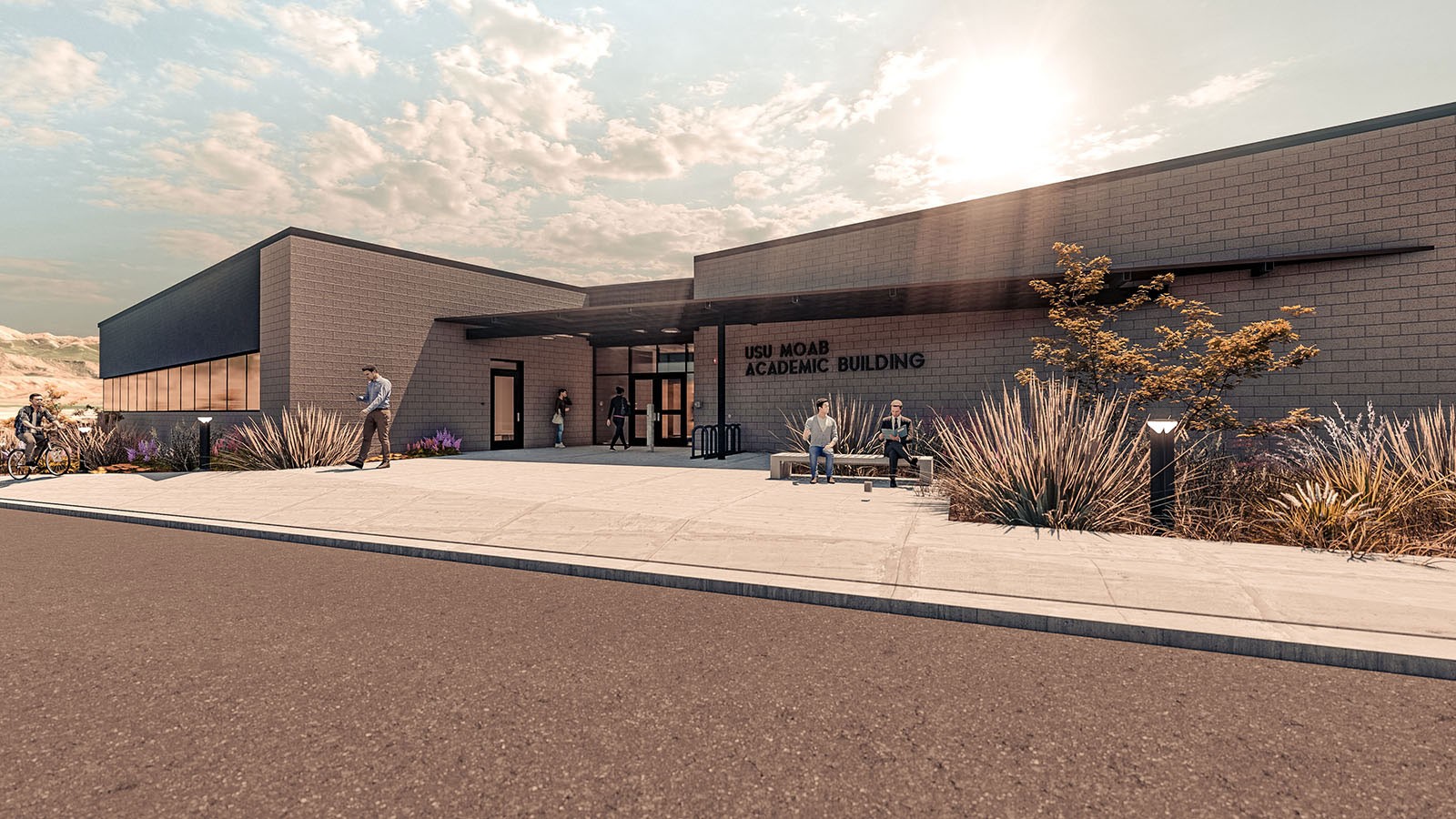
The state-of-the-art facility will have indoor and outdoor spaces for hands-on learning experiences. Students and visitors will enjoy a campus reflecting Moab’s natural landscape, linking them to their broader ecosystem.
Building contributor Peter Lawson says he hopes the new building will help people live an inspired life in the future.
“My hope is that this facility can provide inspiration for the people who use it– students, faculty and visitors alike,” Lawson said.
Other contributors to the new USU Moab building are Jennifer Speers, the Janet Quinney Lawson Foundation, the Emma Eccles Jones Foundation, the George S. and Dolores Doré Eccles Foundation, Moab Regional Hospital, Desert Rivers Credit Union, Moab City, Grand County, the Holyoak Family and the Rocky Mountain Power Blue Sky Renewable Energy Grant. In addition to its major donors, the USU Moab project was made possible with New Markets Tax Credits from the Community Development Finance Alliance.
Construction of the new USU Moab campus will continue throughout the rest of the year and throughout 2021. The campus is targeting a 2022 grand opening.
For more information about USU Moab and the new campus, and to see a live webcam feed of the construction, visit moab.usu.edu/newcampus.

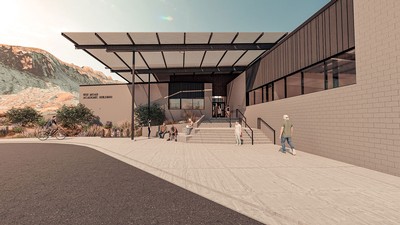
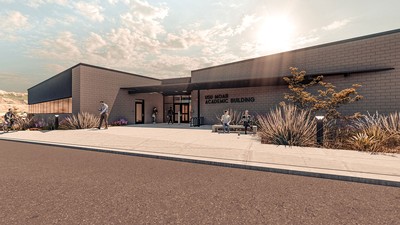
Artistic rendering of USU Moab's new campus. The campus will have its ribbon cutting ceremony on April 1, 2022.


CONTACT
Lianna Etchberger
Associate Vice President
USU Moab
lianna.etchberger@usu.edu
SHARE
Comments and questions regarding this article may be directed to the contact person listed on this page.