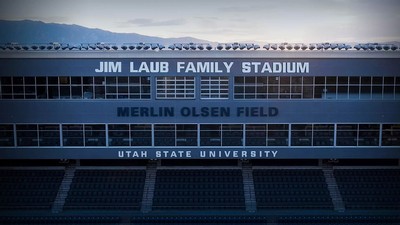
USU Eastern Applauds Major Investment in Helper City Ballfields
By Amanda Paiz |
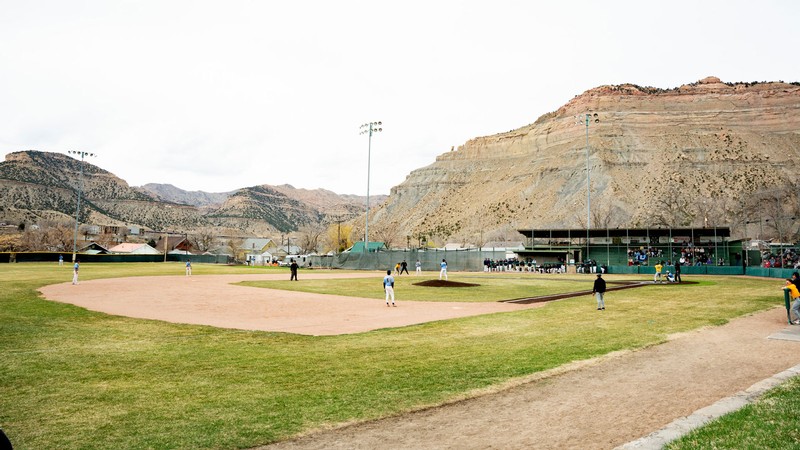
Athletes compete at Ernie Gardner Field in Helper, Utah. (Photo credit: USU/Dallin Grant)
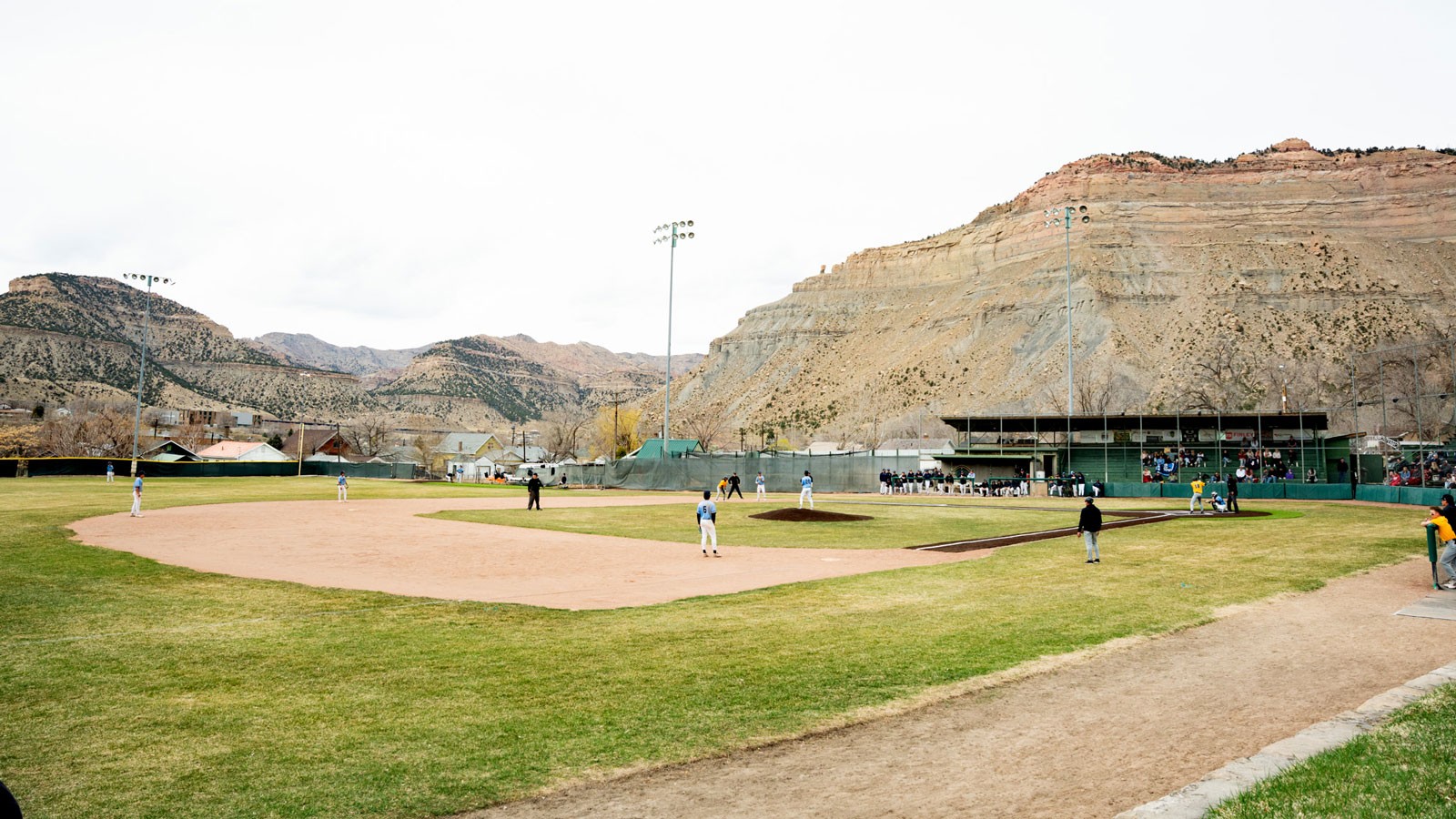
Helper, Utah — Utah State University Eastern is celebrating a $1.16 million investment in the Gardner and Heritage fields.
The City of Helper has secured a $580,000 grant through the Land and Water Conservation Fund, paired with a matching contribution from the Houston family for the project, which will transform the historic ballfields into a modern collegiate-level sports complex while preserving the deep baseball heritage that has long been part of Helper’s identity.
For USU Eastern Athletics, the investment represents more than facility upgrades; it strengthens a long-standing partnership between the university and the community.
Jess Brinkerhoff, athletic director for USU Eastern, said the project reflects the power of community vision and collaboration.
“First and foremost, this is a huge credit to Helper City, Mayor Lenise Peterman, and the Houston family,” Brinkerhoff said. “Their vision and generosity are what made this possible. We’re incredibly grateful that USU Eastern is able to continue using Gardner and Heritage Fields and be part of something that means so much to this community.”
Brinkerhoff noted that the improvements will help USU Eastern baseball continue building its program in a location that holds significant historical value.
“For our baseball program, this investment allows us to keep building in a place with deep history,” he said. “We’ve invested a great deal over the last two seasons to help maintain and improve the fields, and we look forward to continuing to care for them and use them the right way for many years to come.”
The upgraded facilities will enhance the experience not only for collegiate athletes but also for local youth and families who use the fields.
“These upgrades benefit not just our student-athletes, but everyone in the community who uses these fields,” Brinkerhoff said. “Our players get to train and compete in a better environment, but just as importantly, youth programs and local families benefit as well.”
He added that improved facilities can play an important role in recruiting future student-athletes.
“In recruiting, it helps when prospects see a community that takes pride in its facilities,” Brinkerhoff said. “Newer and improved facilities allow players to feel more valued and have a better experience. But we always want it to be clear — this is about Helper investing in Helper. We’re just grateful to be part of it as members of the community.”
Helper Mayor Lenise Peterman said the investment is part of a larger vision to strengthen recreation and economic development while honoring the community’s historic connection to baseball.
“This funding will allow us to upgrade playing fields and create a state-of-the-art collegiate sports complex,” Peterman said. “We believe these upgrades will serve as yet another recreational draw to the area, activating economic streams via new guests and visitors. It also plays into our rich baseball heritage, which is something we want to honor and respect as we move into a new phase of activating these fields.”
Community enthusiasm for the project has already been evident.
“Anytime you can upgrade an existing asset, it’s a notch of community pride,” Peterman said. “People are excited about baseball and softball returning in full force. They contributed en masse when we cleaned and painted bleachers, and the feedback about the upgrades has been amazing. The citizens are all-in.”
The success of the project reflects a strong partnership between the City of Helper, community supporters and the state.
Peterman explained that the Houston family played a critical role by providing the matching funds needed to secure the federal grant.
“We approached the Houston family to request a cash donation as the matching funds for the Land and Water Conservation Fund opportunity,” Peterman said. “John Houston graciously agreed to match up to $580,000 so we could possibly double that.”
She also credited the Utah Division of Outdoor Recreation for helping guide the application process and USU Eastern coaches for assisting in identifying the most impactful improvements.
“Both Coach Haney and Groves were integral in determining the most necessary field upgrades,” Peterman said. “They did the legwork collecting estimates and evaluating potential vendors for the project.”
Major Upgrades Planned for Both Fields
The funding will bring significant improvements to both Gardner Field and Heritage Field.
At Heritage Field, upgrades will include:
- A new press box.
- Restroom facilities.
- Expanded dugouts.
- Turf outfield for water conservation and reduced maintenance.
- Wind screens.
- ADA-accessible gravel areas.
- Batting cages.
At Gardner Field, improvements will include:
- Restroom upgrades.
- Expanded dugouts.
- Turf infield.
- Relocated fencing inside existing light poles.
- Fence slats replacing wind screens.
- Batting cages.
Peterman said the larger outfield space at Gardner Field may also allow for the addition of two future T-ball fields to support youth programs.
Brinkerhoff said the upgraded facilities will create new opportunities for tournaments, camps and regional events that bring visitors into the community.
“Improved facilities create opportunities for more games, camps and tournaments, which ultimately benefits the entire community,” Brinkerhoff said. “More visitors, more families in town, more business and pride in Helper and for Utah State Eastern baseball and softball.”
Mayor Peterman echoed that sentiment, noting that visiting teams often bring dozens of families who stay overnight and spend locally.
“Visiting teams bring an average of 40 or more people who spend the night, eat locally and hopefully shop on our historic Main Street,” she said.
For USU Eastern, the partnership with Helper represents a shared commitment to preserving the legacy of these historic fields while investing in the future.
“Community partnerships are everything for a place like USU Eastern,” Brinkerhoff said. “We don’t exist in isolation, we’re part of Helper, Price and the communities of Carbon and Emery counties.”
He added that the university remains committed to honoring the fields’ history and ensuring they continue serving the community for generations.
“Our role is simple,” Brinkerhoff said. “We want to be good stewards. We want to continue investing time, effort and resources into maintaining and improving the fields while respecting the history of everyone who has played there before us — and those who will play there in the future.”
WRITER
Amanda Paiz
brooklyn.crippen@usu.edu
CONTACT
Brooklyn Crippen
Coordinator of Special Programs
USU Eastern Community and Campus Engagement
brooklyn.crippen@usu.edu
SHARE
Comments and questions regarding this article may be directed to the contact person listed on this page.