USU Eastern Students Explore Sustainability, Ecology Through Iceland Study Abroad Experience
By Amanda Paiz |
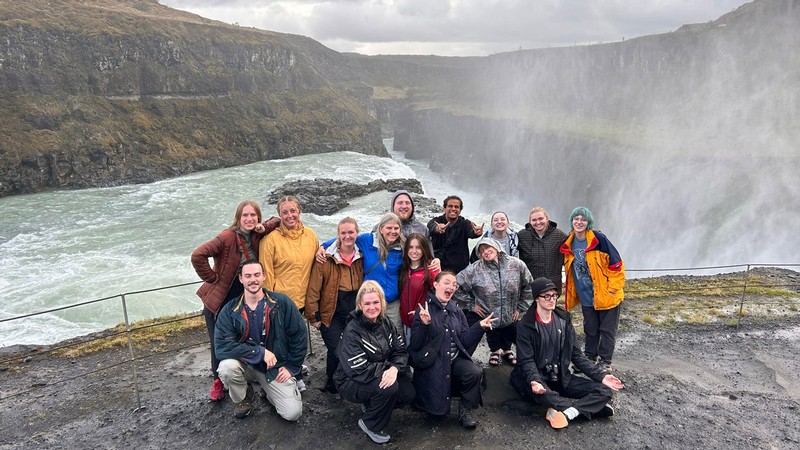
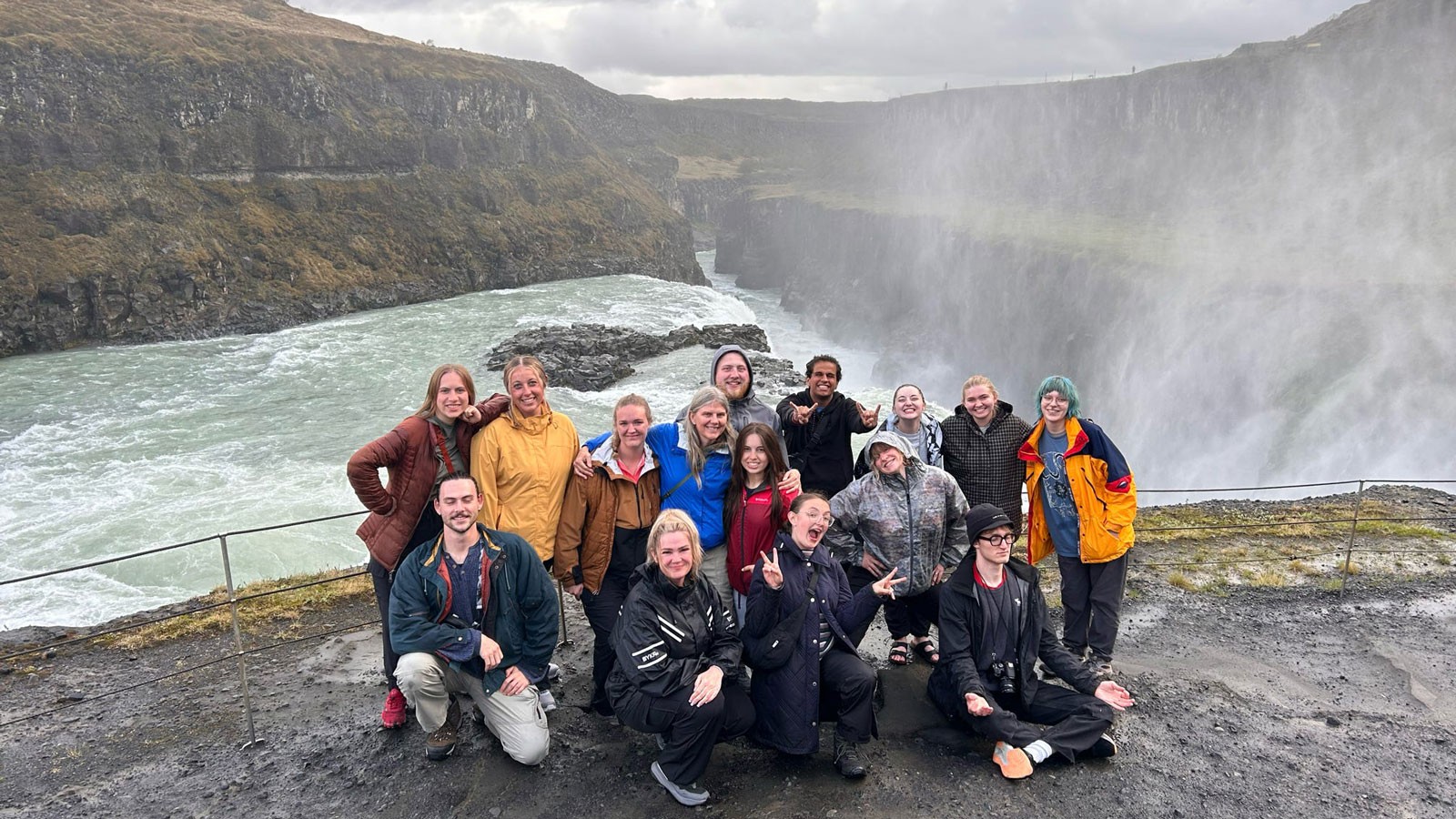
Study abroad participants pose for a group photo at Gullfoss Waterfall in Iceland.
PRICE, Utah — Seventeen Utah State University students, including four from USU Eastern, traveled to Iceland for a study abroad program that immersed them in wildlife ecology, renewable energy, agriculture and sustainability through hands-on learning.
Led in part by Sunshine Brosi, the Iceland Study Abroad program let students study ecosystems, natural resources and community development in one of the world's most unique environmental settings.
Students traveled across Iceland examining glacial, volcanic, coastal and agricultural landscapes while learning how communities balance environmental stewardship with economic growth. The program combines field-based learning, research and cultural experiences that allow students to connect classroom concepts with real-world challenges and solutions.
"Iceland provides opportunities for real-time observation of climate change, ecosystem processes and policy outcomes that cannot be replicated in a traditional classroom setting," Brosi said.
Students explored glaciers, volcanic landscapes, coastal ecosystems, geothermal energy facilities and agricultural operations while examining how communities balance conservation, tourism, energy production and economic development. The experience offered striking parallels to challenges faced in rural Utah.
Among the participants were honors students, an Aggies Elevated student and students from a variety of backgrounds. Nearly 30% of participants were Statewide students, 18% were post-traditional students and approximately 70% were Pell Grant eligible. Financial aid, grants and scholarships helped make the international trip feasible for many participants.
For several students, seeing environmental issues firsthand created powerful and lasting impressions.
"We saw glaciers that were melting, and many students cried at this site because it made it real and visible," Brosi said.
Students observed Atlantic puffins, Arctic terns, seals, marine mammals and other wildlife while learning how natural systems connect across continents. They also met with local farmers and explored how Iceland's communities adapt to limited natural resources and challenging growing conditions.
Brosi hopes students return home with more than academic knowledge.
"I hope these students return to Price with a deeper understanding that wildlife ecology and sustainability are not abstract concepts but lived realities shaped by real communities, economies and landscapes," she said.
Beyond academics, the program helps students build confidence, independence and a broader worldview. Brosi encourages students not to assume study abroad opportunities are financially out of reach.
"So the message is: don't self-select out because of cost," Brosi said. "There are real pathways that make study abroad achievable, and the return on that investment, both academically and personally, is significant."
For USU Eastern students, the experience demonstrates how lessons learned abroad can help shape sustainable solutions for the communities they call home.
WRITER
Amanda Paiz
brooklyn.crippen@usu.edu
TOPICS
Environment 346stories Hands-on Learning 332stories Ecology 195stories International 81stories Study Abroad 57storiesSHARE
Comments and questions regarding this article may be directed to the contact person listed on this page.