USU Expert Examines Growing Evidence for Climate Benefits of Lawns
By Lael Gilbert |
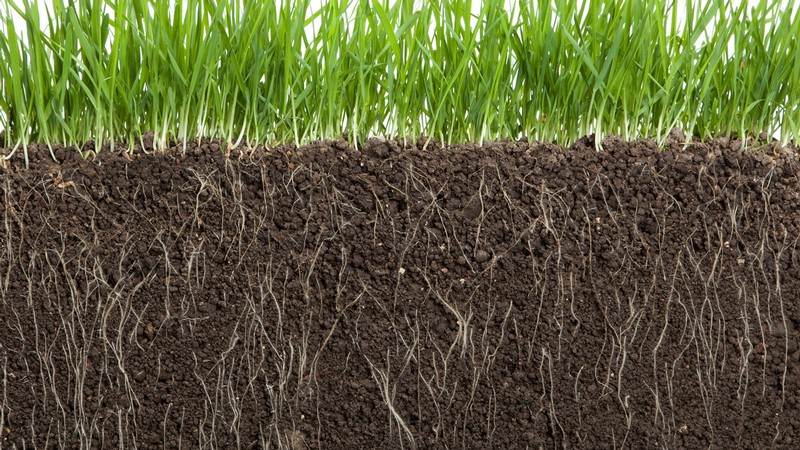
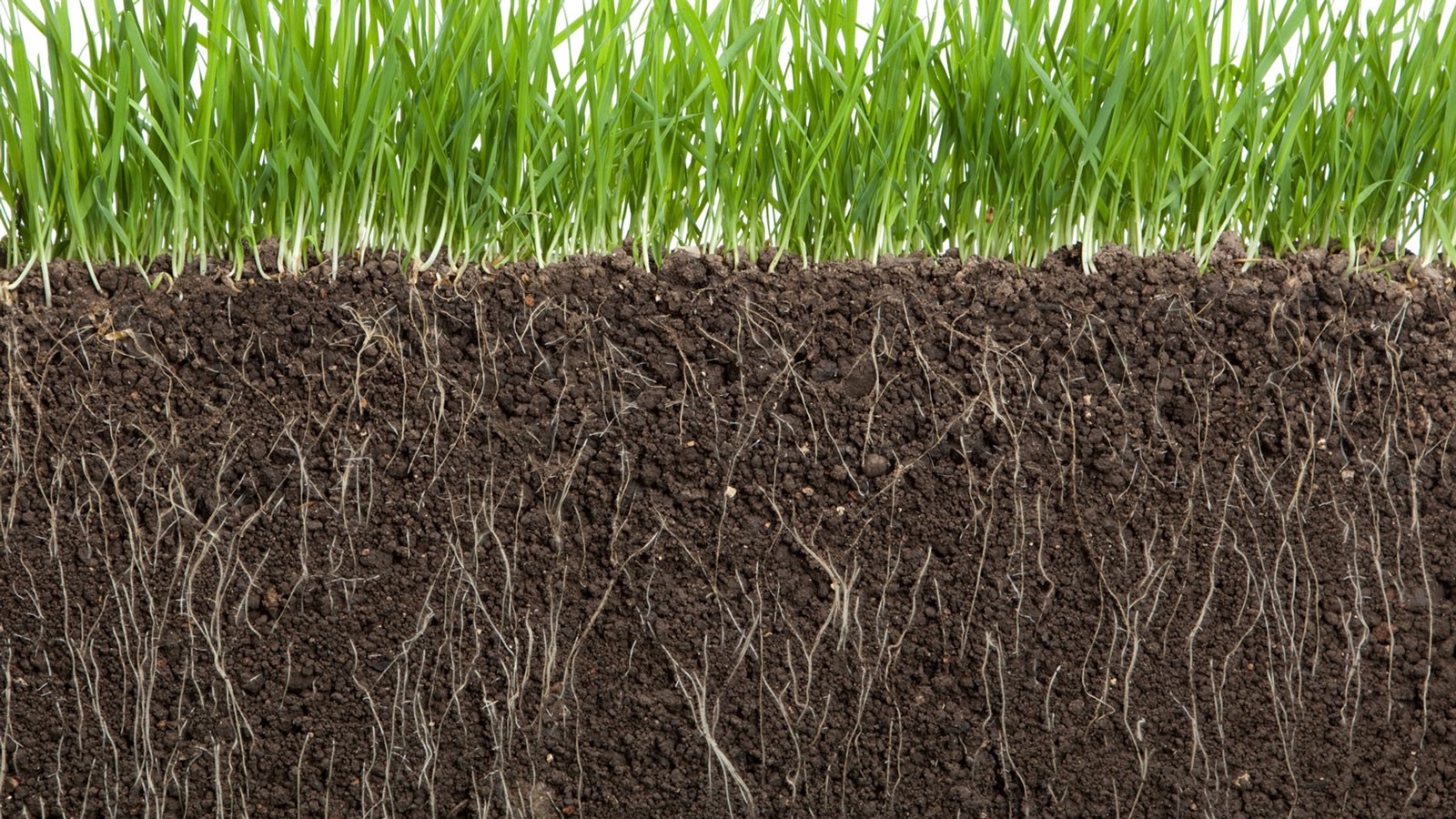
In your backyard is a giant, underground carbon vault — a dense tangle of roots pulling carbon out of the atmosphere to store it deep underground. It’s your lawn.
There is growing research evidence that turfgrass plays an important ecological role in urban environments, according to Kelly Kopp from Utah State University’s Department of Plants, Soils, and Climate.
As communities look for ways to conserve limited water supplies, some homeowners are choosing to replace lawns with gravel, xeriscaping, or artificial turf, in some cases prompted by city incentives. But research suggests that there are environmental tradeoffs for removing turfgrass, because lawns offer underappreciated benefits for cooling, water infiltration, and even carbon storage, Kopp said.
Kopp and collaborator Alec Kowalewski from Oregon State University compiled and presented findings from peer-reviewed research that show when it comes to turf removal, the greener choice isn't always so clear-cut.
Carbon dioxide in the atmosphere traps heat from the sun and changes climate patterns. Plants and trees offer a partial remedy to that, pulling carbon out of the atmosphere through photosynthesis and storing it in their roots, stems, leaves, and surrounding soils — in a process called carbon sequestration.
Some of that carbon will eventually cycle back into the atmosphere as materials break down, but some remains trapped, especially when it is underground. Systems that store more total carbon than they release over time are called “carbon sinks.”
“Well-managed turfgrass systems are pretty effective as carbon sinks,” Kopp said. “They can collect and hold organic carbon in the soil over the span of decades.”
It had been thought that intensively managed turfgrass soils were inherently neutral or even producers of carbon, but research is increasingly challenging that assumption, she said.
Turfgrass systems move carbon into the soil three ways: as fine roots die and are replaced, as living roots leak carbon-rich fluids into the soil, and as soil microbes consume those fluids and convert them into stable organic matter. Once incorporated into soil, carbon can remain stored for years or decades, accumulating for up to 50 years before a lawn reaches a state of carbon equilibrium, according to the research.
If lawns are eliminated, not only do they stop collecting carbon, but the carbon already stored in the soil begins to break down and returns to the atmosphere.
“There is an unfortunate perception that lawns are an environmental villain," Kopp said, “But if you look at the evidence, the tradeoffs are more complicated than that.”
There are additional ways lawns benefit urban environments, Kopp said. They act like giant swamp coolers, helping to moderate urban air temperatures locally. The dense, fibrous root networks also increase the ground's capacity to absorb rainfall and anchor the soil, which reduces runoff and protects against erosion.
But even if turfgrass isn't the nemesis it's made out to be, it isn't by default an environmental hero, Kopp said. Potential ecological benefits of lawns could be offset by how they are managed, losing the carbon-equation advantage with emissions from lawn care equipment, improper fertilization, and overirrigation.
There are ways to find balance. You can increase underground carbon storage in lawns by leaving grass clippings on the ground to enrich the soil, raising the height on mowers to encourage deeper rooting, and switching to electric mowers, Kopp said. Using organic or controlled-release fertilizers reduces nutrient loss and the carbon cost of fertilizer production. Installing smart irrigation systems that measure soil moisture levels helps to keep soil carbon high while reducing unnecessary water use, she said.
“The goal shouldn’t be to eliminate lawns simply because they use water. It should be to use science to plant and maintain turfgrass in the right places — and manage it so that every gallon of water delivers as much environmental benefit as possible,” Kopp said.
WRITER
Lael Gilbert
Public Relations Specialist
S.J. and Jessie E. Quinney College of Agriculture & Natural Resources
435-797-8455
lael.gilbert@usu.edu
CONTACT
Kelly Kopp
Director, Center for Water Efficient Landscaping
Water Conservation and Turfgrass Specialist, Extension
Kelly.kopp@usu.edu
SHARE
Comments and questions regarding this article may be directed to the contact person listed on this page.