USU Launches Statewide Disaster Risk Project to Support Smarter Resilience Investments

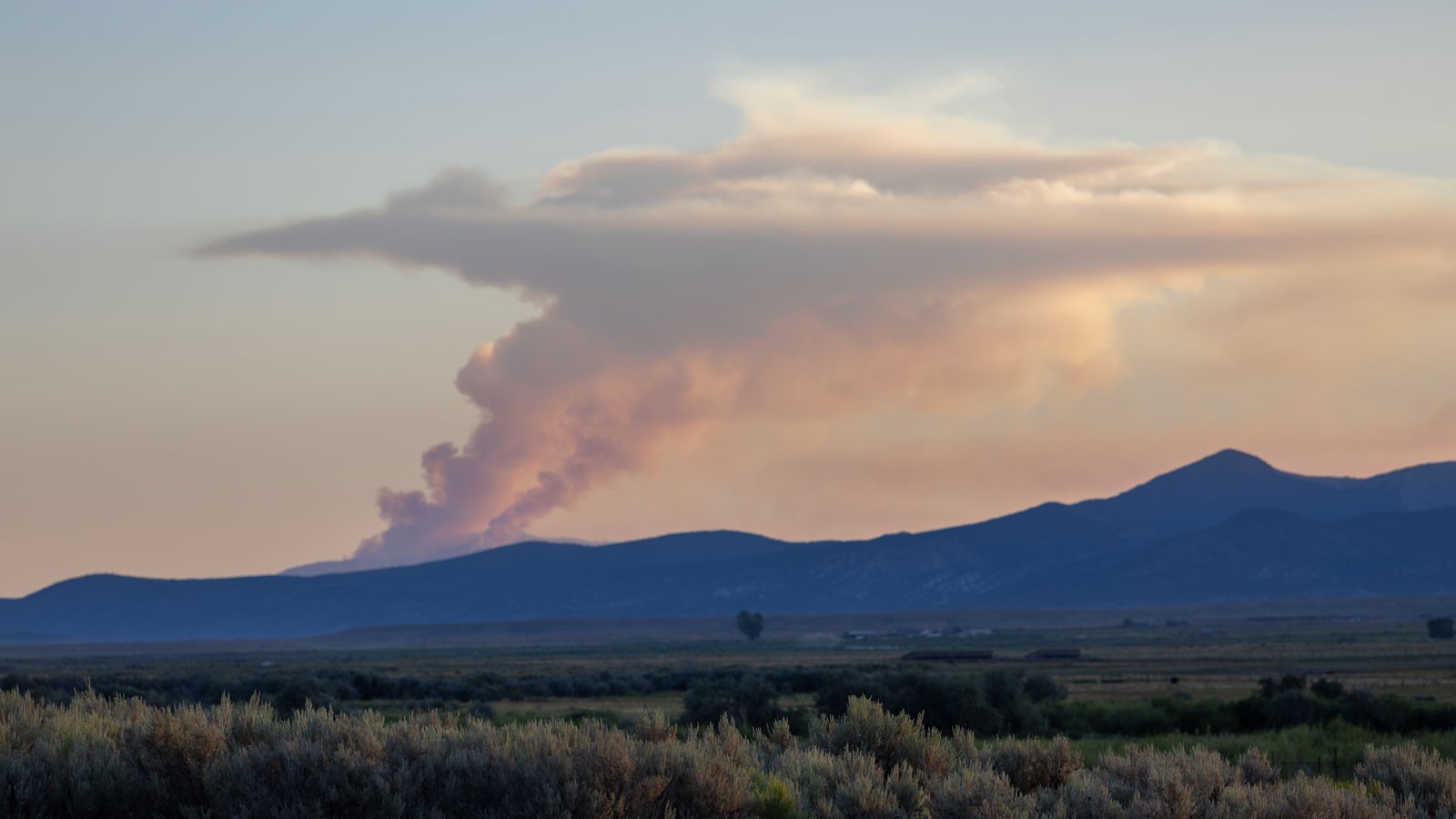
Wildfire smoke as seen from Panguitch, Utah. (Photo credit: USU/Aaron Fortin)
The Janet Quinney Lawson Institute for Land, Water and Air at Utah State University has launched a new statewide initiative to help Utah better understand, prioritize and plan for natural disaster risks — from flooding and wildfire to earthquakes and drought — using a practical, decision-ready assessment tool.
The project will produce a Utah-specific Disaster Risk Matrix, designed to help policymakers, planners and communities evaluate which disaster risks pose the greatest threat and where mitigation investments can deliver the greatest return. The work is supported by The Pew Charitable Trusts, a national leader in advancing evidence-based public policy.
“Utah’s hazard landscape is changing, and the costs of disasters — both human and economic — are growing,” said Brian Steed, executive director of ILWA. “This project brings together science, economics and policy expertise to help the state make smarter, more proactive investments in resilience. We’re excited to partner with Pew, whose focus on rigorous, policy-relevant research aligns closely with this work.”
While Utah faces a wide range of natural hazards, many national risk models fail to capture how those hazards behave in the Intermountain West, particularly in arid and mountainous environments. ILWA’s work will synthesize existing research, analyze Utah-specific data, and assess the economic tradeoffs of mitigation strategies — comparing the cost of action today with the long-term costs of inaction.
At the center of the effort is an easy-to-understand risk matrix that compares the likelihood and potential consequences of major disaster scenarios. The tool is designed to translate complex analysis into a format that supports budgeting, planning and policy decisions.
“The real value of this work is helping decision-makers see the full picture,” said Phillip Fernberg, principal investigator on the project. “By pairing hazard science with economic analysis, we can show where mitigation efforts reduce risk most effectively and where investments can avoid much larger losses down the road.”
In addition to technical analysis, the project emphasizes outreach, convening and engagement. ILWA will work closely with state agencies, local governments, tribal representatives, nonprofit organizations and academic partners through listening sessions, interviews and workshops to ensure the final products reflect real-world conditions and needs.
“This isn’t a project we do in isolation,” said Anna McEntire, managing director of ILWA. “We’re bringing people together who deal with these risks every day and asking what information would actually help them do their jobs better. Our role is to listen, connect the dots, and turn that shared insight into tools people can use.”
The project aligns with Pew’s broader efforts to help states strengthen fiscal resilience, reduce disaster losses and make data-driven investments that protect communities and public resources.
“States across the country are grappling with how to prioritize resilience investments amid growing disaster risks,” said Kristiane Huber, officer with The Pew Charitable Trusts. “This research in Utah will help demonstrate how clear analysis and practical tools can support smarter, more cost-effective decisions that benefit communities over the long term.”
About the Janet Quinney Lawson Institute for Land, Water and Air
The Janet Quinney Lawson Institute for Land, Water and Air at Utah State Universityadvances solutions at the intersection of land, water, air, energy and climate. Through applied research, policy engagement and public convening, ILWA helps decision-makers navigate complex environmental challenges and translate science into action.
About The Pew Charitable Trusts
Founded in 1948, The Pew Charitable Trusts uses data to make a difference. Pew addresses the challenges of a changing world by illuminating issues, creating common ground, and advancing ambitious projects that lead to tangible progress. Learn more at pew.org.
CONTACT
Anna McEntire
Managing Director
Janet Quinney Lawson Institute for Land, Water, and Air
(435) 881-1323
anna.mcentire@usu.edu
SHARE
Comments and questions regarding this article may be directed to the contact person listed on this page.