USU Researcher Receives $16 Million Department of Education Grant
A Utah State University research proposal from the Emma Eccles Jones College of Education and Human Services was one of an elite number selected to receive a prized U.S. Department of Education “Investing in Education” grant.
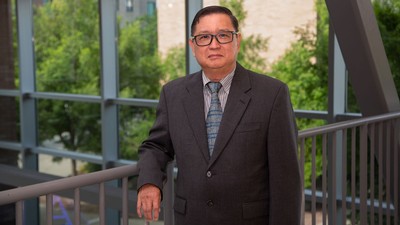
USU researcher and principal investigator Linda Goetze will receive nearly $16 million pending a 20 percent private-sector match funding for a five-year project to conduct a cost-effectiveness analysis of an extended school year intervention known as the K-3 Plus Program.
The K-3 Plus Program is currently being piloted with about 7,000 high-need students (students served in schools with 85 percent or more free reduced lunch) each year in New Mexico.
Goetze’s project is among a cross-section of 49 school districts, nonprofit education organizations and institutions of higher education selected from among nearly 1,700 applicants for funding under the Department of Education’s Investing in Innovation (i3) program.
"All across America, innovative entrepreneurs are finding solutions to our most pressing educational challenges," said U.S. Secretary of Education Arne Duncan. "The i3 grants will support creative thinkers who test good ideas and take proven approaches to scale so that more children can benefit."
The funding to USU is part of an historic $10 billion investment in school reform to build research-based innovative programs that help close the achievement gap and improve outcomes for high-need students.
Goetze said that as a top rated applicant, USU successfully demonstrated its previous success in closing achievement gaps and improving student progress toward proficiency.
“This project is a targeted approach to educational reform and provides significantly more time for students in kindergarten to third grade to learn core academic content by expanding the school year,” she said.
The project is a cost-effectiveness analysis of New Mexico’s K-3 Plus. Service costs and student outcomes will be compared for students in and out of an extended school year to evaluate the merits of replication and scale-up of the K-3 Plus program. Goetze said the project perfectly fits the historic mission of the college.
“It focuses on improving literacy, math and social skills during early childhood,” she said. “These areas overlap with Emma Eccles Jones’s teaching philosophy and the project is a perfect fit for the college that bears her name.”
Funding from this grant will pay for K-3 Plus services to students randomly assigned to the intervention in four New Mexico areas. The study will measure the impact of the increased instructional time on costs and resources as well as on the literacy, numeracy and social skills of students.
The intervention will be implemented with students enrolled in persistently low-performing schools in Gallup-McKinley (a rural, low-income school according to 2009 criteria), Albuquerque, Gadsden and Las Cruces school districts.
“We will address the very important issue of whether or not students, especially high need students, lose ground during the summer when they are not in school,” Goetze said.
Beth Foley, interim dean of the Emma Eccles Jones College of Education and Human Services, said the project matches the mission of the college perfectly.
“Dr. Goetze’s grant will impact the lives of students in the project, but eventually the results she finds could help answer important questions for children throughout the nation,” Foley said. “It is a rewarding feeling to know that our college is part of a community of educators who are making a significant difference in the lives of children through innovative educational policies.”
The i3 fund, which is part of the historic $10 billion investment in school reform in the American Recovery and Reinvestment Act (ARRA), will support local efforts to start or expand research-based innovative programs that help close the achievement gap and improve outcomes for high-need students. The competition was open to school districts as well as nonprofit organizations and institutions of higher education working in partnership with public schools.
Applicants were required to demonstrate their previous success in closing achievement gaps, improving student progress toward proficiency, increasing graduation rates, or recruiting and retaining high-quality teachers and principals.
Goetze said federal funding is critical to evaluate, in this case, an early childhood initiative that is supported with state funds. States struggle between funding direct services in education and funding evaluation of those education programs.
“Federal funds to evaluate state initiatives are critical if we are to implement the most effective practices for students at the state and local level,” she said.
Successful applicants will serve 42 states and two territories with more than half intending to serve students with disabilities and limited English proficient students and 37 percent intending to serve rural school districts.
According to Jim Shelton, assistant U.S. deputy secretary for innovation and improvement, “We were really struck by the number of high quality applicants and winners who were not among the usual suspects.”
Writer and contact: Tim Vitale, 435-797-1356, tim.vitale@usu.edu

Comments and questions regarding this article may be directed to the contact person listed on this page.