USU Responds to Utah's Nursing Shortages
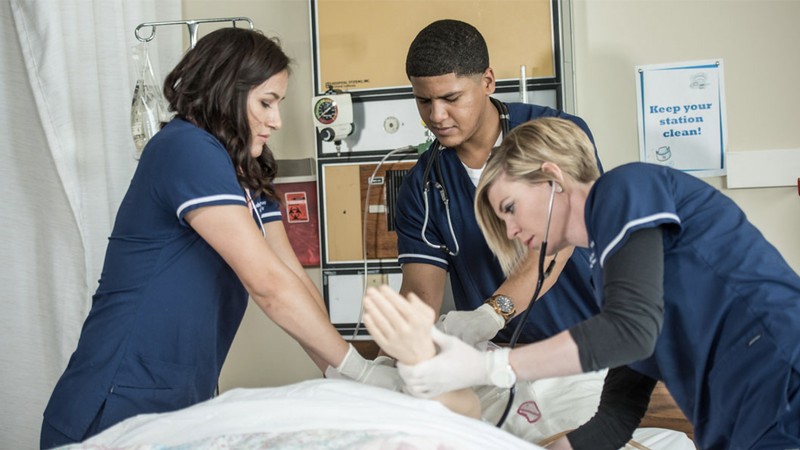
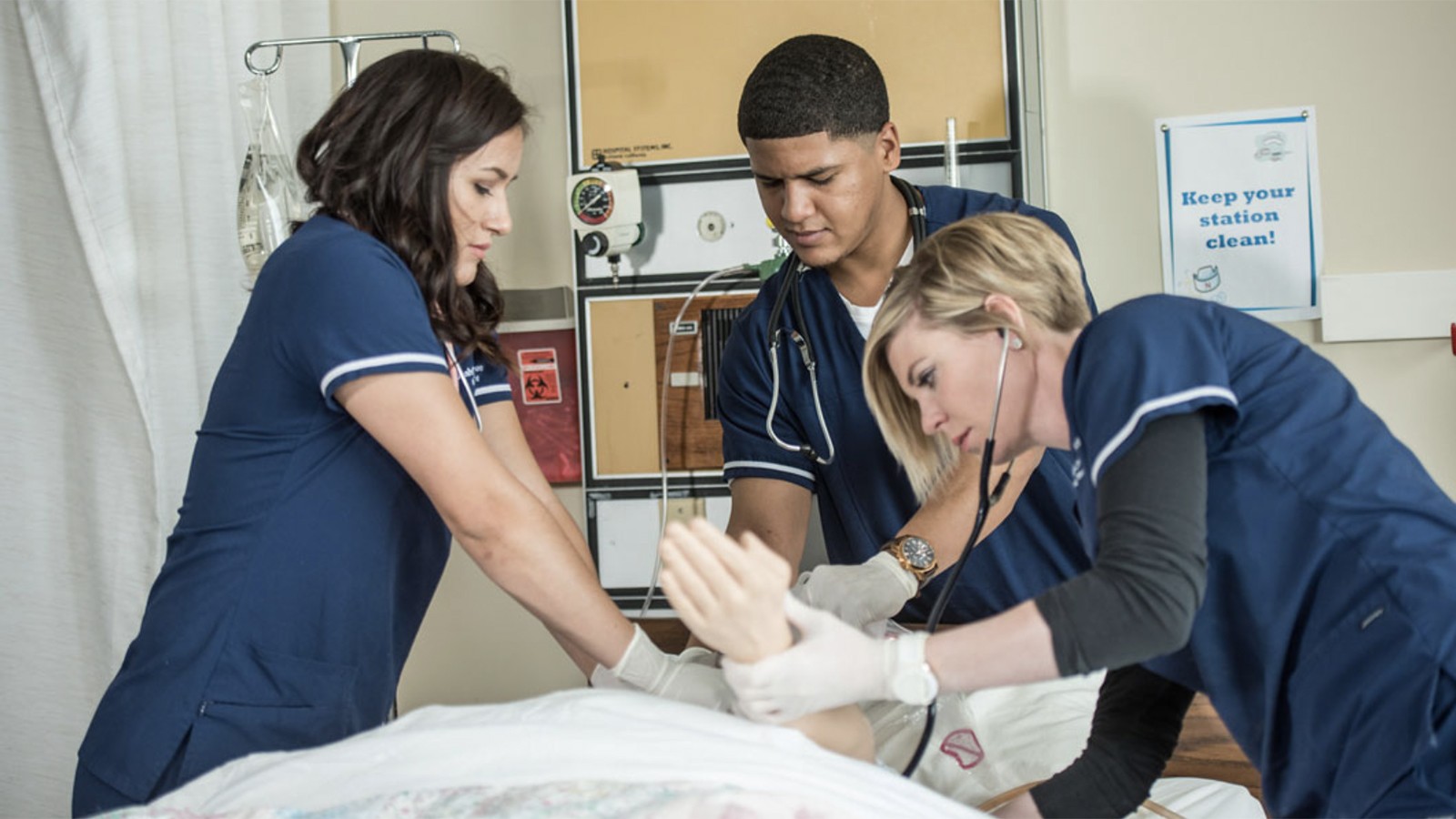
The demand for nurses is increasing at a faster rate than the number of students accepted into nursing schools. This is causing a high demand in the number of nurses needed to replace retirees and to provide care to the Baby Boomer generation.
In a 2012 study titled, “United States Registered Nurse Workforce Report Card and Shortage Forecast,” researchers developed “demand and supply models” to determine and predict the future registered nurse (RN) shortage for each of the 50 states. Based on this model, each state was given a letter grade of “A”, “B”, “C”, “D”, or “F”. Utah declines from a “C-” in 2009 to a “D” for the projected year 2030. This means that based on projection models of age and population, Utah will only have 299 RN jobs per 100,000 people in 2030.
Part of the problem is a lack of nursing schools and a shortage of nursing faculty. Nursing majors require laboratories, hands-on learning, clinical rotations, and more classroom materials. To accommodate this, schools aren’t able to accept as many students as they would like.
So, what’s being done?
Utah State University has developed nursing programs throughout its regional campuses in Utah, and developed partnerships with the Utah College of Applied Technology (UCAT) campuses, providing career and technical education for in-demand careers, especially in rural communities.
Dave Woolstenhulme, UCAT Commissioner of Technical Education, played an integral role in the partnership. “It was a no-brainer,” said Woolstenhulme. “The ATC’s provide the perfect place for students starting a nursing career. Then USU can step in and provide college degrees with further training.”
Students attend the UCAT colleges in the Uintah Basin and Tooele regions to earn Practical Nursing Certificates that prepare students for licensure as Licensed Practical Nurses (LPNs). Then they are able to attend the USU-Uintah Basin or USU-Tooele to earn an Associate of Applied Science (AAS) in Nursing to prepare them for licensure as registered nurses (RNs).
USU-Moab, -Price and -Blanding offer the Practical Nursing Certificates and the AAS in Nursing degree. So far, USU’s regional campuses have seen great success with the students completing the nursing programs. Take the USU-Uintah Basin for example; the national pass rate for the RN licensure exam is 87-88%, and the USU-UB students had a 100% pass rate in 2016.
In Moab, a partnership was created between USU-Moab and the Moab Regional Hospital (MRH) to increase the career opportunities for health-care related occupations. MRH employees are able to advance their education through USU-Moab, while USU-Moab students are informed on employment opportunities at the hospital. “USU has great instructors with a lot of experience, and it shows in the LPNs and RNs who are graduating and coming to Moab Regional Hospital for employment,” said Katherine Sullivan, HR Director at MHR. “We are happy to provide a setting where students can gain on-site clinical training and get jobs after graduation.”
USU is currently developing plans to make nursing degrees available at more regional campuses. With partnerships with hospitals like MHR and with ATC schools in Utah, more students will be able to gain the education necessary to become nurses and fill the nursing shortage gap.
Comments and questions regarding this article may be directed to the contact person listed on this page.