USU Social Work Student Is Finalist in Policy Pitch Competition
Melaine Webster will present a proposal to reform Utah's criminal debt collection system before legislators and policy experts at The Policy Pitch Summit on June 12.

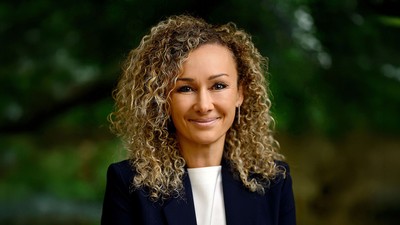
Melaine Webster.

LOGAN — Utah State University grad student Melaine Webster has been named one of three finalists in the Policy Pitch Competition, a statewide contest hosted by The Policy Project.
Webster will present her proposal to reform Utah’s criminal debt collection system before a live audience and a bipartisan panel of legislators, policy experts, and practitioners at The Policy Pitch Summit on June 12 at the Kiln in Salt Lake City.
Webster is a Master of Social Work student in USU’s Department of Social Work.
Chosen from 115 submissions, Webster’s pitch addresses a challenge she has seen firsthand in her work as a Community Justice Advocate: Utahns trying to rebuild their lives after court involvement often face a debt collection system in which fines, fees and penalties grow faster than they can realistically pay.
Trained as part of an internship with USU’s Transforming Communities Institute, Webster completed her community justice advocate certification in debt navigation in fall 2025. Soon after, she joined Nonprofit Legal Services of Utah as a volunteer to help clients with costs that accumulated during incarceration, treatment and unemployment, which can create significant barriers to housing, employment and recovery, among other areas.
“Melaine is a dedicated student who is deeply committed to making society a more equitable and inclusive space for everyone,” said Sean Camp, a clinical professor of social work. “She focuses on systemic-level change, recognizing that addressing the root causes of societal problems — poverty, healthcare disparities, etc. — ultimately impacts large segments of society at once.”
Webster’s proposal aims to fix the system without abandoning accountability. It would protect victim restitution, pause interest and penalties during incarceration, require clear ability-to-pay standards, and allow verified rehabilitation, such as treatment, education, job training, sobriety and community service, to count toward compliance. She argues the reforms would create a fairer, more effective system that increases real repayment, supports reentry and helps people become stable, contributing members of their communities.
Shianne Anderson — Exit Strategies and Reentry Program coordinator for the Tooele County Sheriff’s Department of Corrections and for USU Tooele Extension — connected with Webster to explore how to improve the system and process for others.
“Working with Melaine and her team made me feel seen and heard,” Anderson said. “She honored my experience, both past and present, without dismissing the facts or diminishing the strain (the Office of State Debt Collection) puts on individuals who are earnestly trying to do the right thing. Not only did the team help me navigate ideas for a solution, but Melaine was genuine in her desire to understand how these practices and policies are unfair, and she is diligently seeking a reasonable policy solution.”
Similarly, Destiny Garcia, executive director of Clean Slate Utah, which connected Anderson to community justice advocates through a referral system, said: “We are very proud of Melaine and the work she is doing to support meaningful reform in Utah’s criminal legal system. By helping people connected to Clean Slate Utah, she has seen how criminal debt can make it hard for people to find housing, employment and successfully reenter their communities.”
The competition’s top three finalists each present their ideas to the experts and audience, with cash prizes awarded to support the winning proposals. Reflecting on the work and the opportunity to present at the Summit, Webster shared her own perspective.
“Accountability and personal responsibility are important Utah values, and my goal is not to erase accountability, but to help our systems produce it in a way that is realistic, meaningful and sustainable,” she said.
“When people are working to rebuild their lives, Webster said, policies should support — not undermine — their ability to become stable, employed, housed and responsible contributors to their families and communities.
“I believe we can create a system that is both compassionate and fiscally responsible by making accountability more proportional, realistic and rehabilitative,” she said.
To learn more about USU’s Community Justice Advocate Program through the College of Arts and Sciences, visit: https://artsci.usu.edu/social-work/transforming-communities-institute/projects/community-justice-advocate-program/
CONTACT
Erin Jensen
Program Coordinator
Transforming Communities Institute
erin.jensen@usu.edu
SHARE
Comments and questions regarding this article may be directed to the contact person listed on this page.