
From Cosmetology to Mining: Students Explore Diverse Post-Secondary Paths on Summer Bus Tours
USU STARS GEAR UP, a federally funded grant program at USU that serves students in under-resourced schools in Utah from seventh grade through their first year of post-secondary education, recently hosted 40 students to explore college and trade schools across Utah and Colorado. The visits introduced students to a wide range of post-secondary pathways. From universities and engineering labs to technical colleges and skilled trades programs, they explored opportunities that aligned with their interests and future career goals.
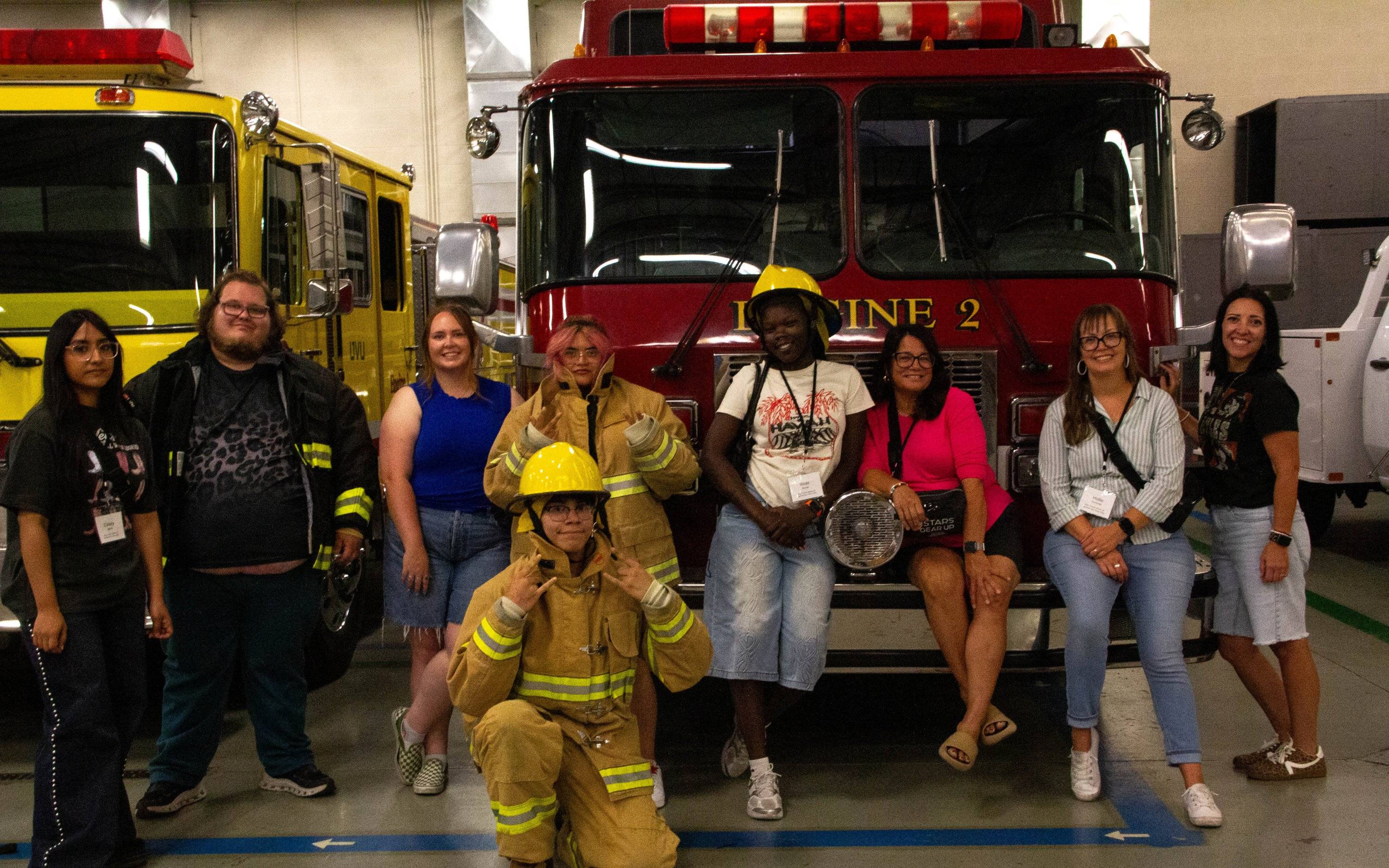
Firetrucks and future plans!
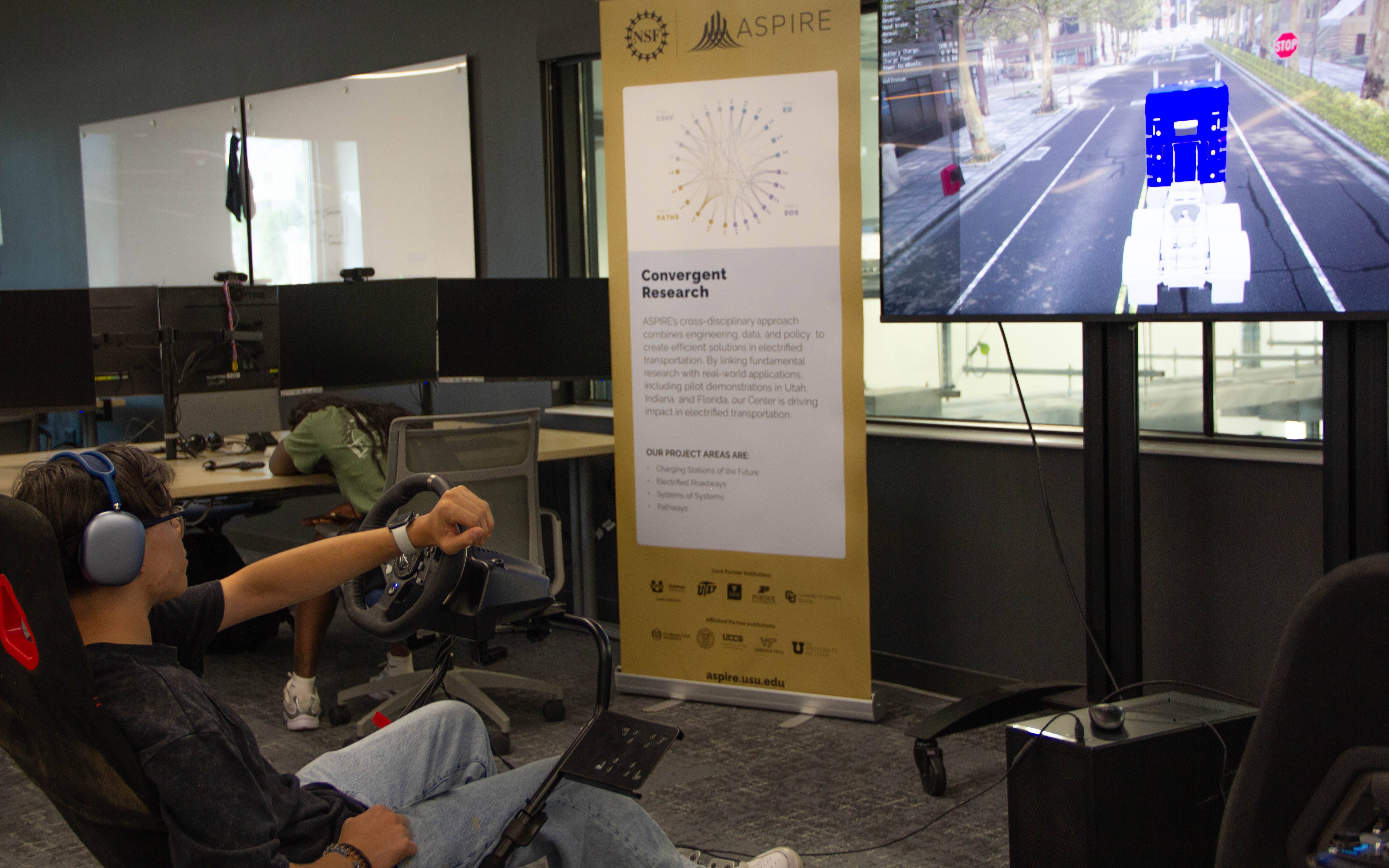
Simulated truck driving with ASPIRE
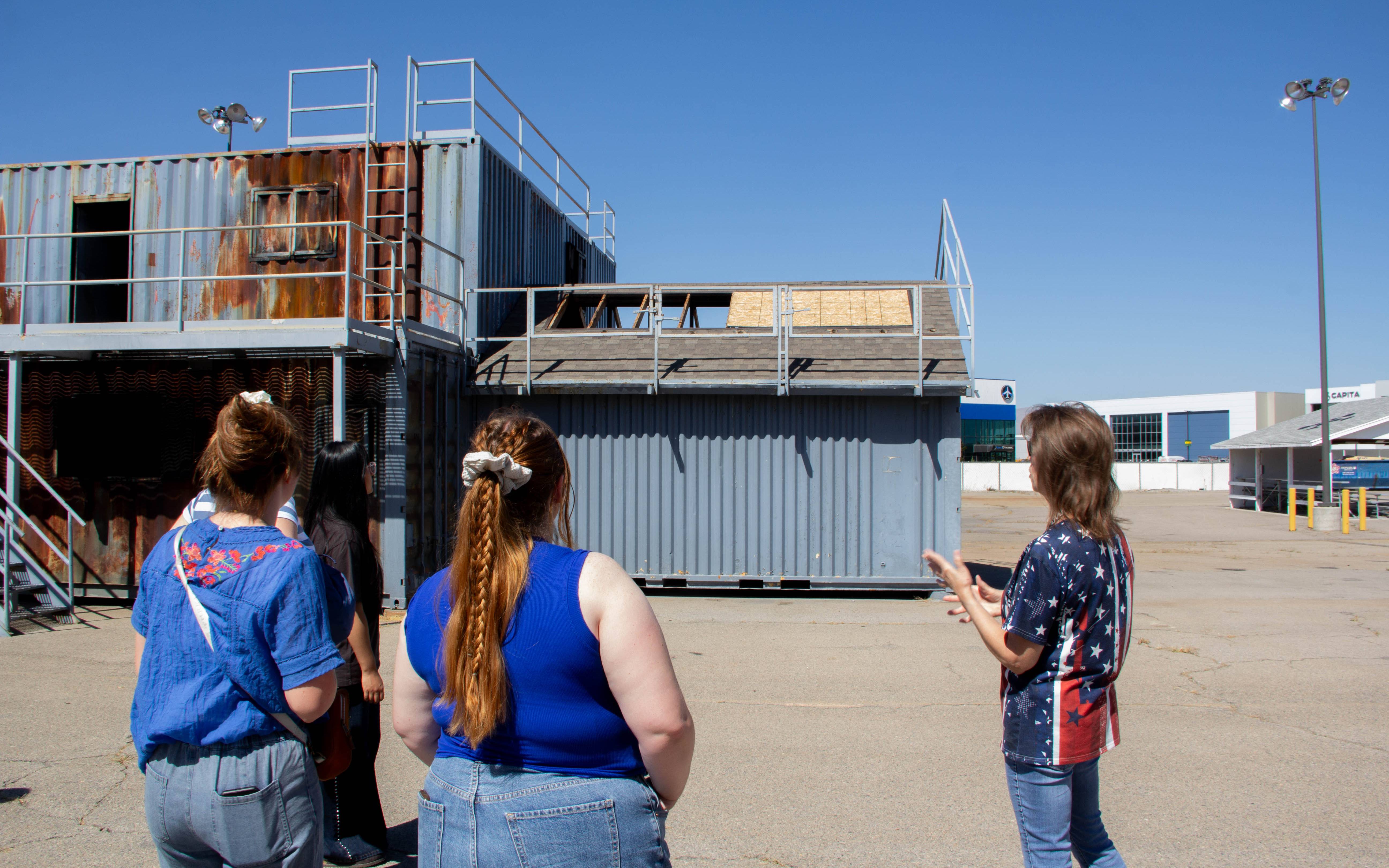
Learning about technical opportunities
From Cosmetology to Mining: Students Explore Diverse Post-Secondary Paths on Summer Bus Tours
“I loved learning about the technical colleges because they are cheaper and offer more of what I’m interested in,” said Lisset Rodriguez, Cyprus High School alumna.
Rodriguez’s experience reflected one of the tour’s primary goals: helping students discover educational paths they hadn’t considered.
One of the schools that piqued Rodriguez’s interest was Davis Technical College. She loved seeing the cosmetology and culinary programs, which she has been considering attending while taking a gap year. While not directly in her line of interest, she also learned that welding can be more than practical.
“I learned welding is an art,” Rodriguez said.
Students were also shown different applications of engineering and emerging technology careers at several stops throughout the Utah tour.
One of the first stops was at the Aspire Research Center in Logan, where engineers are working to build infrastructure that can charge electric vehicles while they are driving. Students got a firsthand look at the track where researchers are developing the technology. The students also met with civil and mechanical engineers working on this technology and discussed its potential impact on the semi-truck driving industry.
Truck-driving simulators and a hands-on lesson about motors were both highlights for the students.
“You have to understand magnets to understand motors,” Matt Jones, the engineering manager at Aspire Research Center, told the students.
The tour also highlighted hands-on career fields where many hours of experience is more critical for success than a college degree. At Art City Auto Body in Springville, the students were greeted by owner Daniel Arc who shared his expertise in the auto body industry by giving them an overview of the industry, showing them around the shop, and giving them the opportunity to repair dents on sample vehicle body panels. Arc explained the distinction between collision repair and mechanical automotive work.
Throughout the tour, Arc emphasized that technological knowledge is essential in the auto body industry.
“We need people to program backup cameras and sensors,” Arc explained.
If being hands-on with cars doesn’t align with personal interests, Arc said there are plenty of jobs on the customer service side of automotive repair, such as scheduling appointments and working with insurance companies in service rider roles.
“It’s not uncommon for people to make six figures in this industry,” Arc said.
At the Utah Fire and Rescue Academy in Orem, program coordinator Donna Cotterell explained that EMT certification is required because most calls are medical emergencies. Students also learned about the physical demands of firefighting, accepting the challenge to put on 55 pounds of firefighting gear in 50 seconds.
Another highlight of the Utah tour was learning about the Utah State University Landscape Architecture and Environmental Planning Program on the Logan campus. Students discovered the difference between spaces designed for functionality and those designed solely for aesthetics. Students were also intrigued to learn about the differences between designing landscapes for homes and for businesses.
“I didn’t know that could be a job,” Rodriguez said.
At Lagoon, an amusement park in Farmington, students experienced some thrills on the rollercoasters and also learned some of the science behind how they work. They met with Dustin Allen, Lagoon engineering director, to learn how engineering principles are applied to design and maintain amusement park rides.
On the Denver tour, students visited various engineering labs at Colorado State University that ranged from manufacturing to weather science.
“What stood out to me was how the school focuses on the student-led projects,” said Makenna Nichols, USU STARS GEAR UP college adviser. “Students can create what excites them.”
A favorite stop for the group was McAir Aviation, where they enroll students who want to pursue aviation as a hobby or a career.
“I’m considering enrolling,” said Asma Abdi, a Salt Lake Community College Student studying psychology. “It was an amazing experience.”
Tour leaders said students learn about electronics, welding, how engines work, and how to fly drones. Once students earn their certification, they can work on anything with big engines, ranging from oil rigs to rollercoasters and everything in between.
Jade Gonzales, a University of Utah student studying architecture, was intrigued by the career possibilities aviation training could open beyond traditional flying careers.
“I was surprised by this school,” said Gonzales. “I might deviate from what I’m working on when I’m finished at the U.”
Students got their feet dirty—literally—on a tour of the Edgar Experimental Mine.
“It was so dark you couldn’t see your hand in front of your face,” said Aubree Whitman, a USU STARS GEAR UP college adviser.
The group explored multiple caves in the mine, stopping at research sites used by academic departments and at a section where workers are building a supercomputer. The tour guide took the group to a training area with a two-story mine-rescue maze.
“We learned people from all sorts of areas use it to train,” Nichols said.
A student favorite was the United States Olympic and Paralympic Museum and Training Center in Colorado Springs, where they learned how the Olympics started and about the first medal. Students were impressed by the variety of sports represented and the equipment used by Olympic and Paralympic athletes.
“There’s so much that goes into all of the Olympic Games,” said Jeremiah Yarbrough, a Hunter High School alumnus. “It’s deeper than just playing a sport.”
Beyond learning about careers and academic programs, students built friendships and gained confidence in their ability to pursue post-secondary education, no matter their interests. Students left with a broader understanding of the opportunities available to them.
“I loved every minute and learned a lot,” Abdi said.