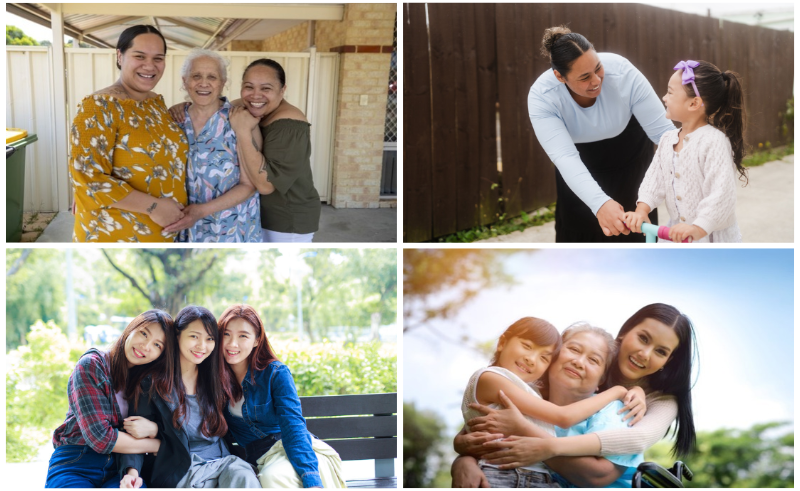
The Utah State University Utah Women & Leadership Project (UWLP) has released two new research snapshots, The Status of Asian Women in Utah: A 2026 Update and The Status of Utah Pacific Islander Women: A 2026 Update. These reports are the first two updates in a five-part series examining the status of women across Utah's racial and ethnic communities through the intersection of race and gender. The snapshots bring together available data on demographics, health, basic needs, education, income, and employment, while also highlighting significant gaps in what is currently known about the experiences of many Utah women.
According to Susan R. Madsen – founding director of the UWLP, professor of leadership in USU Extension, and coauthor of the reports – data examining gender and race together provide a more complete understanding of the opportunities and challenges facing Utah women.
“Looking at gender alone or race alone only tells part of the story,” Madsen said. “These reports help us better understand the experiences of women within Utah’s diverse communities and provide leaders with information that can help guide more effective decision-making.”
Key Findings and Highlights: Asian Women in Utah
The report highlights several areas where Utah Asian women are thriving. Asian women have higher bachelor's degree attainment than Utah women overall (47.9% compared to 36.2%), are more likely to be enrolled in college, and report higher median personal income. They also report lower rates of obesity, heart disease, poor mental health, and diagnosed depression.
At the same time, the report identifies areas of concern. Asian women are less likely to receive Pap smear screenings, more likely to report having no personal doctor, and more than twice as likely to experience gestational diabetes as Utah women overall. Poverty rates also remain slightly higher than those of Utah women overall.
Additional highlights include:
- Utah’s Asian population grew from 73,190 in 2020 to 82,950 in 2024.
- More than half (52%) of Asian women ages 18-24 are enrolled in college, compared with 44.2% of Utah women overall.
- Utah Asian women have substantially lower rates of obesity (12.3% vs. 30.2%) and diagnosed depression (17.8% vs. 32.1%) than Utah women overall.
- Asian women earn approximately $0.72 for every $1 earned by White Utah men.
Key Findings and Highlights: Pacific Islander Women in Utah
The companion report highlights both strengths and persistent disparities facing Pacific Islander women in Utah. Pacific Islander women participate in the labor force at higher rates than Utah women overall and have higher birth rates and larger household sizes.
However, Pacific Islander women face significant challenges across several key areas. They are more likely to be uninsured and to delay health care due to cost, and they have substantially higher obesity rates, lower bachelor's degree attainment, lower median personal income, and higher poverty rates than Utah women overall. The report also found that Pacific Islander women are overrepresented in Utah's female prison population relative to their share of the state's female population.
Additional highlights include:
- Utah is home to nearly 15,000 Pacific Islander women and girls.
- Pacific Islander women are about twice as likely to be uninsured as Utah women overall (15.9% versus 7.7%).
- Nearly 63% of Pacific Islander women are classified as obese, compared with 30% of Utah women overall.
- Only 17.4% have earned a bachelor's degree, compared with 36.2% of Utah women overall.
- Pacific Islander women earn approximately $0.57 for every $1 earned by White Utah men.
Why These Data Matter
Both reports underscore the importance of understanding the intersection of race and gender when examining outcomes for Utah women. Researchers noted that significant data gaps remain, particularly in housing, transportation, childcare access, caregiving, civic engagement, food insecurity, and domestic violence. Improved data collection and reporting could help policymakers, educators, employers, nonprofit organizations, and community leaders more effectively support women and families statewide.
“Data can help us identify challenges, recognize strengths, and uncover opportunities that might otherwise be overlooked,” Madsen said. “When we better understand the experiences of all Utah women, we can create stronger communities, workplaces, educational institutions, and a stronger state.”
The reports were authored by Yvette Young, former UWLP research manager, and Madsen.
*****
The Utah Women & Leadership Project strengthens the impact of Utah girls and women through research, resources, and statewide engagement. Its premier initiative – A Bolder Way Forward – creates opportunities for Utahns to learn, collaborate, and drive meaningful change across 18 areas of focus. For more information, visit the UWLP website at utwomen.org. The UWLP is affiliated with USU Extension.