Explore New Voices in Theater: USU's Play Reading Series Features '2201: Xibalba' and 'Playground'
By Emma Lee |
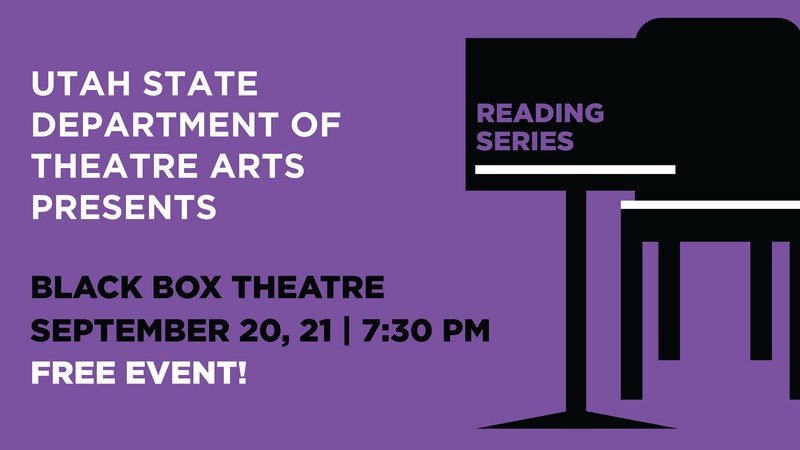
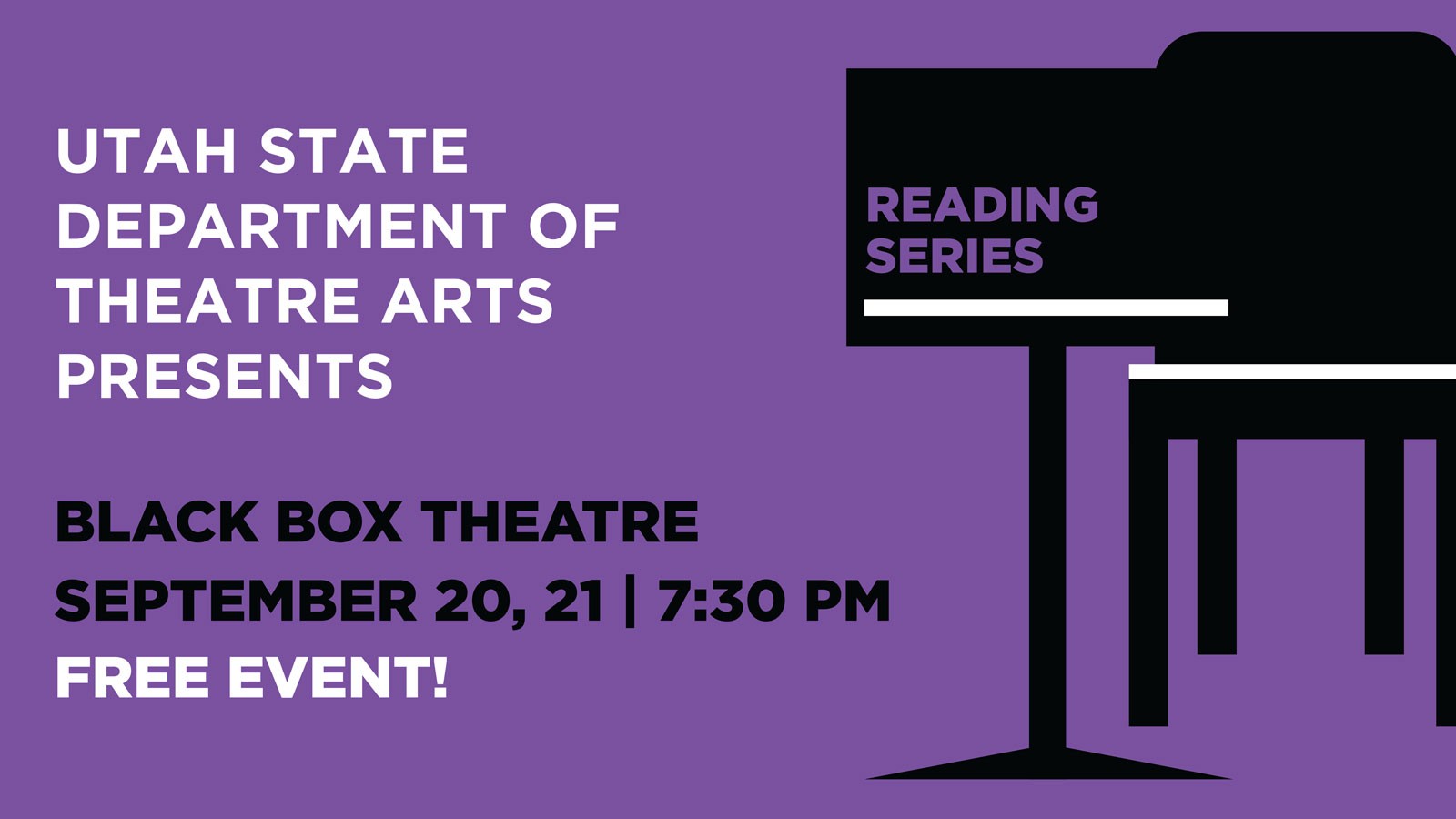
LOGAN, Utah — The Utah State University Department of Theatre Arts presents “2201: Xibalba” & “Playground” as part of its play reading series on Sept. 20 and 21 at 7:30 p.m. in the Daryl Chase Fine Arts Center’s Black Box Theatre.
The UST Play Reading Series features three separate play readings each year. Student actors rehearse reading the show for several days to give them familiarity with the characters while still relying on the script for the actual performance.
These stripped-down readings have minimal technical elements like sound, costumes and lights, giving audience members the opportunity to fill out the world of the plays with their imaginations.
The plays are largely student-created, providing valuable experience without significantly increasing their workloads.
“Actors can work on acting technique and characterization choices in a reading situation in a way that’s similar to a full production,” said Michael Shipley, associate professor of acting, voice and speech. “Aspiring directors and stage managers can try out their skills in a simpler form with a shorter time commitment. All who attend can hear a new play and enjoy a night of theatre in a different form.”
Each night, audiences will see readings from both plays: “2201: Xibalba” and “Playground.”
"2201: Xibalba" is a short space farce by Chris Anthony Ferrer, and will be directed by Ethan Shaw (BFA Acting, 2025). In this play, Cadet Cicero Lipschitz faces his first day on duty at Space Station Xibalba during a New Year’s celebration. With the daunting responsibility of preventing a potentially catastrophic wormhole from opening, Cicero's seemingly simple task turns into a high-stakes adventure.
Following “2201: Xibalba,” students will read from “Playground,” written by Benjamin Walton and directed by Samantha Capener (BFA Theatre Education, 2025). This play follows Kai, a nonbinary 6-year-old, as they push through their manifested mental illness to try and find their place in a new school.
“These are new plays without a large production history,” Shipley said. “Both of these plays are quite different from what you might see at your neighborhood theater. The range and creativity of the plays is exciting.”
Readings are free and open to the public with no ticket required.
WRITER
Emma Lee
Communications Specialist
College of Arts & Sciences
(909) 670-3273
emma.lee@usu.edu
CONTACT
Michael Shipley
Assistant Professor
Theatre Arts
michael.shipley@usu.edu
SHARE
Comments and questions regarding this article may be directed to the contact person listed on this page.