New Research: Toxins From Great Salt Lake Dust Absorbed by Plants, Soils, Human Bodies
By Lael Gilbert |


Shrinking water levels at the Great Salt Lake are not just about Utah’s water supply — they may pose serious risk to public health. Newly published research from a team at Utah State University documents the ways metal-laden dust from the drying lakebed may find its way into human bodies — directly through ingestion and indirectly through food systems.
The work was carried out as part of Molly Blakowski’s graduate research and supervised by Janice Brahney from the Quinney College of Agriculture and Natural Resources. They found that leafy vegetables exposed to Great Salt Lake dust contained elevated levels of elements like arsenic and uranium, even after thorough washing. The work documented how metals in dust could adhere to crops and evaluated whether they could be absorbed by roots.
“Dust is an acute health hazard, but rarely measured for composition or bioavailability of potentially toxic components," said Brahney, who runs a dust monitoring network across the Western U.S. “This new research takes our understanding one step further, measuring how toxic-laden dust could infiltrate Utahn’s lives in pervasive ways.”
Toxins can be taken into the body directly through ingestion, according to the research. More than one third of the modeled exposure scenarios showed that exposure to toxic metals surpassed levels of concern for children. Dust carrying heavy metals can also be deposited onto crops, where it can be incorporated into plant tissues through leaves or roots.
And toxic dust would be difficult, if not impossible to avoid. Within the three most highly populated counties bordering the lake (Salt Lake, Weber and Davis), there are approximately 40 community gardens, countless backyard gardens and small farms, and around a dozen farmers markets where locally grown vegetables are distributed.
“Growing food and home gardening is an important part of Utah culture,” Brahney said. “We like to get our hands in the dirt. So we need to make sure the atmosphere isn’t adding contaminants to our local soils and water that we depend upon."
Sediments produced by the dry playa around Great Salt Lake have been contaminated by a century of mining, waste disposal, oil refining and other human activities, said Blakowski, who is now a senior scientist overseeing Owens and Mono lakes, which are saline lakes in California.
“The dropping levels of the lake have exacerbated the problem,” she said. “And the lake’s dust is just one part of a complex mixture of atmospheric metal deposition on the Wasatch Front, which includes active and legacy pollution from mining, smelting and vehicle exhaust.”
The chemistry of these interactions is complex, according to the research. Some of the metals identified in the dust dissolve easily in the natural environment, allowing them to be transported or taken up by plants. While others were soluble in stomach acid, raising concerns about ingestion.
The health effects of exposure to these metals can also be additive, they said. It’s not just exposure to arsenic that’s a concern, but also lead and antimony as well as other toxic metals, Blakowski said.
Brahney’s overarching work also seeks to evaluate the concentrations of other types of toxins in the playa sediments, including cyanotoxins (poisons produced by bacteria) and organic contaminants, the latter in collaboration with faculty in the USU’s Department of Chemistry. The additive effects of all these potentially harmful components are yet to be evaluated, Brahney said.
“The next step is for expanded dust monitoring around the lake to reduce uncertainties and help researchers refine health risk assessments,” Blakowski said. “And efforts to restore water levels and reduce industrial pollution are complementary strategies that should be pursued.”
The authors call for expanded dust monitoring, improved exposure modeling and additional field and lab-based studies on crops grown near Great Salt Lake.
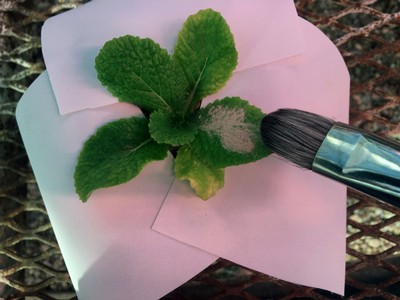
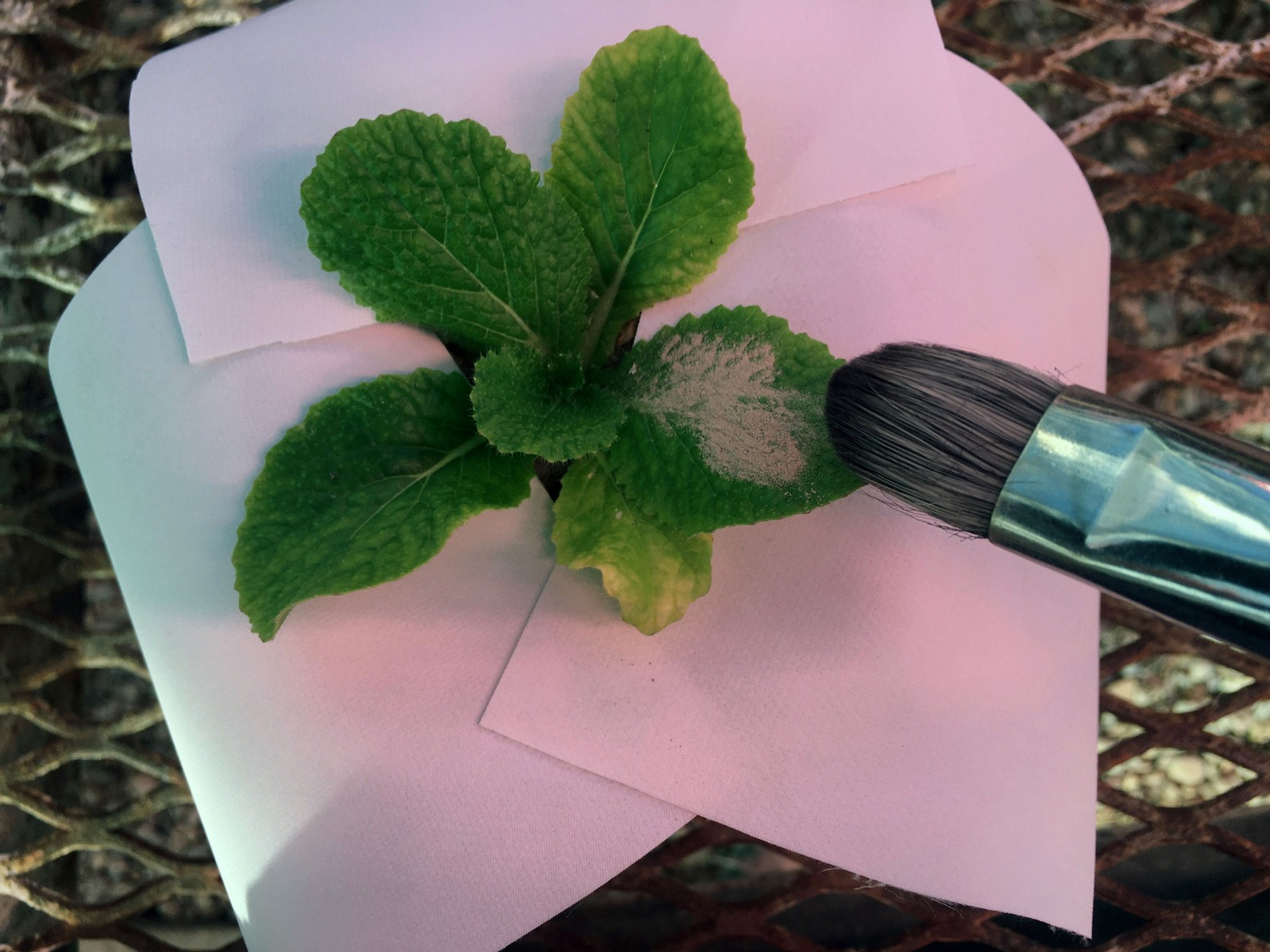
Dust is applied to a leafy plant in a greenhouse during an experiment by Utah State University researchers. (Photo credit: USU/Molly Blakowski)
WRITER
Lael Gilbert
Public Relations Specialist
S.J. and Jessie E. Quinney College of Agriculture & Natural Resources
435-797-8455
lael.gilbert@usu.edu
CONTACT
Janice Brahney
Associate Professor
Department of Water, Earth, & Environmental Sciences
435-797-4479
janice.brahney@usu.edu
SHARE
Comments and questions regarding this article may be directed to the contact person listed on this page.