'No-till Phil' Rasmussen Receives National Sustainable Ag Award
The Renewable Natural Resources Foundation selected V. Phillip Rasmussen, Jr., a professor in USU's Plant, Soils and Biometeorology Department, to receive its 2005 Sustained Achievement Award. The award recognizes the long-term contributions and commitment of an individual to the protection and conservation of natural resources.
Rasmussen, who serves as coordinator of the Western Regional USDA Sustainable Agriculture Research and Education program, has spent his career working toward judicious use and conservation of natural resources, while emphasizing agricultural productivity — earning the nickname "No-till Phil."
"(This is) a top-of your career award that you don't get until you're almost ready to die," Rasmussen jokingly told a local reporter. "It's such an honor, it has taken a while to be believable."
Rasmussen, who also serves as assistant director of Utah State University Extension and assistant director of the Utah State Agricultural Experiment Station, spent the early part of his career establishing non-till research plots across the Intermountain West. In 1999, he became the nation's first NASA-sponsored geospatial extension specialist, using modern technology for precision agriculture to ensure that resources were used in an environmentally friendly way.
During Rasmussen's tenure with Western SARE, the program has administered more than 900 grants worth nearly $35 million to researchers, educators, farmers and ranchers throughout the West.
Rasmussen has published more than 200 articles and book chapters covering agronomic computer applications, soil physics and sustainable agricultural techniques. He received a bachelor's degree in soil science with a physics minor and a master's degree in soil science and biometeorology from Utah State. He earned a doctorate degree in agronomy from Kansas State University.

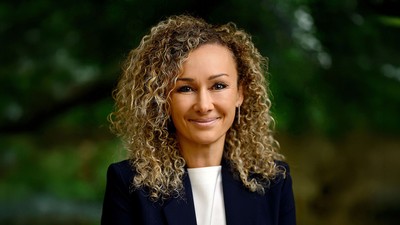
Utah State University's V. Phillip Rasmussen, Jr., is the recipient of a prestigious national award.
TOPICS
Awards 862storiesSHARE
Comments and questions regarding this article may be directed to the contact person listed on this page.