Photo Students Present Dementia Research Project at Utah Conference on Undergraduate Research
By Emma Lee |
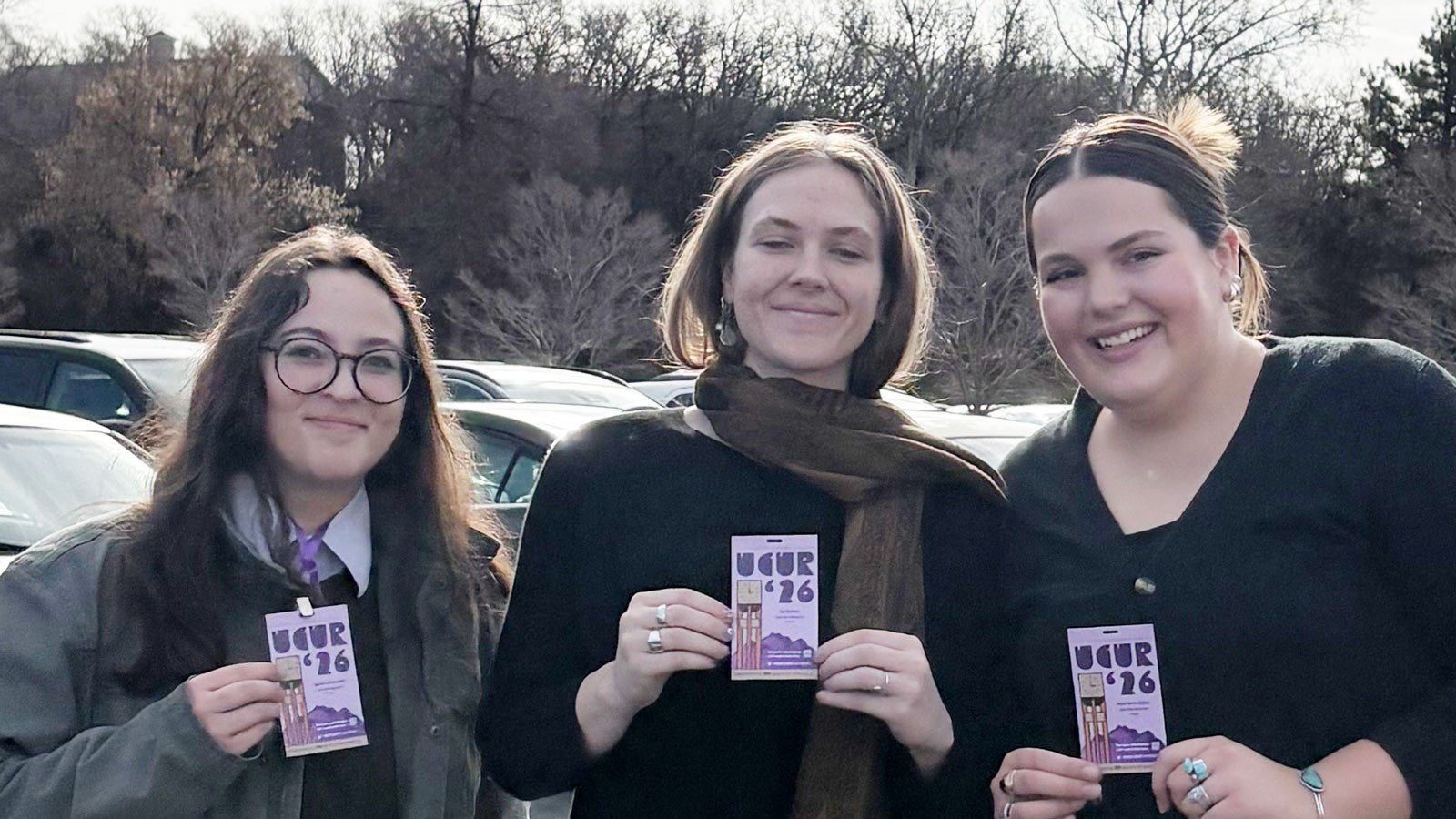
LOGAN, Utah — Three Utah State University photography students are using visual storytelling to explore the human side of Alzheimer’s disease and dementia.
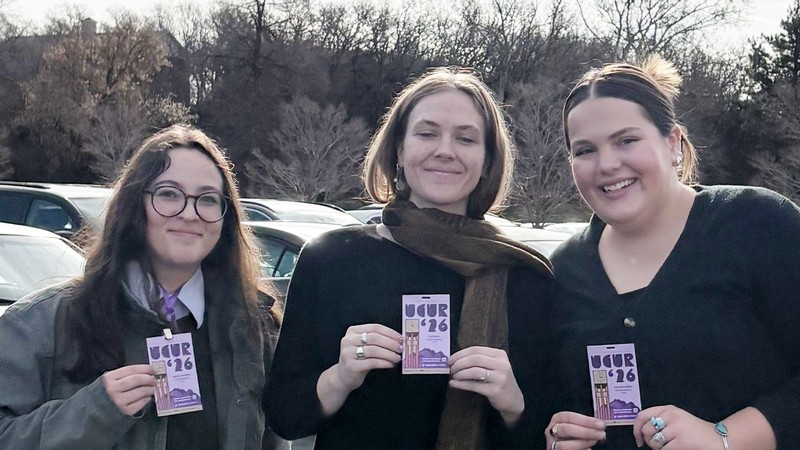
Third-year students Hazel Harris-Staples and Tye Statham and fourth-year student Kjrstine Landaverde recently presented their ongoing documentary project at the Utah Conference on Undergraduate Research.
The project explores the lived experiences of people with Alzheimer’s Disease and Dementia and the relationships they have with their caregivers.
“We aim to foster empathy and deeper understanding around this issue. It is not only about the diagnosis,” Associate Professor Fazilat Soukhakian said. “It’s about the relationships, the caregivers and how families continue to live, adapt and support one another.”
The research began in fall 2025 when Soukhakian received a catalyst program grant from USU’s Alzheimer’s Disease and Dementia Research Center to facilitate new research on Alzheimer’s disease and related dementias.
“The center conducts extensive scientific research which is incredibly important,” Soukhakian said. “At the same time, we wanted to explore a different kind of work, one that uses art and storytelling to share the human experiences behind the diagnosis. Art has the ability to communicate these stories in a way that fosters empathy and a deeper understanding of dementia.”
The project will eventually include documentary photography, filmed interviews and a short video component, with hopes for a future exhibition.
Currently, the team is documenting the story of Dave and Jerilyn Perkins, a couple living in the Salt Lake City area, where Dave has been living with dementia for about five years and Jerilyn serves as his primary caregiver.
“Going into this project, whenever I thought of Alzheimer’s or dementia, I pictured someone slipping away or not being who they used to be,” Harris-Staples said. “Through this project, we’re really trying to humanize that and focus on the relationship between the person living with the disease and their caregiver.”
The students expressed their expanded view of Alzheimer’s and Dementia through their visits with the couple.
“Every time we interviewed Dave, he kept saying, ‘I’m as happy as I can be, and I’m doing what I want to be doing in life,’” Statham said. “Even when we asked about the difficult parts, he chose to focus on that perspective.”
The team hopes to showcase the meaningful relationships and experiences rather than just the challenges.
“We’re trying to show that this isn’t just one kind of experience, it’s a transition into a different stage of life, and the relationships between people and their caregivers are still able to be unique and meaningful,” Landaverde said.
While the research is still ongoing, group members presented their project at the Utah Conference on Undergraduate Research on Feb. 27, where they shared photographs from the project and discussed the storytelling process and goals.
“I think it’s important, coming from the arts, to show that this is also research,” Harris-Staples said. “When people think of research they think of beakers and lab coats, but storytelling and photography are another way to explore important issues and share people’s experiences.”
For more information about the USU photography program, visit the website. To learn more about the Research Catalyst program through the Alzheimer's Disease and Dementia Research Center, visit the webpage.
WRITER
Emma Lee
Communications Specialist
College of Arts & Sciences
(909) 670-3273
emma.lee@usu.edu
CONTACT
Fazilat Soukhakian
Associate Professor, Photography
Caine College of the Arts
fazilat.soukhakian@usu.edu
SHARE
Comments and questions regarding this article may be directed to the contact person listed on this page.