Psychology Professor Presents Inaugural Lecture
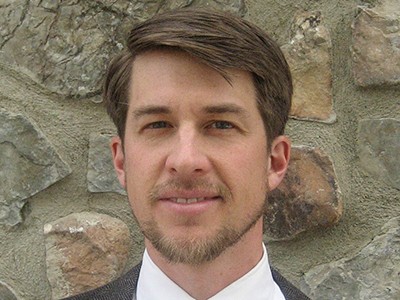
Jamison Fargo, a professor in the Department of Psychology at USU, has become a full professor and has participated this year in the Inaugural Lecture tradition.
Jamison Fargo, a professor in the Department of Psychology at Utah State University, has become a full professor and has participated this year in the Inaugural Lecture tradition.
USU faculty members who become full professors have the opportunity of addressing their family, friends and colleagues in a traditional inaugural lecture at the university president’s home. Fargo enjoyed his participation, speaking warmly during his lecture about his personal and professional experiences.
Fargo has committed much of his time, energy and passion towards alleviating homelessness among military veterans. His research is driven by the premise that prevention is the best solution to many behavioral and social problems.
Working with the Salt Lake City Veterans Affairs (V.A.) office and the University of Utah that has one of the largest databases of medical data on veterans in the country, Dr. Fargo explores risk factors that can help predict homelessness, including the effect of military misconduct, exposure to sexual trauma, substance abuse, mental health and economic issues.
“These are just some of the puzzle pieces,” says Fargo. “Hopefully one day we’ll have enough pieces to better understand what’s going on.”
Fargo is a research scientist with the National Center on Homelessness among Veterans and the Philadelphia Veterans Affairs Medical Center.
Screening for homelessness can become more effective as early warning indicators are studied and as veterans can be referred to social services or a housing coordinator. Within 5 years after being discharged from the military, one in ten veterans who have military misconduct on their record or have experienced sexual trauma become homeless. As more studies are published that shed light on the issue, researchers like Fargo hope that the V.A. will be able to take more action.
In 2008, multiple cities across the nation developed a 10-year plan to end chronic homelessness. As a result of intensive efforts and funding, homelessness has declined significantly in the last few years. Some estimates show a decline from 70,000 homeless to 40,000 homeless nationally from 2007 to 2015. These efforts have brought attention to the need for resources and services. “We can better understand and describe the problem,” says Fargo. “Now we want to figure out how to prevent it.”
The V.A. in Salt Lake City built a homeless shelter called Valor House that has made a significant impact on reducing emergency needs for veterans with disabilities. Freedom Landing is another Utah facility that offers substance abuse treatment and mental health treatment.
“Homelessness is an important social problem,” says Fargo. “I enjoy statistics and quantitative methods, and it’s very rewarding on a human level to solve real-world problems.”
Fargo is affiliated with the graduate emphasis in sociobehavioral epidemiology. He has extensive methodological expertise in the application of modern psychometric, latent variable and mixed-effects modeling techniques to research problems in the sociobehavioral, epidemiological and educational sciences. He routinely teaches graduate-level quantitative methodology courses.
Fargo lives in Providence, Utah, with his wife, Heidi and 5 children, as well as a cat, some chickens and occasional goats. They enjoy camping throughout the western United States and various hobbies such as reading, gardening and woodworking.
Contact: Rebecca Dixon, rebecca.dixon@usu.edu
Comments and questions regarding this article may be directed to the contact person listed on this page.