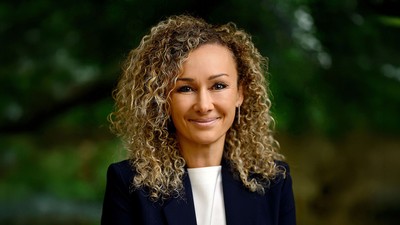
Remote Sensing Specialist Joins USU USTAR Team
Allen Q. Howard has joined Utah State University’s Center for Active Sensing and Imaging. Howard will serve as principal investigator for the center and was recruited by USU as part of the Utah Science, Technology and Research Initiative. Howard will have a dual appointment as a research professor in USU’s department of physics.
He is on leave from the U.S. Army’s Dugway Proving Ground, where he is a member of its technical staff.
Howard’s research interests include optical remote sensing, geophysical applications of electromagnetic theory, applied mathematics and signal processing. His research in this area has earned him two U.S. patents and the distinction of becoming an Institute of Electrical and Electronics Engineers Fellow. He also studies optical methods to retrieve aerosol properties from active and passive sensors in the lower atmosphere.
“Most of my career has centered on geophysical remote sensing in academic and industrial settings,” Howard said. “The appointment in CASI as a USTAR professor reconnects my geophysical remote sensing experience, and my joint appointment with SDL and the department of physics provides vital links to the international high tech corridor.”
Howard said CASI’s aerosol science mission is to achieve Center of Excellence status with a high level of credibility and reliability in quantitative aerosol monitoring using a combination of in situ and remote optical sensing systems.
“For this purpose, we are assembling an impressive team of scientists, engineers, students and optical measurement systems,” Howard said. “With my colleagues, I look forward to the opportunities and challenges in developing this new technology. This will result in USTAR’s goal — the creation of new high-tech employment in the state of Utah.”
In 1995 Howard founded Terragraf, a high-resolution subsurface imaging company. His credentials and expertise have allowed him to do extensive consulting work with such organizations as Standard Oil, British Petroleum, Los Alamos Labs and the U.S. Department of Commerce.
“The addition of Allen Howard to the CASI team will greatly accelerate the programs in aerosol detection,” said Ned Weinshenker, USU vice president for Technology Commercialization. “Given the increased interest in fine particle pollution measurements, this new technology will be ripe for market commercialization.”
USU’s Center for Active Sensing and Imaging is focused on active sensors and the development of Laser Detection and Ranging (LADAR) technology. Demand for this technology is rapidly increasing, and there are nearly countless applications that would profit from it: real-world 3D imaging for games and films, precision targeting for the military, surveying for engineering and architecture, remote monitoring and regulation of the environment, remote surveillance for homeland security and situational awareness in space.
“Dr. Howard brings with him extensive insight into the problems of both natural and hazardous particulates,” said Gail Bingham, chief scientist at USU’s Space Dynamics Laboratory and CASI team member. “He is a world-renowned authority on aerosol remote sensing and will be working with USU to develop a nationally recognized aerosol measurement laboratory and modeling capability.”
Howard has served as professor of geophysics at the Universidade do Pará and the Universidade Estadual do Norte Fluminense, both in Brazil. He also taught in the electrical engineering department of the University of Arizona. He wanted to return to the Rocky Mountains because of family connections and the outdoors.
Passed in the 2006 state legislative session, USTAR is designed to help Utah keep pace in scientific research and technological advancement — directly translating to a stronger economy, high-paying jobs, increased tax revenue and better quality of life, said USU Vice President for Research Brent Miller. The USTAR Economic Development Initiative leverages the proven success of Utah’s research universities in creating and commercializing innovative technologies.
For more information, visit the USTAR Web site.
Contacts: Allen Howard, ahoward@cc.usu.edu
Ned Weinshenker, 435-797-9602
Ned Weinshenker, 435-797-9602

Allen Q. Howard has joined Utah State University's Center for Active Sensing and Imaging.
SHARE
Comments and questions regarding this article may be directed to the contact person listed on this page.