Research Catalyst Grant Fuels Study of 'Compassion Compass' for Dementia Diagnoses
By Jennifer Payne |

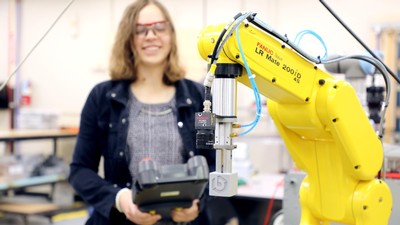
Heather Kelley, Ph.D., poses for a photo with doctoral student Francesca Knudsen.

Heather Kelley, Ph.D. and researcher at the Institute for Disability Research, Policy and Practice, was recently awarded a Research Catalyst grant from the Alzheimer’s Disease and Dementia Research Center to examine the impact of Compassion Compass, an asynchronous single-session digital mental health intervention among adults who have recently received a dementia diagnosis.
Compassion Compass was created as a collaborative effort between the ADRC, the IDRPP, and the Department of Psychology, all programs and centers within the Emma Eccles Jones College of Education and Human Services at USU. The program implements skills taught in Acceptance and Commitment Therapy (or ACT), a therapeutic approach that incorporates acceptance, mindfulness and values-based strategies to promote mental health and wellbeing.
Although ACT interventions have been shown to be effective at improving quality of life and reducing psychological distress among other groups, a single-session online training had not yet been developed or tested among individuals with dementia. The Compassion Compass program aims to provide skills to help individuals better navigate their emotional responses to a dementia diagnosis.
“Our goal is to see if a self-guided, online program could really make a difference for people with dementia,” Kelley said. “Will they enroll, will they like the program and will it improve their quality of life and mental health?”
In the pilot study, 18 people who had received a dementia diagnosis in the past year completed the Compassion Compass program and then participated in follow-up surveys and an-depth interview. Participants consistently reported positive changes in emotional awareness and regulation, self-compassion, understanding and accepting diagnosis, connection to self-identified values, and behaviors.
Of the participants, 94% said they found the program helpful. One participant commented: “It gave me hope that the diagnosis isn’t the end-all, and that there’s still a possibility I can live a happy, productive life.”
Another participant said: “It helped me see a hope-filled future. I have the mental and emotional tools to deal with it for now, and it really helped me. It gave me a sense of confidence.”
In addition to providing the participants with the skills and knowledge to better navigate their complex emotional responses to their dementia diagnosis, the project also impacted Francesca Knudsen, a doctoral student in the combined clinical/counseling psychology program at USU, who assisted in the project by recruiting participants and conducting interviews.
“Working on the Compassion Compass study was profoundly meaningful both professionally and personally,” Knudsen said. “One of the most impactful parts of my involvement was conducting qualitative interviews with participants, who were often remarkably vulnerable and emotional.”
Before this project, Knudsen hadn’t worked with individuals facing acute medical diagnoses.
“It became clear to me how profoundly life-changing a dementia diagnosis can be, and how essential it is to offer support and hope during such a confusing and frightening time,” Knudsen said. “It felt highly meaningful and important to create an open, safe space for participants as they reflected on both their diagnosis and the impact of the Compassion Compass program.”
Because this project was a small pilot study, the results don’t fully demonstrate the program’s efficacy, so Kelley is hoping to conduct additional research.
“The next steps would be to have a larger participant pool and a control group so we can determine whether decreases in psychological distress and increases in subjective wellbeing are indeed due to participation in the Compassion Compass intervention and not some other factor,” Kelley said.
In time, Kelley is hopeful that Compassion Compass will be added to USU’s ACT Guide online collection of services.
“The program’s accessible format and ACT-based skills make it a promising approach to help address the gaps in emotional support for people with dementia,” Kelley said. “With continued research, it is possible that Compassion Compasscould be easily integrated into health care contexts in a cost-effective manner to provide a meaningful support to adults going through this life-changing diagnosis.”
Learn more about the ACT Guide self-help offerings that are available through the ACT Research Group at USU.
WRITER
Jennifer Payne
Emma Eccles Jones College of Education and Human Services
Public Relations Specialist
jen.payne@usu.edu
CONTACT
Alicia Richmond
Director of Public Relations & Marketing
Emma Eccles Jones College of Education & Human Services
alicia.richmond@usu.edu
TOPICS
Grants 281stories Innovation 129stories Mental Health 110stories Disabilities 100stories Psychology 51storiesSHARE
Comments and questions regarding this article may be directed to the contact person listed on this page.