The Moo-vement Mystery: Cows on the Range Could Provide Answers for Wildlife Ecologists
By Stacie Denetsosie |
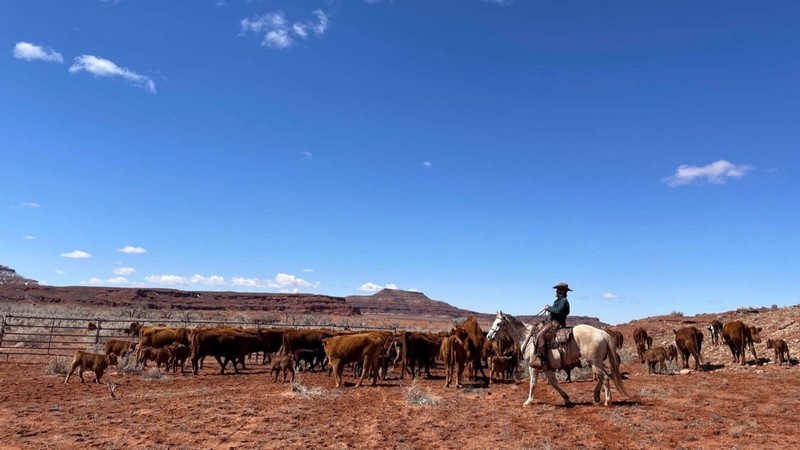
(Photo credit: Jack Van Allsburg)
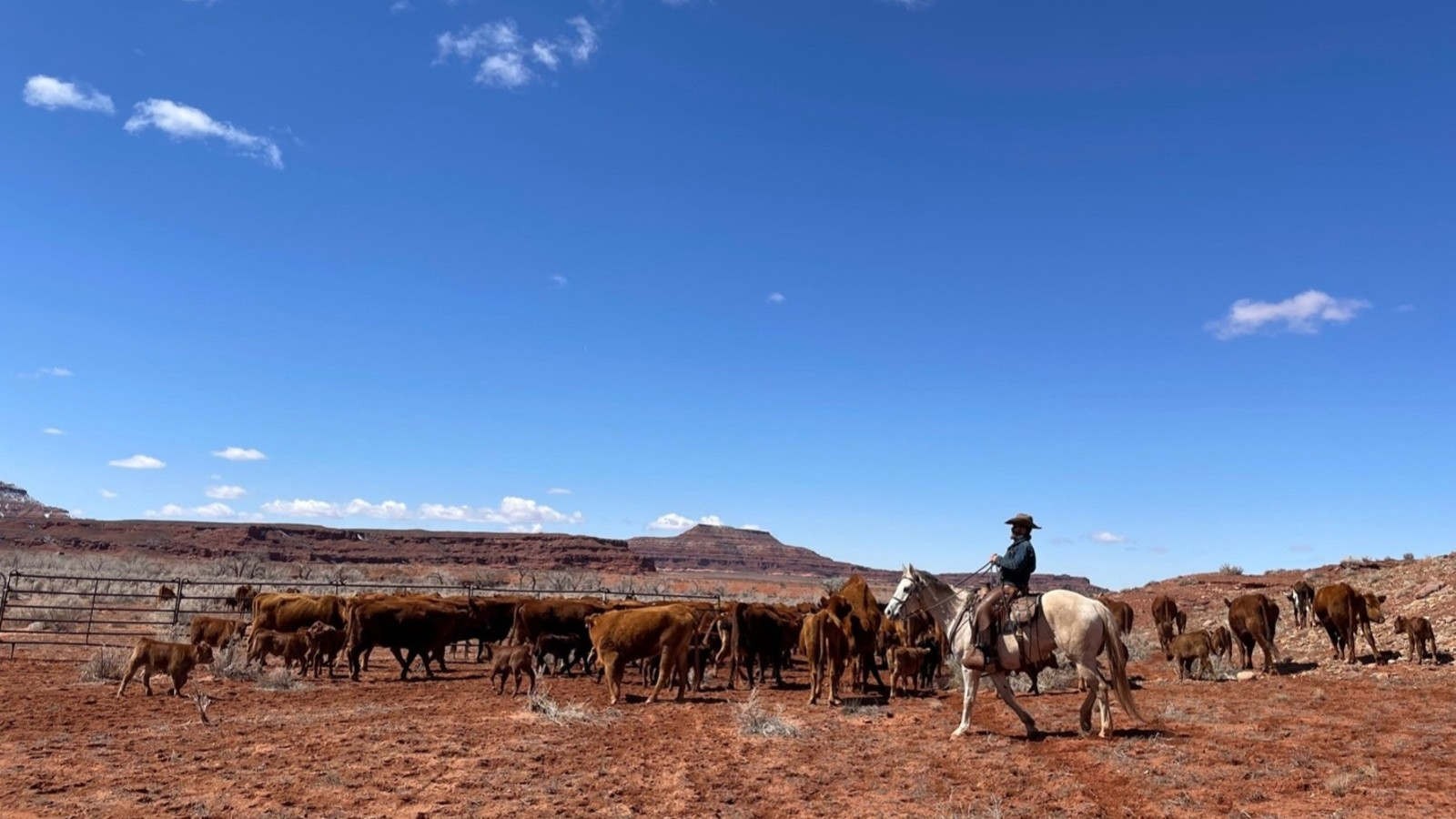
Rangeland-based livestock movement could provide key insights into the movement ecology of many species of wildlife.
According to Utah State University doctoral student Maria Stahl, the field has exploded over the last 20 years in terms of the number of studies and the number of organisms and taxa that people are studying.
For many decades, the equipment required for these studies was deemed too expensive and too bulky to safely place on small animals. However, recent advancements have made GPS devices far more accessible.
Stahl notes that tracking technologies are becoming less expensive and becoming so small you can put them on birds. Satellite-based tracking now allows researchers to monitor animal locations in near real time.
Despite these advancements, knowledge gaps remain because most studies focus on wildlife populations where experimental control is nearly impossible. Stahl points out that it’s very difficult to test whether these animals do confer a benefit from being in the areas that they’re selecting for, or if they are actually selecting for the places that improve their fitness the most.
To fill these gaps, Stahl and her colleagues propose using rangeland-based livestock operations as a model system to answer some outstanding questions in the field.
Finding a suitable location for such a study can be difficult, but the Dugout Ranch in Southern Utah offered a natural fit. Home to the Canyonlands Research Center and owned by The Nature Conservancy, the ranch provided the ideal setting for Stahl to track the movements of Criollo cattle, a heritage breed originally from Mexico.
Stahl said her partnership with ranchers is a “really collaborative, exciting environment,” and that the organization’s science-driven mission allows management flexibility and experimental risks. That focus also provided Stahl and her collaborators with detailed records of individual animals’ genealogical and life history, health and nutrition state.
For Stahl, “precision ranch technology” sheds new light on animal movement. In collaboration with the ranchers, researchers can monitor animals in rugged terrain and use sensors on animals and "smart feeders" that weigh the cattle automatically every time they come to get supplemental feed.
This innovation allows researchers to couple movement data with metabolic data or physiological data, like heart rate or respiratory rate, to better understand the causes and consequences of the movement patterns.
From there, researchers try to find answers for the four key components that motivate movement: internal state, navigation capacity, motion capacity and external factors. Stahl’s research suggests the answers are rarely simple because "all animals are more complicated than we think … and there are a lot of reasons that an animal is going to move from point A to point B."
As Stahl prepared to present her findings at the Ecological Society of America’s (ESA) annual meeting, she hoped her work will help bridge the gap between agriculture and wildlife biology.
"Agriculture is part of our natural landscapes and the animals in those systems are still animals," Stahl said. “By studying the movement of cattle, researchers may finally gain a clearer picture of why any animal, wild or domestic, moves the way it does.”
Learn more about the research and collaborators on the ESA 2026 meeting website. Read more about Maria’s academic research at Springer Nature.
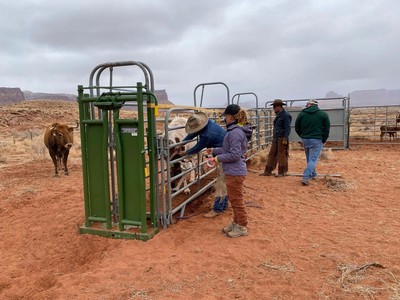
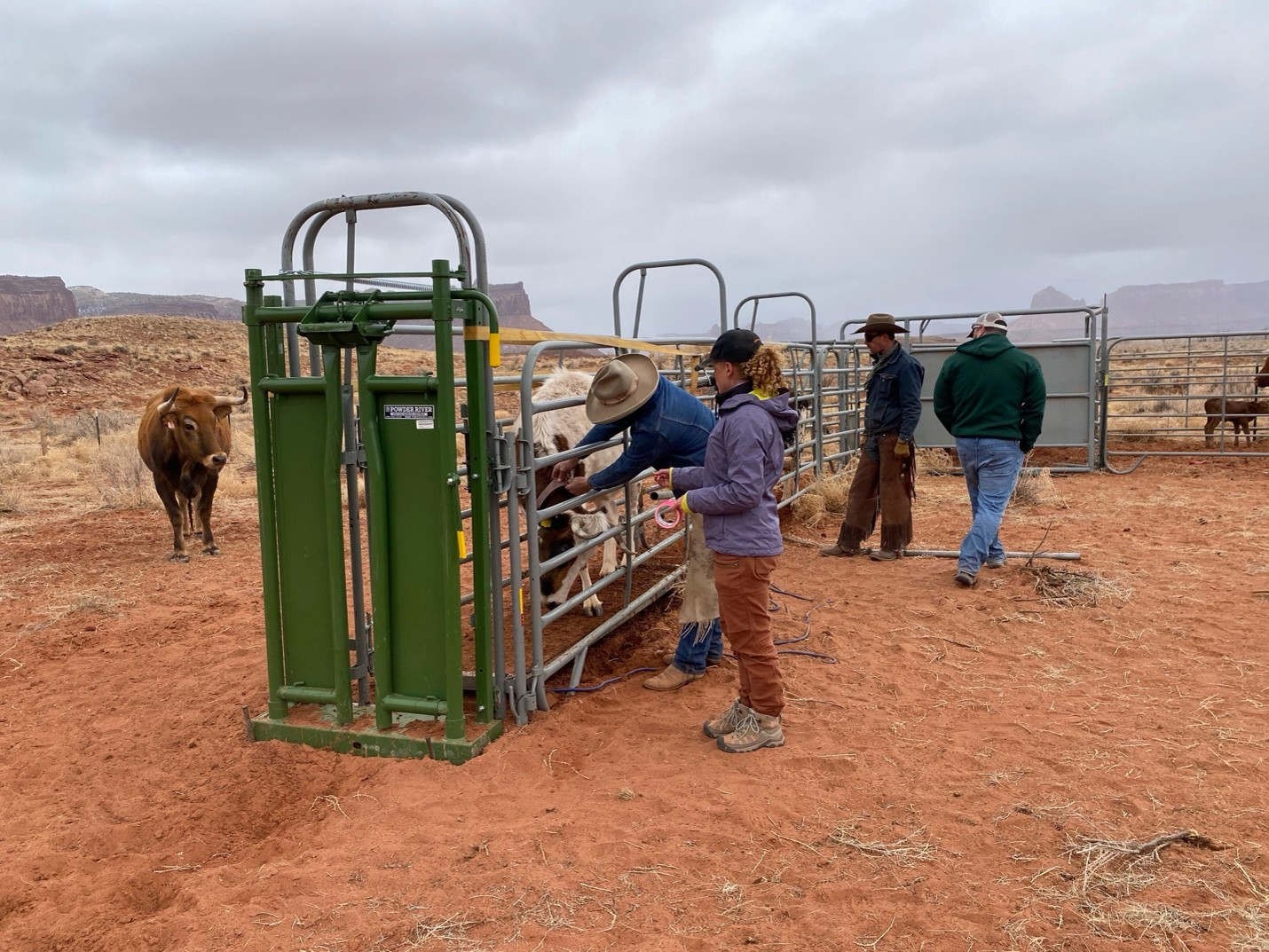
Cattle being examined and weighed at the Dugout Ranch. (Photo credit: Will Munger)
WRITER
Stacie Denetsosie
Internal Communications
Quinney College of Agriculture and Natural Resources
(435) 797-0574
stacie.denetsosie@usu.edu
CONTACT
Maria Stahl
Wildland Resources
Graduate Student
maria.stahl@usu.edu
SHARE
Comments and questions regarding this article may be directed to the contact person listed on this page.