Up in Smoke: New Research Document Widespread Implications of Smoke After Wildfire
By Lael Gilbert |
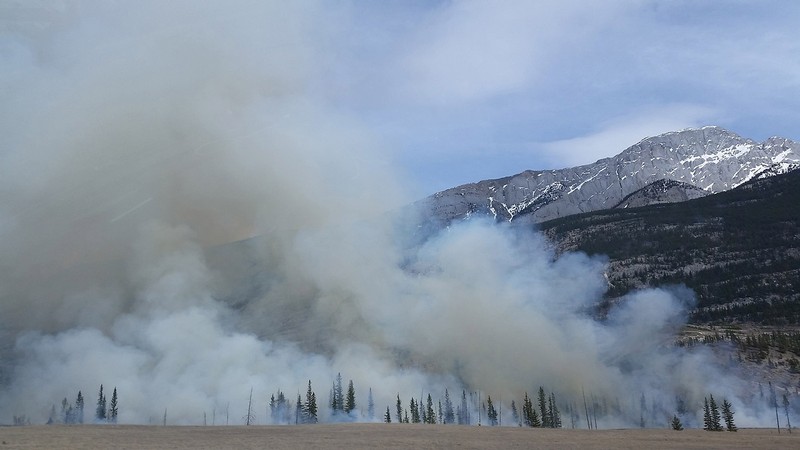
Wildfire in Jasper National Park (Credit: Pixabay)
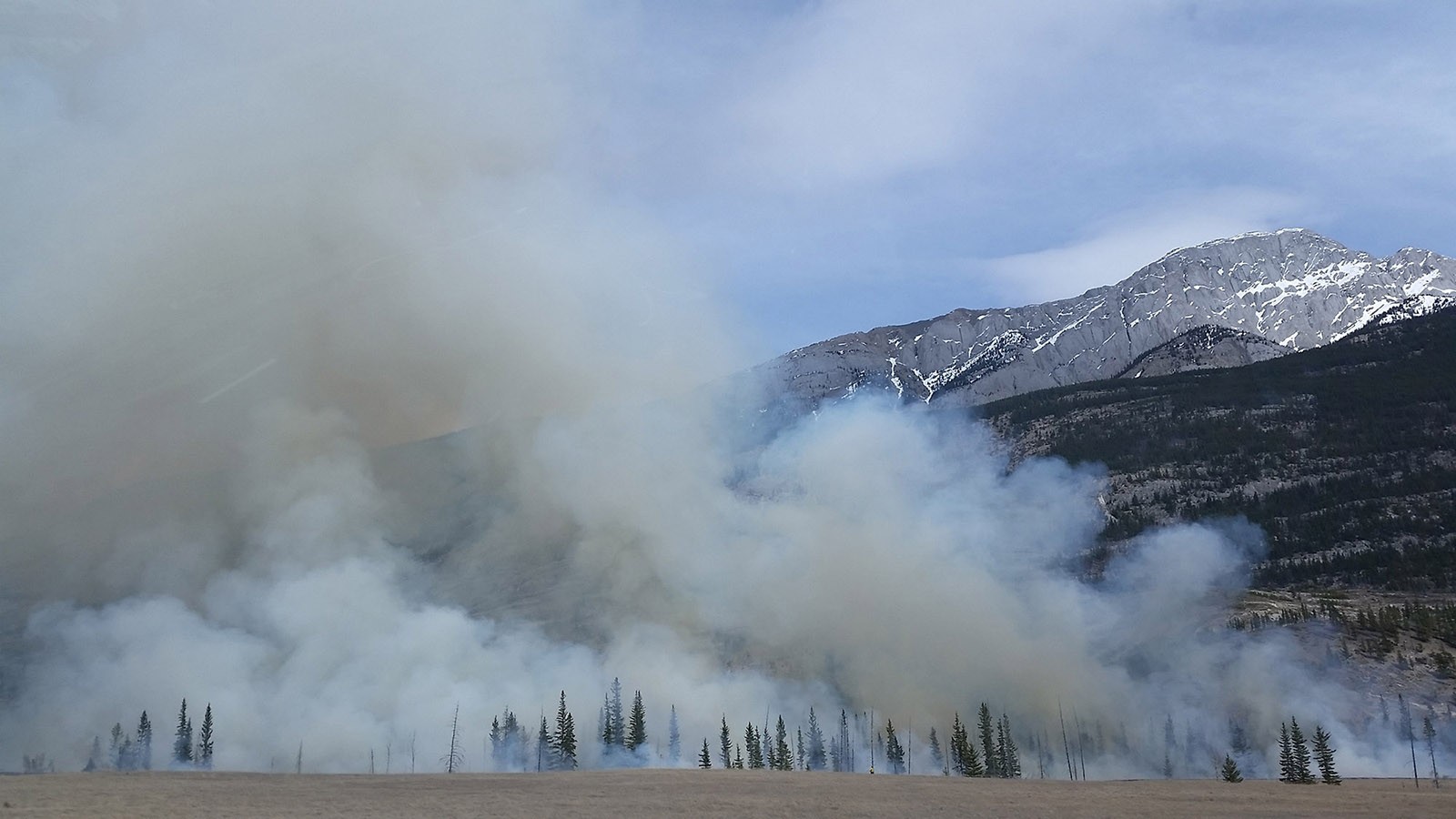
Guttering flames and smoldering trees leave behind obvious marks, but new research shows that the wildfire smoke itself can have far-reaching and long-lasting impacts on natural systems, according to two new studies from Janice Brahney, a biogeochemist from the Department of Water, Earth, & Environmental Sciences and the Ecology Center.
Rain can turn smoke particles into fertilizer, according to the work newly released in the journal Global Change Biology. When smoke and rain coincide, precipitation can deliver unusually large bursts of nitrogen, phosphorus, and potassium to ecosystems in a form readily available to plants and trees, according to the research project that Brahney co-led with Alexandra Ponette-González and others from the University of Utah and the Cary Institute of Ecosystem Studies, New York.
During these events, nutrients released as smoke are dissolved into rain and pulled from the atmosphere back into soil and water systems — and not an insignificant amount. In 2022 smoke-rain events delivered 20 to 30% of the annual rain-deposited nitrogen, phosphorus, potassium, and calcium to mountain lakes and forests at the study sites.
Brahney said as wildfires become more frequent, these nutrient pulses could become increasingly important. The number of smoke-rain days continues to increase, according to the research.
“The atmospheric deposition of nutrients like phosphorus is underappreciated over shorter time scales, generally,” Brahney said. “Whether that input has a meaningful ecological effect depends on the characteristics of the ecosystem receiving it — atmospheric deposition isn’t as simple as good or bad.”
For instance, Brahney has shown that atmospheric nutrient deposition to mountain lakes could increase biological production or shift community composition in other research.
“The complexity makes it all that more important to track,” she said.
The new research covered 250 sites across 16 climate regions in 2014, 2020, and 2022, and quantified how often smoke and rain coincided and what nutrients were deposited during those events.
“There’s so much focus on how smoke affects human health,” Ponette-González said, “but we need to be interested in everything that falls out of the atmosphere and lands on ecosystems, and what that means for our environment.”
The next phase of the project will trace smoke plumes back to their source fires, to determine how different types of fires influence the chemistry of smoke. Understanding that connection could help determine if certain types of fires — such as forest fires, urban environments, or agricultural burning — contribute different nutrients or contaminants to different regions, Brahney said.
A second publication from an inter-institutional team, including Brahney, tracked the ballistic potential of dust and particles during fire — how far these forces can launch ash and char from an active site. The researchers created a model based on factors like particle size, heat release, and atmospheric conditions like wind.
Small particles can travel thousands of miles from a fire source, while large, coarse firebrands can settle within a few hundred meters and start new fires, the model shows. Most of what fires produce measures somewhere between those two sizes, and is deposited between 2 and 25 miles downwind of a fireline.
But under intense burning conditions with strong updrafts, the model and radar observations show particles can be lofted up to 12,000 meters and transported up to 70 miles from the fire source.
“The physics-based modeling framework developed by Scordo’s team is a really important tool for understanding how pyrogenic particles are distributed across a landscape,” Brahney said. “We are really excited about the next several steps in this research. Which are to evaluate how source material, fire intensity, and distance influence the nutrient composition and bioavailability, and determine the impacts to soils and freshwater systems through experimentation.”
By predicting precisely where particles travel and land, researchers can better understand how wildfires transport nutrients and contaminants that might impact downwind soil, water quality, and freshwater ecosystems in the months and years after a fire is extinguished.
The footprint of a wildfire does not stop at the burn line or dissipate in the atmosphere, said Brahney. It actively reshapes watersheds and soil, impacting areas that are a thousand times larger than the fire itself. As the frequency of extreme fires continues to rise, working to understand the nuanced and complete impact is becoming increasingly important, she said.
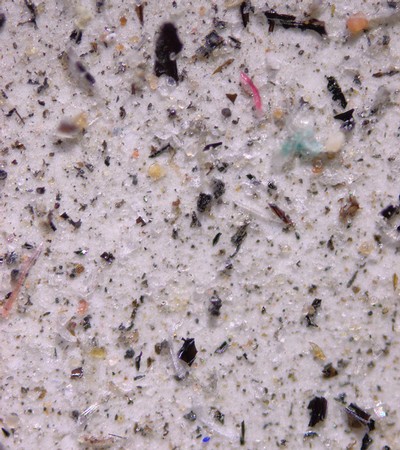
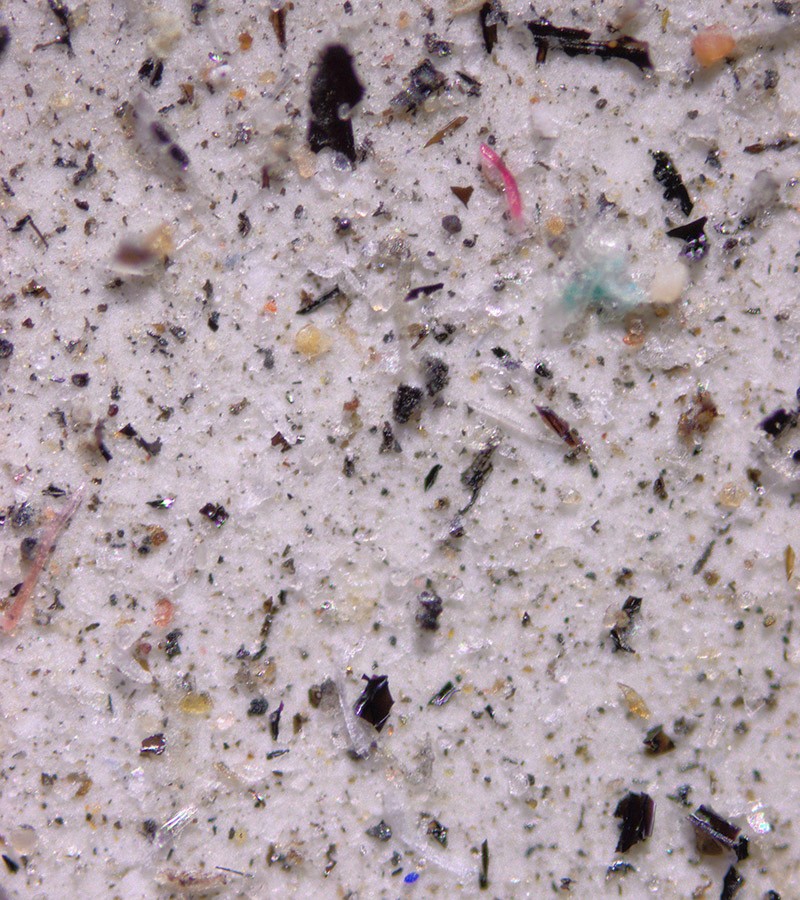
Ash particles from atmospheric deposition can be seen, collected through the National Atmospheric Deposition Program. (Credit: Janice Brahney)
WRITER
Lael Gilbert
Public Relations Specialist
S.J. and Jessie E. Quinney College of Agriculture & Natural Resources
435-797-8455
lael.gilbert@usu.edu
CONTACT
Janice Brahney
Associate Professor
Department of Water, Earth, & Environmental Sciences
435-797-4479
janice.brahney@usu.edu
TOPICS
Wildfire 52storiesSHARE
Comments and questions regarding this article may be directed to the contact person listed on this page.